

The Complete Guide to AI Content Generation for Singapore Businesses
April 8, 2026 at 6:12 pm
Scaling Content Production with AI: A Singapore Strategy Blueprint
April 10, 2026 at 4:52 pm

Singapore’s digital economy moves at an unforgiving pace. Brands are no longer competing on creativity alone — they are competing on speed, scale, and precision. The companies winning search visibility, dominating LinkedIn, and flooding social feeds are not necessarily bigger. They are simply using AI more intelligently.
This is where AI Content Generation Singapore becomes a strategic advantage rather than a tactical experiment. Businesses across finance, SaaS, logistics, ecommerce, and professional services are using AI Content Generation Singapore frameworks to produce SEO blogs, ad copy, landing pages, and thought leadership content at scale without ballooning headcount.
However, most companies implement AI tools incorrectly. They jump straight into prompts without defining goals. They generate content without governance. They publish without compliance review. The result is inconsistent messaging, weak SEO performance, and internal resistance.
A structured implementation model removes that chaos. It turns AI Content Generation Singapore from a novelty into an operational engine. Instead of replacing writers, it augments strategy. Instead of flooding channels with noise, it builds authority.
In Singapore’s multilingual and compliance-sensitive environment, implementation discipline matters even more. A step-by-step rollout ensures tone consistency, regulatory alignment, and measurable ROI. Businesses that treat AI content as infrastructure — not just a tool — build sustainable competitive advantage.
This framework outlines exactly how to move from experimentation to scalable AI Content Generation Singapore execution without compromising brand integrity or operational clarity.

Define Strategic Objectives Before Touching Any AI Tool
Most AI implementations fail before they even begin. The mistake is simple — organizations start with tools instead of outcomes. A proper AI Content Generation Singapore rollout begins with defining exactly what success looks like.
Is the goal SEO dominance? Faster campaign launches? Lead generation? LinkedIn authority? Product education? Each objective requires a different content structure and workflow. Without clarity, AI outputs become scattered and ineffective.
Singapore businesses using AI Content Generation Singapore effectively typically map content to funnel stages. Top-of-funnel includes educational blogs and industry insights. Mid-funnel focuses on comparisons and use cases. Bottom-funnel targets conversion pages and sales enablement assets.
KPIs must also be defined early. These may include content velocity, organic traffic growth, keyword ranking expansion, conversion rate improvement, or cost per asset reduction. Once these metrics are established, AI tools can be configured to support measurable outcomes rather than generic content production.
Stakeholder alignment is equally critical. Marketing teams want speed. Compliance teams want control. Leadership wants ROI. A well-defined AI Content Generation Singapore strategy balances all three by setting guardrails from day one.
This phase also identifies high-impact starting points. For many Singapore companies, that means SEO blog production, LinkedIn content pipelines, or landing page optimization. By focusing on one objective first, organizations create early wins that justify broader adoption.
The result is clarity. Instead of experimenting blindly, businesses implement AI Content Generation Singapore with direction, accountability, and performance expectations.

Audit Your Existing Content Ecosystem Before Automation
Before scaling AI, organizations must understand what already exists. A content audit reveals inefficiencies, redundancies, and opportunities for automation. Without this step, AI Content Generation Singapore risks amplifying broken workflows instead of improving them.
Start by mapping the current production lifecycle. Who ideates? Who writes? Who edits? Who approves? Where are delays happening? Many Singapore teams discover that approvals — not writing — are the biggest bottleneck. AI solves generation speed, but governance must also be streamlined.
Next, evaluate content types. Blogs, newsletters, landing pages, proposals, social posts, and email campaigns all require different AI prompting structures. A structured AI Content Generation Singapore deployment identifies which formats benefit most from automation.
Repetitive tasks should be prioritized. These include meta descriptions, SEO outlines, product descriptions, campaign variations, and localization drafts. These are ideal for AI augmentation and produce immediate efficiency gains.
Technology stack assessment also matters. CMS platforms, SEO tools, analytics dashboards, and approval systems must integrate smoothly. A fragmented stack weakens AI Content Generation Singapore performance and introduces friction.
Finally, define human vs. AI responsibilities. AI drafts. Humans refine. AI scales. Humans strategize. This hybrid model ensures quality while maintaining speed. Singapore organizations that adopt this balance avoid the common trap of over-automation.
Once the audit is complete, AI implementation becomes precise. Instead of replacing workflows blindly, AI Content Generation Singapore is layered into the system where it delivers maximum impact.
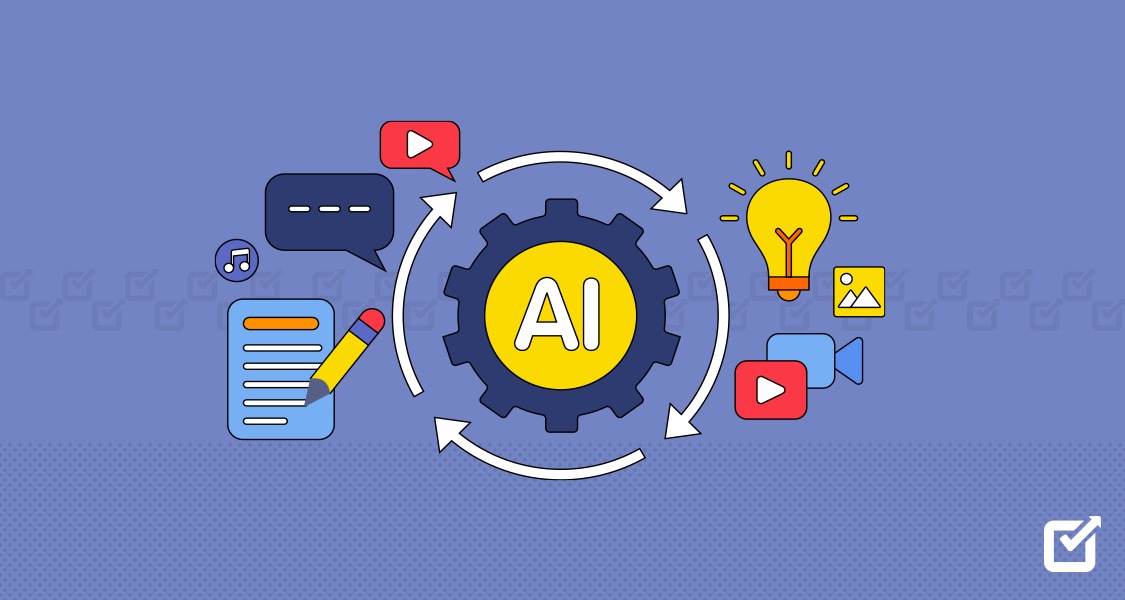
Selecting the Right AI Content Tools for Singapore’s Market Reality
Not all AI content tools are built for Singapore’s business environment. Some lack multilingual capability. Others struggle with compliance-sensitive industries like finance and healthcare. Choosing the right stack determines whether AI Content Generation Singapore becomes scalable or chaotic.
Organizations typically require three layers. First, long-form generation tools for blogs, guides, and thought leadership. Second, short-form engines for ads, social content, and email campaigns. Third, optimization tools for SEO, tone consistency, and brand alignment.
Localization is particularly important. Singapore’s diverse audience often requires tone adjustments across industries and demographics. Strong AI Content Generation Singapore implementations include localization prompts, terminology libraries, and brand vocabulary controls.
Integration capability should also be evaluated. AI tools must connect with CMS platforms, analytics dashboards, and collaboration environments. Without integration, teams revert to manual workflows, reducing efficiency.
Security and compliance should not be overlooked. Enterprise teams require data privacy safeguards, prompt logging, and audit trails. Mature AI Content Generation Singapore strategies include governance layers from the start.
Scalability is the final consideration. The chosen tools must support growth from pilot campaigns to full content ecosystems. Businesses that choose flexible platforms avoid costly migrations later.
The right selection process transforms AI from isolated tools into a unified AI Content Generation Singapore infrastructure capable of supporting long-term digital growth.

Build a Structured AI Content Workflow That Maintains Quality
Speed without structure leads to inconsistency. That is why workflow design is the backbone of scalable AI Content Generation Singapore deployment. Organizations must define how AI-generated content moves from prompt to publication.
The first layer is prompt standardization. Templates ensure tone consistency, SEO alignment, and messaging accuracy. Instead of reinventing instructions each time, teams reuse structured prompts. This stabilizes AI Content Generation Singapore output quality.
Next comes the human-in-the-loop model. AI drafts content, editors refine it, and strategists approve it. This layered review protects brand voice while preserving speed. Singapore companies operating in regulated sectors benefit significantly from this control mechanism.
Compliance checkpoints should also be embedded. Claims validation, tone review, and factual accuracy checks prevent reputational risks. Mature AI Content Generation Singapore workflows treat governance as part of production, not an afterthought.
Version control is another critical element. AI accelerates iteration, but without tracking, teams lose clarity. Structured workflows maintain audit trails and ensure alignment across stakeholders.
Finally, approval hierarchy must be streamlined. Too many reviewers slow down the very efficiency AI provides. Effective AI Content Generation Singapore implementations balance control with agility.
With the right workflow, organizations achieve both scale and consistency — the hallmark of successful AI-driven content operations.
Launch a Controlled Pilot Before Organization-Wide Rollout
Scaling immediately is tempting, but disciplined teams start small. A pilot allows organizations to validate AI Content Generation Singapore performance before committing across departments.
Choose one high-impact use case. Many Singapore businesses begin with SEO blog production, LinkedIn thought leadership, or landing page optimization. These formats deliver measurable results quickly and demonstrate value.
Baseline metrics must be established. Measure content production time, engagement rates, traffic growth, and conversion performance. Once AI is introduced, compare improvements. This data-driven approach strengthens AI Content Generation Singapore adoption internally.
Pilot phases also allow prompt optimization. Teams refine tone, structure, and messaging guidelines. Over time, outputs become more aligned with brand identity. This iterative learning is essential for long-term success.
Training is another key component. Writers, marketers, and strategists must understand how to collaborate with AI effectively. Organizations that invest in enablement accelerate AI Content Generation Singapore maturity.
Documentation should be created during the pilot. SOPs, prompt libraries, and workflow diagrams ensure knowledge transfer. This prevents dependency on individual users.
Once performance stabilizes, scaling becomes predictable. Instead of guesswork, organizations expand AI Content Generation Singapore based on proven success.
Conclusion
The final stage transforms AI from a project into infrastructure. Scaling AI Content Generation Singapore means expanding across teams, channels, and campaign types while maintaining consistency.
Organizations typically extend AI into SEO clusters, campaign content, social pipelines, email marketing, and sales enablement. This unified approach creates content velocity that manual teams cannot match.
Performance dashboards should guide optimization. Track keyword growth, engagement metrics, conversion rates, and production efficiency. Mature AI Content Generation Singapore strategies rely on continuous improvement rather than static workflows.
Governance also evolves. As usage expands, organizations introduce prompt libraries, tone guidelines, and approval policies. These guardrails protect brand identity while enabling autonomy.
Cross-department adoption is the next milestone. Marketing, HR, product, and sales teams can all benefit from AI content. This multiplies ROI and embeds AI Content Generation Singapore across the organization.
Finally, optimization never stops. AI tools improve, search behavior changes, and competition evolves. Companies that continuously refine their strategy maintain advantage.
When executed properly, AI Content Generation Singapore becomes more than a productivity tool — it becomes a scalable content engine that drives sustained digital growth.
