

What AI Marketing Looks Like in Regulated Industries Across Asia (Finance, Healthcare, etc.)
April 28, 2026 at 8:36 pm
B2B Lead Generation for Asia: AI Tools to Increase Lead Velocity
April 30, 2026 at 5:53 pm

Across Asia, growth is no longer won by companies that chase random leads and celebrate one-off deals. The real winners are businesses that build systems—repeatable engines that turn demand into pipeline and pipeline into revenue. That is where B2B Lead Generation for Asia becomes more than a marketing tactic. It becomes a commercial discipline.
Many companies still rely on referrals, scattered ad campaigns, and inconsistent outbound efforts. Some months feel strong. Others feel dry. Sales teams lose momentum, forecasting becomes guesswork, and management decisions are driven by hope instead of data. In fast-moving Asian markets, that approach gets punished quickly.
Asia is complex. Buyers in Singapore behave differently from buyers in Indonesia. Procurement cycles in Japan differ from those in Malaysia. Enterprise buyers in Hong Kong may demand proof, speed, and precision. That means generic playbooks rarely survive regional reality. Effective B2B Lead Generation for Asia requires localization, patience, and a machine built for consistency.
Predictable revenue happens when companies know where leads come from, how they convert, and what actions increase close rates. It is not magic. It is measurement. It is discipline. It is building campaigns that can be repeated, optimized, and scaled.
The strongest brands in Asia are not always the loudest. They are often the most systematic. They know their numbers. They know their buyers. They know which channels create revenue, not vanity metrics.
If your business wants sustainable growth instead of quarterly anxiety, now is the time to invest in B2B Lead Generation for Asia. Because in this market, randomness is expensive, but predictability compounds.

Build the Foundation: Know Exactly Who You Need to Win
Weak targeting kills strong campaigns. Before spending on ads, outreach, or content, define who matters most. Serious growth starts with clarity. That is the first law of B2B Lead Generation for Asia.
Many businesses target industries too broadly. They chase “everyone in manufacturing” or “all SMEs in Asia.” That creates waste. Instead, narrow the field. Identify companies with urgency, budget, and real buying potential. Look at company size, geography, revenue stage, hiring patterns, technology stack, and expansion signals.
Then go deeper. Understand the humans inside the accounts. Who signs the contract? Who influences the decision? Who blocks progress? In Asia, multiple stakeholders often shape a deal, especially in mid-market and enterprise sales. Your messaging must speak to each one.
For example, a CFO may care about ROI. A marketing head may care about speed. A CEO may care about market share. Precision matters. Messaging without relevance is noise.
This is why elite B2B Lead Generation for Asia strategies are built around Ideal Customer Profiles and segmented buyer personas. When targeting is sharp, acquisition costs fall and close rates rise.
Use data from existing customers. Which industries stay longest? Which countries convert fastest? Which accounts spend more over time? Let evidence guide expansion, not assumptions.
The market rewards focus. The companies that know exactly who they serve usually outperform those trying to serve everyone. Build that foundation first, and every campaign after becomes stronger.

Quarter One: Repair the Funnel Before You Scale It
Scaling a broken funnel only magnifies waste. Before launching aggressive campaigns, fix the leaks. This is where mature B2B Lead Generation for Asia begins—with operational honesty.
Audit every stage. Where do leads come from? What percentage converts to meetings? How many opportunities become proposals? How many proposals close? Somewhere in that chain, money is escaping.
Often the problem is not traffic. It is friction. Slow landing pages, weak offers, confusing forms, delayed follow-ups, poor qualification, or unclear positioning. These silent killers erode performance month after month.
Start with your website. Is the value proposition immediate? Can a visitor understand why you matter in five seconds? Is there a clear next step? If not, rebuild.
Then review lead response times. In many markets, the fastest responder wins attention. A 24-hour delay can kill intent. Automated workflows, CRM alerts, and instant acknowledgment systems help recover lost momentum.
Next, tighten qualification. Not every inquiry deserves full sales energy. Build criteria around budget, authority, need, and timing. Smart filtering lets sales teams focus on winnable opportunities.
Strong B2B Lead Generation for Asia is not just about generating names. It is about creating a revenue-ready process where prospects move smoothly toward buying decisions.
Quarter one is about discipline, not fireworks. Fix pages. Fix follow-up. Fix messaging. Fix handovers between marketing and sales. Once the machine runs cleanly, then scale becomes profitable instead of painful.
Quarter Two: Launch Multi-Channel Campaigns That Create Demand
Once the funnel is stable, expansion begins. Now the task is volume with control. Serious B2B Lead Generation for Asia depends on multiple channels working together, not one hero tactic.
Relying only on referrals is fragile. Depending only on paid ads is risky. Betting everything on cold outreach is exhausting. Durable growth comes from channel diversity.
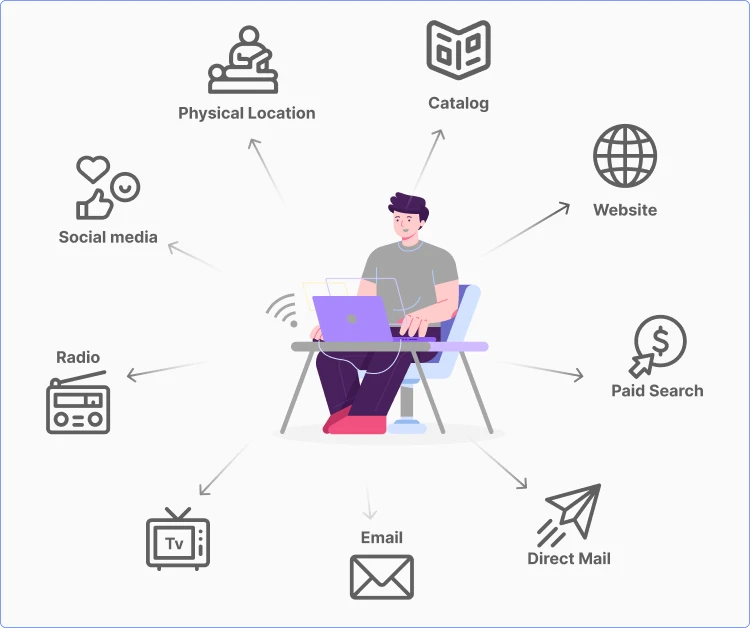
Use SEO to capture intent-driven buyers searching for solutions. Use LinkedIn outreach to start executive-level conversations. Use paid media to accelerate awareness in priority markets. Use email nurturing to stay visible while deals mature. Use webinars and case studies to build authority.
Asia’s B2B buying cycles are often slower and relationship-driven. That means repetition matters. Buyers may need to see your brand several times before responding. Multi-channel presence creates familiarity, and familiarity lowers resistance.
Localization also matters. Campaigns that work in Singapore may need adaptation for Thailand or Vietnam. Tone, urgency, trust signals, and proof points can vary. Great B2B Lead Generation for Asia respects those differences.
Track channel contribution carefully. Some channels generate direct leads. Others influence later-stage conversions. Measure both last-click and assisted impact.
Quarter two is where many firms finally feel momentum. Meetings increase. Pipeline grows. Brand recognition rises. But stay sharp—activity alone is not success. Revenue is the scorecard.
Build campaigns like a portfolio: diversified, measurable, and constantly improved. That is how demand becomes dependable.
Quarter Three: Nurture Leads Until Timing Turns in Your Favor
Most leads do not buy immediately. They compare, delay, budget, discuss internally, and wait for urgency. If you vanish after first contact, competitors inherit your opportunity. This is why nurturing is central to B2B Lead Generation for Asia.
Many businesses mistake silence for rejection. In reality, silence often means “not yet.” Smart companies stay present without becoming annoying.
Create email sequences that educate instead of spam. Share market insights, ROI calculators, case studies, product updates, and strategic advice. Stay useful. Use retargeting ads to remain visible. Use CRM reminders for timely human follow-up.
Lead scoring helps prioritize effort. A prospect opening emails, visiting pricing pages, and downloading case studies is warmer than one who ignored everything for months. Treat signals seriously.
Trust is a currency in Asian markets. Buyers often want proof before commitment. Testimonials, regional success stories, and clear business outcomes reduce fear. Strong B2B Lead Generation for Asia strategies turn trust-building into a repeatable system.
Sales and marketing alignment is crucial here. Marketing keeps attention warm. Sales enters when timing sharpens. If those teams operate separately, opportunities stall.
Quarter three rewards patience. Some of the best deals in your pipeline may have entered months earlier. Nurturing converts forgotten names into active revenue.
Do not chase only fresh leads while neglecting old ones. Often the warmest opportunity is already inside your database, waiting for the right message at the right time.

Quarter Four: Scale Winners and Cut the Dead Weight
By quarter four, patterns emerge. Some campaigns outperform. Some channels waste money. Some segments close faster. Some markets drag endlessly. This is the season of ruthless refinement in B2B Lead Generation for Asia.
Double down on what produces revenue, not applause. A channel with fewer leads but higher close rates may deserve more budget than one producing cheap noise. Vanity metrics mislead. Closed business tells the truth.
Review customer acquisition cost by channel. Measure sales cycle length by segment. Compare average deal size across countries. Identify where effort returns profit.
Then remove friction again. Improve ads, sharpen offers, rewrite landing pages, tighten targeting, retrain SDR teams, and strengthen objection handling. Scaling is not just spending more—it is improving the machine while feeding it more fuel.
Expansion into new markets should happen only after proof exists elsewhere. If you cannot win predictably in one market, entering three more often multiplies chaos. Mature B2B Lead Generation for Asia grows in controlled steps.
Quarter four is also the time to forecast the next year using real data. Which channels deserve investment? Which personas deserve focus? Which territories deserve entry? Let evidence lead strategy.
The gritty truth: growth is not glamorous. It is pruning, measuring, repeating, and improving. Companies willing to do that quiet work become difficult to compete against.
Conclusion: The 12-Month Roadmap to Predictable Revenue
Predictable revenue is built, not wished into existence. It starts with focus, grows through systems, and compounds through discipline. That is the essence of B2B Lead Generation for Asia.
Quarter one repairs the engine. Quarter two builds demand. Quarter three nurtures intent. Quarter four scales winners. Follow that rhythm consistently, and revenue becomes less volatile, more forecastable, and easier to grow.
Asia rewards businesses that respect complexity and execute with patience. If you want growth that lasts, build the machine now through B2B Lead Generation for Asia.
