

AI Content Generation Asia: The Practical Guide for B2B Marketers
May 5, 2026 at 6:19 pm
B2B Lead Generation for Singapore: Local SEO Strategies That Convert
May 7, 2026 at 6:05 pm

Asia is not a market—it’s a battlefield of micro-markets stitched together by opportunity and friction. Anyone approaching B2B Lead Generation for Asia with a one-size-fits-all mindset will burn budget fast and learn slow. What works in the US collapses in Singapore, stalls in Vietnam, and gets ignored in Japan. The reason is simple: buyer psychology, language nuance, regulatory pressure, and digital maturity vary wildly across the region.
This is where most SaaS companies fail. They treat Asia as an expansion checkbox instead of a strategy reset. Effective B2B Lead Generation for Asia starts with accepting that trust is slower, relationships matter more, and credibility must be earned locally—not imported globally.
At the same time, the upside is massive. Asia is home to some of the fastest-growing digital economies, with businesses actively looking for scalable SaaS solutions. But attention is expensive, and trust is currency. That means your approach to B2B Lead Generation for Asia must be deliberate, localized, and grounded in reality—not theory.
Companies that win here don’t just generate leads. They engineer market entry systems. They align messaging with cultural expectations, build authority through regional relevance, and execute consistently across fragmented channels. If you’re not willing to adapt, Asia will reject you quietly—and move on.

Define Your Ideal Customer Profile Like a Local, Not a Tourist
If your ICP still reads like a global template, you’re already behind. In Asia, precision beats scale every time. Strong B2B Lead Generation for Asia starts with defining who actually buys—not who fits your global persona.
Start by slicing the market geographically. Southeast Asia alone includes Singapore (high purchasing power), Indonesia (volume-driven), and Vietnam (fast growth, price-sensitive). Each demands a different entry strategy. Your ICP for Singapore should not look like your ICP for Thailand.
Next, understand organizational dynamics. Decision-making in Asian companies often involves multiple stakeholders, hierarchical approvals, and longer sales cycles. That means your B2B Lead Generation for Asia strategy must target both decision-makers and internal influencers—especially those responsible for implementation.
Pain points also shift. Western SaaS messaging often emphasizes innovation and disruption. In Asia, buyers care more about reliability, compliance, ROI clarity, and long-term support. If your messaging doesn’t reflect that, your leads will stall.
This is why smart companies invest time refining their B2B Lead Generation for Asia targeting before spending on ads or outreach. They map industries, identify buying triggers, and build personas grounded in real market behavior—not assumptions.
Get this wrong, and your funnel fills with noise. Get it right, and every lead becomes a conversation worth having.

Build a Value Proposition That Speaks the Language of Trust
A strong product doesn’t sell itself in Asia. A relevant one does. The difference lies in how you position it. Effective B2B Lead Generation for Asia hinges on translating your value—not just linguistically, but contextually.
Your messaging must answer three silent questions every Asian buyer is asking:
Can I trust you?
Will this work here?
Who else like me is using this?
If your SaaS brand lacks local proof, you’re asking for friction. Case studies from the US won’t carry the same weight in Malaysia or the Philippines. This is where localized social proof becomes critical. Even a small regional client can outperform a global brand name in terms of credibility.
Pricing strategy also plays a role. In many Asian markets, buyers are cautious, analytical, and ROI-driven. That means your B2B Lead Generation for Asia messaging should highlight efficiency, cost savings, and scalability—not just features.
Smart SaaS companies adapt their narrative. They emphasize stability over disruption, partnership over product, and outcomes over promises. They align their messaging with how decisions are actually made—not how they wish they were made.
If you want traction, your positioning must feel native. That’s the difference between being considered—and being ignored.

Go Where the Buyers Actually Are (Not Where You’re Comfortable)
Channel selection is where strategy meets reality. You can’t run B2B Lead Generation for Asia on autopilot using the same channels you use in the West. Buyer behavior is different, and so are the platforms.
LinkedIn works well in Singapore and parts of Southeast Asia—but it’s not dominant everywhere. In China, ecosystems revolve around super apps. In Japan and Thailand, messaging platforms play a bigger role in business communication. If your strategy ignores these nuances, you’re invisible.
Email marketing? Still effective—but only if localized and personalized. Cold outreach without cultural awareness will get ignored fast. Paid ads? They work, but only when paired with region-specific targeting and messaging.
Search behavior also varies. While Google dominates much of Southeast Asia, other markets rely on alternative search engines. That means your SEO and paid search strategy for B2B Lead Generation for Asia must adapt accordingly.
Events and webinars remain underrated. In Asia, relationships still matter. Face-to-face interactions—or at least localized virtual ones—can accelerate trust significantly.
The takeaway is simple: channel strategy is not transferable. Winning companies build multi-channel systems tailored to each market. They don’t chase trends—they follow buyer behavior.
Engineer a Lead Generation Funnel That Actually Converts
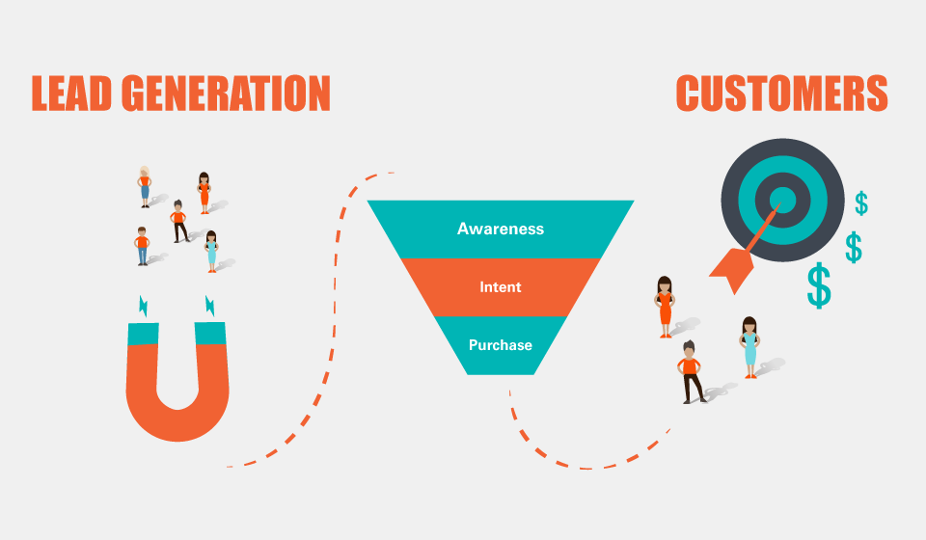
A funnel isn’t a diagram—it’s a system. And in Asia, it needs to be tighter, smarter, and more patient. Effective B2B Lead Generation for Asia requires a funnel built for longer trust cycles and multi-touch engagement.
At the top, focus on education. Content marketing, SEO, and targeted ads should position your brand as a credible authority. But generic content won’t cut it. Your content must address region-specific challenges and use cases.
In the middle, your job is to nurture. Lead magnets, webinars, and email sequences should deepen trust and demonstrate value. This is where many SaaS companies drop the ball—they push too hard, too early. In Asia, that kills momentum.
At the bottom, conversion depends on clarity and confidence. Your demos, proposals, and follow-ups must be localized, relevant, and responsive. Strong B2B Lead Generation for Asia doesn’t rush deals—it removes friction.
Automation plays a role, but it must be balanced with human interaction. Buyers want efficiency, but they also want reassurance. That means your funnel must feel both scalable and personal.
Companies that master this don’t just generate leads—they convert them consistently. And that’s where real growth happens.

Scale Faster with AI—But Don’t Lose the Human Edge
AI is a force multiplier—but only if used correctly. In the context of B2B Lead Generation for Asia, it’s not about replacing people. It’s about amplifying precision.
AI can help identify high-intent prospects, personalize outreach at scale, and optimize campaigns in real time. It can analyze behavior across markets and surface insights that would take teams weeks to uncover manually.
But here’s the catch: automation without localization fails. If your AI-driven campaigns ignore cultural nuance, tone, and context, they’ll feel robotic—and get ignored.
Smart SaaS companies use AI to enhance their B2B Lead Generation for Asia strategy, not replace it. They combine data-driven targeting with human-led messaging. They automate processes, not relationships.
Chatbots, predictive scoring, and automated outreach all have their place. But the companies that win are the ones that know when to step in manually—especially during critical decision stages.
AI gives you speed. Human insight gives you trust. You need both.

Measure What Matters, Then Scale What Works
Metrics without context are dangerous. In Asia, performance varies significantly by country, channel, and audience. That means your B2B Lead Generation for Asia strategy must be data-driven—but also market-aware.
Start with the fundamentals: cost per lead, customer acquisition cost, and conversion rates. But don’t stop there. Break performance down by region. What works in Singapore may fail in Indonesia. Treat each market as its own experiment.
A/B testing is non-negotiable. Messaging, creatives, channels—everything should be tested and refined continuously. The goal is not perfection. It’s progression.
Once you find traction in one market, expand strategically. Don’t scale blindly. Replicate what works, adapt what doesn’t, and build systems that can evolve with each new region.
Strong B2B Lead Generation for Asia is not about quick wins. It’s about building a repeatable engine—one that can generate, nurture, and convert leads across multiple markets without breaking.
Conclusion: Build Systems, Not Campaigns
Most SaaS companies approach Asia with campaigns. The ones that succeed build systems. That’s the real difference.
B2B Lead Generation for Asia is not a short-term play. It’s a long-term investment in understanding markets, building trust, and executing with precision. Every section of this guide points to the same truth: localization is not optional—it’s foundational.
If you want consistent growth, you need a strategy that adapts, a funnel that converts, and a system that scales. That’s how you move from experimentation to dominance.
And in Asia, dominance doesn’t come from being loud. It comes from being relevant, reliable, and relentlessly strategic.
