

AI Content Generation Singapore: 15 Strategies to Increase Traffic
June 10, 2026 at 11:27 am
AI Content Generation Singapore: Best Practices for Local Market Relevance
June 11, 2026 at 1:00 pm

By Marcus Tan | iSmart Communications
The traditional B2B lead capture experience has always been a little impersonal. A visitor lands on your website, spends a few minutes reading about your services, and then faces a choice: fill in a contact form and wait two business days for a response, or leave and continue their research elsewhere. Most choose the second option.
This is not a minor friction problem. It is a structural gap in the B2B buying journey, and it costs Singapore companies a measurable share of their qualified pipeline every single month.
Conversational marketing is the discipline that closes this gap. It replaces the passive, one-way contact form with real-time, two-way dialogue: AI-powered chatbots that engage website visitors the moment their intent is highest, WhatsApp Business conversations that meet buyers on the channel they use every day, and conversational AI platforms that qualify, nurture, and route leads with a speed and consistency that human teams cannot match at scale.
In Singapore’s B2B market, where WhatsApp penetration exceeds 85 percent of the adult population and where buyers expect the same quality of digital experience from vendors as they receive from consumer apps, conversational marketing has moved from a competitive advantage to a commercial necessity. This guide explains how it works, why it fits Singapore so well, and how to build a conversational marketing programme that generates real pipeline.

What Conversational Marketing Actually Means in a B2B Context
Conversational marketing is often conflated with chatbots, but the two are not the same thing. A chatbot is a tool. Conversational marketing is a strategy: the deliberate use of real-time, personalised, two-way communication to engage buyers at the right moment, qualify their intent, and move them toward a sales conversation faster than traditional lead capture methods allow.
Done well, conversational marketing operates across multiple channels and touchpoints simultaneously. On your website, an AI chatbot greets visitors, asks qualifying questions, surfaces relevant content, and routes high-intent prospects directly to a salesperson or booking page. On WhatsApp, automated sequences follow up on enquiries, deliver requested content, and keep prospects engaged between touchpoints. Through LinkedIn messaging, personalised sequences open conversations with target accounts identified through your ABM programme. Each channel is different, but the underlying principle is consistent: engage the buyer in dialogue rather than waiting for them to fill in a form.
The commercial logic is straightforward. Research consistently shows that the speed of response to an inbound enquiry is one of the strongest predictors of conversion. Responding to a lead within five minutes makes you 100 times more likely to reach them than responding after thirty minutes, and the probability of connecting drops dramatically with every passing hour. In Singapore’s competitive B2B market, where a buyer enquiring about your services is likely also enquiring with two or three competitors at the same time, the company that responds first with a relevant, personalised conversation has a structural advantage.
Conversational marketing solves the speed problem at scale. An AI chatbot never sleeps, never has a backlog, and never forgets to follow up. At 11pm on a Tuesday, when a Singapore procurement manager is doing research after the kids are in bed, your conversational system is there to engage them. Your competitors’ contact forms are not.
The Singapore Context: Why This Market Is Uniquely Well-Suited to Conversational Marketing
Singapore is one of the most digitally mature markets in Southeast Asia, and several characteristics of its B2B environment make conversational marketing particularly powerful here.
The most significant is WhatsApp. Singapore’s WhatsApp penetration rate is among the highest in the world. The platform is not just a consumer messaging app in this market: it is a core business communication channel, used daily by procurement managers, C-suite executives, and SME owners to conduct real business conversations. For Singapore B2B companies, this means WhatsApp Business is not a nice-to-have add-on to your lead generation programme. It is a channel where your buyers already are, already comfortable, and already expecting to transact.
The second factor is Singapore’s multicultural professional environment. Effective B2B communication here needs to work across Chinese, English, and Malay-speaking buyers, across industries from financial services and logistics to manufacturing and professional services. Modern conversational AI platforms handle multilingual conversations with increasing sophistication, allowing Singapore B2B companies to engage buyers in their preferred language without the overhead of separate human teams for each segment.
The third factor is the quality expectation. Singapore B2B buyers have high expectations of digital experience, shaped by the consumer apps they use every day. A slow, generic, impersonal contact form experience stands out negatively in this market in a way it might not elsewhere. Conversational marketing, when executed well, delivers the kind of responsive, personalised engagement that Singapore buyers have come to expect, which means it converts better here than in markets with lower digital experience baselines.
Finally, Singapore’s role as a regional hub for multinational corporations and regional headquarters means that many B2B buying decisions here involve multiple stakeholders across different geographies and time zones. Conversational marketing systems that can engage prospects asynchronously, follow up across time zones, and maintain conversation continuity over days or weeks are particularly well-suited to this buying reality.
The Three Core Channels of B2B Conversational Marketing in Singapore
A well-built conversational marketing programme in Singapore typically operates across three primary channels, each serving a different stage of the buyer journey and a different type of engagement.
Website chatbots and live chat. The website remains the central hub of most Singapore B2B companies’ digital presence, and it is where the majority of inbound lead capture happens. A well-configured AI chatbot on your website does several things simultaneously: it greets returning visitors with contextually relevant messages based on their browsing history, it asks qualifying questions that help route prospects to the right sales resource, it surfaces relevant case studies and content at the moment of maximum interest, and it captures contact details and books meetings without requiring a human to be available.
The key distinction between an effective B2B website chatbot and a frustrating one is the quality of its conversation design. The best implementations feel genuinely helpful rather than formulaic. They ask specific, relevant questions about the visitor’s situation. They acknowledge what the visitor has told them and respond accordingly. They know when to hand off to a human and how to make that transition smoothly. Getting this right requires careful mapping of your buyer journeys and investment in conversation design, not just platform configuration.
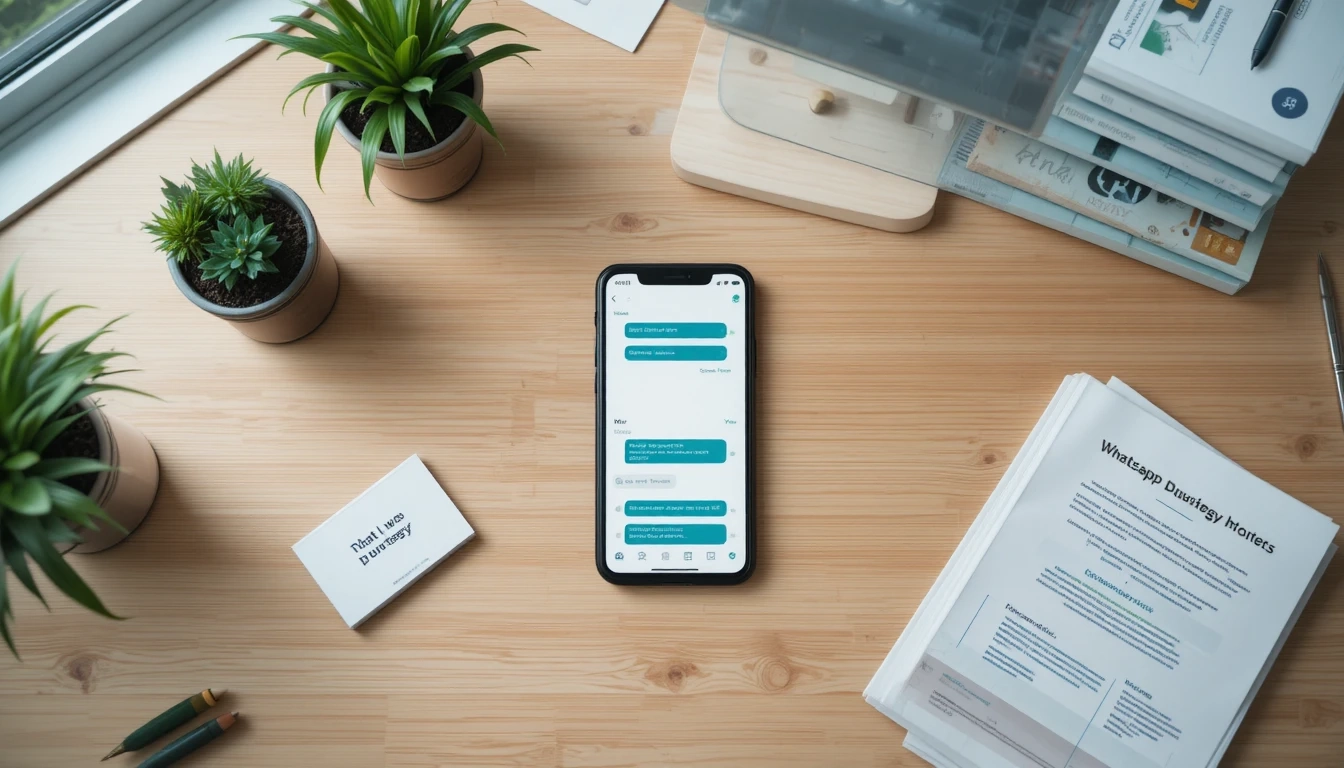
WhatsApp Business API. For Singapore B2B companies, WhatsApp Business is the single most underutilised channel in the conversational marketing stack. The WhatsApp Business API allows companies to send automated messages, build lead nurture sequences, and manage two-way conversations at scale, all within the app that Singapore decision-makers check dozens of times a day.
The practical applications are significant. A prospect who requests a whitepaper through your website can receive it instantly on WhatsApp, along with a personalised message from your BDR team. A lead who attended a webinar can receive a follow-up sequence over WhatsApp with relevant content and a meeting booking link. A target account identified through your ABM programme can receive personalised outreach through a channel that delivers dramatically higher open rates than email. WhatsApp messages in Singapore consistently see open rates above 90 percent: a figure that email marketers can only dream about.
The WhatsApp Business API requires approved business account status and integration with a business solution provider, which adds some setup complexity. But the commercial return in Singapore’s market justifies the investment substantially.
LinkedIn conversational ads and messaging. LinkedIn’s conversational ad format deserves more attention from Singapore B2B marketers than it typically receives. Rather than directing prospects to a landing page and a contact form, conversational ads open a direct LinkedIn message dialogue with the prospect, presenting them with options and pathways that feel like a natural conversation rather than a traditional ad experience.
When combined with LinkedIn’s precise targeting, this format allows Singapore B2B companies to initiate conversations with exactly the right decision-makers at their target accounts, at a scale that would be impossible to achieve through individual outreach. The conversations generated can feed directly into your CRM and sales sequences, making LinkedIn conversational ads an effective bridge between your social selling and paid demand generation programmes.

Integrating Conversational Marketing with Your Broader B2B Marketing Stack
Conversational marketing generates its strongest commercial returns when it is integrated with the rest of your marketing and sales infrastructure, rather than operating as a standalone tool. Here is what effective integration looks like in practice for Singapore B2B companies.
CRM integration. Every conversation your chatbot or WhatsApp system conducts should feed into your CRM in real time. Contact details, qualifying information, conversation history, and sentiment signals should all be captured and attributed correctly so that your sales team has full context when they pick up a conversation that the automated system has handed off. Disconnected systems create the worst conversational marketing outcome: a prospect who has already explained their situation to your chatbot and then has to explain it again to a salesperson who has no record of the earlier conversation.
Connection to marketing automation. Conversational touchpoints should trigger the appropriate automation workflows. A prospect who self-identifies as being at the evaluation stage during a chatbot conversation should be immediately enrolled in a mid-funnel nurture sequence, not re-entered into a top-of-funnel email flow. The qualifying data that conversational marketing captures is only valuable if your automation platform uses it to personalise the subsequent experience.
Intent data enrichment. For Singapore B2B companies running intent data programmes, conversational marketing creates a powerful feedback loop. Accounts showing intent signals can be prioritised for proactive conversational outreach, while the qualifying information captured in conversations enriches your intent data picture. A target account that shows third-party intent signals and then initiates a chatbot conversation on your pricing page is exhibiting a very clear buying signal: your sales team should know about it immediately.
Alignment with lead generation and paid campaigns. Conversational marketing performs significantly better when paid campaign traffic is directed to landing pages with active chat engagement rather than static forms. When a prospect clicks a LinkedIn ad or a Google search ad and lands on your website, the chatbot should greet them with messaging that is contextually aligned with the ad they clicked. This continuity of message, from ad to landing page to conversation, substantially improves conversion rates and reduces cost per lead.
Building and Measuring a B2B Conversational Marketing Programme in Singapore
Conversational marketing programmes are not built in a day, and the companies that generate the strongest returns from them have invested seriously in programme design, conversation quality, and measurement. Here is what a well-structured implementation looks like.
Start with your highest-intent pages. Do not try to deploy conversational marketing across your entire website simultaneously. Begin with the pages where visitor intent is highest: your pricing page, your contact page, your service-specific landing pages, and any pages with significant paid traffic. These are the pages where the opportunity cost of a passive contact form is greatest, and where a well-designed chatbot conversation will generate the most immediate commercial return.
Map your buyer journeys before configuring conversations. The most common mistake in chatbot implementation is treating it as a technology problem rather than a communication design problem. Before you configure any conversation flow, map the actual journeys your buyers take, the questions they have at each stage, the objections they face, and the content they find most useful. Your chatbot conversations should be built around these journeys, not around the default flows that come with your platform.
Define your qualification criteria clearly. Conversational marketing is most valuable when it qualifies leads before routing them to your sales team. This means defining clearly what a qualified lead looks like in your specific business context: company size, industry, budget range, decision-making authority, urgency. Your chatbot should be designed to surface these signals naturally in conversation, so that by the time a prospect reaches your sales team, the initial qualification work is already done.
Measure what matters. Conversational marketing programmes should be measured on pipeline and revenue outcomes, not on engagement metrics alone. The metrics that matter most are: conversation-to-meeting conversion rate, conversation-to-qualified-lead rate, average response time, and pipeline value attributable to conversational touchpoints. If your chatbot is having thousands of conversations but converting very few to qualified pipeline, the conversation design needs to be revised, not the volume increased.
Iterate continuously. The best conversational marketing programmes in Singapore are in a constant state of improvement. Review conversation transcripts regularly to identify where prospects drop off, what questions they ask that your chatbot cannot answer well, and what objections surface most frequently. These insights should feed directly into both your conversation design updates and your broader content and sales enablement programmes.

The AI Layer: What Generative AI Is Changing in Conversational Marketing
The conversational marketing landscape is being reshaped rapidly by generative AI, and Singapore B2B companies that understand these changes will be better positioned to build programmes that outperform their competitors.
The most significant shift is in conversation quality. Early chatbots operated on rigid decision trees: if the prospect said A, the chatbot responded with B. Generative AI has made it possible to build chatbot experiences that feel genuinely conversational, that can handle unexpected inputs gracefully, that can draw on your company’s entire knowledge base to answer specific questions, and that can personalise responses based on the context of the conversation so far.
This matters enormously for Singapore B2B companies because the quality bar for chatbot experience is rising. A chatbot that feels robotic or formulaic does not just fail to convert: it actively damages your brand in a market where professional reputation matters. A chatbot that feels genuinely helpful and intelligent, on the other hand, creates a positive first impression that gives your sales team a head start in every subsequent conversation.
Beyond conversation quality, generative AI is enabling new forms of personalisation in conversational marketing. AI systems can now analyse a prospect’s LinkedIn profile, their company’s recent news, and their behaviour on your website, and generate a genuinely personalised opening message that references something specific and relevant to them. This is a meaningfully different proposition from the generic “Hi, how can I help you today?” of first-generation chatbots, and it drives substantially better engagement rates.
The implication for Singapore B2B marketers is clear: the question is no longer whether to invest in conversational marketing, but how quickly to move from basic chatbot implementation to genuinely AI-powered conversational experiences. The companies that make this transition in 2026 will be operating with a significant structural advantage over those that do so in 2027 or later, because conversational AI systems improve with use. The data they collect, the conversations they have, and the refinements made along the way compound into a capability that becomes harder for later entrants to replicate.
Getting Started: What Singapore B2B Companies Should Do First
If you are a Singapore B2B company looking to build a conversational marketing capability, the following sequence will give you the strongest foundation.
Audit your current lead capture experience first. Sit with your highest-intent pages and experience them as a buyer would. How long does it take to get a response to a contact form submission? What happens if you visit at 9pm? What information do you have to give before you get anything in return? This audit will immediately reveal where conversational marketing can close the most significant gaps in your current buyer experience.
Choose your starting channel based on where your buyers are. For most Singapore B2B companies, the right starting point is either a website chatbot on high-intent pages or a WhatsApp Business integration for follow-up sequences. The choice depends on where your current lead volume is highest and where response speed has the greatest impact on conversion. For companies with significant inbound website traffic, the website chatbot comes first. For companies doing significant outbound sales and event-based lead generation, WhatsApp sequences often generate faster initial returns.
Invest in conversation design before platform selection. The platform you choose matters less than the quality of the conversations it enables. Before evaluating vendors, write out the key conversations you want your system to have with buyers at different stages, in different situations, with different levels of intent. This exercise will clarify your requirements and help you avoid the trap of choosing a platform that is technically capable but practically unsuited to the conversations your buyers need to have.
Conversational marketing represents one of the most significant opportunities available to Singapore B2B companies in 2026. The buyers are already on the channels. The technology is ready. The companies winning the most pipeline are already using it. The question is not whether to build this capability: it is how quickly you can do so before your competitors make the investment first.
If you would like to understand what a conversational marketing programme could look like for your specific business, our team at iSmart would be happy to walk you through what we have built for companies like yours. Book a free lead generation audit and let us show you where the biggest opportunities are in your current buyer journey.
