
How Can Your Business Scale B2B Lead Generation Across Asia?
March 4, 2026
Navigating the Shift: A Singapore Business’s AI Marketing Journey
March 5, 2026

The digital landscape in Asia is moving faster than most brands can keep up. Search engines are no longer an optional channel; they are the battleground. In markets like Singapore, Hong Kong, Malaysia, India, and beyond, organic visibility can make or break a business. As search behavior evolves, production expectations soar. That’s where AI Content Generation Singapore isn’t just a buzzword — it’s a core capability. When I talk to SEO leaders across Asia, the biggest bottleneck isn’t strategy. It’s scaling content without sinking budgets or slowing execution. Traditional content teams can’t churn high-quality, keyword-rich material across dozens of regional languages while also optimizing for search intent. Using AI Content Generation Singapore shifts that paradigm. These systems can draft pages, refine topic clusters, and generate localized variants in hours instead of weeks. But this isn’t about throwing tech at a problem and praying it works. The reality is grit: firms that win in organic search understand that technology drives velocity, but human insight drives accuracy. In Singapore’s crowded SEO ecosystem — where enterprises and nimble startups compete — extracting value from AI Content Generation Singapore means integrating it into a framework of strategic oversight, continual optimization, and performance measurement. Content volume alone isn’t enough; quality and relevance are non-negotiable. The smart players use AI to amplify their reach and then use analytics and human editing to ensure search engines and real people stay engaged. In Asia, where linguistic nuance matters, landing that balance is the key to visibility, authority, and growth.

How Search in Asia Breaks the Traditional SEO Playbook
If you’ve run SEO campaigns in the U.S. or Europe, you’ve likely relied on a relatively uniform set of signals: clear intent, stable language patterns, and predictable keyword behavior. In Asia, that framework collapses under weighty complexity. Search demand isn’t monolithic — it’s fractal. Markets like Singapore, with four official languages and a melting pot of cultural search habits, don’t behave like single-language environments. In this context, AI Content Generation Singapore becomes far more than an efficiency tool — it becomes a lens through which to interpret and translate diverse search intent at scale. Deploying AI Content Generation Singapore allows you to generate culturally attuned content drafts across multiple dialects, audience segments, and platforms with consistency. Yet, the real challenge isn’t generation; it’s relevance. Asian search engines — especially localized versions of Google, Baidu, and regional vertical search — reward contextual precision and semantic depth. People aren’t just typing keywords; they are asking questions shaped by local context, phrasing, and expectation. This means your content must go beyond literal translation and lean into local nuance, which pure automation alone cannot reliably deliver. That’s why best-in-class teams harness AI Content Generation Singapore as the engine for drafting and scaling, but then apply human expertise to refine language, anchor messaging in cultural frames, and tailor content architecture for local search patterns. When approached strategically, this combination enables SEO programs that are both agile and resonant — capable of winning rankings while truly serving diverse Asian audience needs.

The Tangible Wins Brands See With AI Content — No Hype, Just Results
Across Asia, brands investing in AI Content Generation Singapore are seeing measurable gains in their SEO performance — not because of some magic algorithm, but because they can operate at a scale and speed previously impossible. When you look at time-to-publish metrics, teams that embrace AI tools cut draft turnaround by 60–80%, freeing up subject matter experts to refine and enrich rather than write from scratch. That’s a direct win for agility. The impact on keyword coverage is equally striking. By feeding trained prompts into AI Content Generation Singapore engines, organizations expand their topical footprint across long-tail clusters, semantic variants, and localized search queries. This leads to broader rankings, deeper engagement, and more organic traffic. But the real proof is in the data: SEO campaigns executed with a hybrid human-plus-AI workflow often show improvements in click-through rates, dwell time, and conversion actions — because the content isn’t just optimized; it’s purposeful. It answers questions audiences actually care about. What separates winners from pretenders in this space is intentionality. Using AI Content Generation Singapore without a content strategy is like having a high-performance engine with no GPS. It generates speed, but not direction. Leading SEO teams set clear KPIs — ranking targets, audience intent profiles, and content resonance benchmarks — before letting AI generate drafts. Then they layer in editorial judgment, aligning output with brand voice, cultural norms, and local relevance. In competitive Asian markets, where SERPs can shift daily and search trends evolve contextually, the advantage of this disciplined application of AI Content Generation Singapore is that it turns output into impact — and impact into measurable business growth.

The Hard Truth: Where AI Content Falls Short If Left Untamed
Let’s be candid: technology alone doesn’t guarantee SEO success. AI Content Generation Singapore can produce volumes of text, but volume without value is noise — and search engines are smarter than ever at spotting it. One of the most common pitfalls is overreliance on AI to generate content without a strategic framework: brands end up with pieces that are keyword-dense but contextually thin, culturally tone-deaf, or even factually incorrect. In Asia’s linguistically rich environment, this is a critical risk. Nuance matters. A phrase that resonates in Manila might miss the mark in Kuala Lumpur; a keyword cluster in Singapore might carry different intent in Jakarta. Without rigorous human oversight, AI Content Generation Singapore algorithms can generate generic content that fails to capture local idioms, search intent subtleties, or cultural signals that influence engagement and conversions. Another challenge is quality control. AI doesn’t inherently understand brand tone, compliance requirements, or industry specifics. It doesn’t differentiate between an authoritative insight and a plausible-sounding guess. This makes human validation non-negotiable. Brands that treat AI as a replacement for subject matter expertise — rather than a multiplier of it — pay the price with weak engagement and missed rankings. Effective SEO is not just about filling pages with keywords; it’s about delivering relevance, trust, and authority. That requires editorial judgment, deep domain knowledge, and iterative refinement — things machines don’t inherently possess. The role of AI Content Generation Singapore should be to liberate human experts from repetitive tasks while elevating strategic output, not to replace expertise. When left untamed, AI content can erode credibility rather than build it, undermining the very objectives it was meant to accelerate.
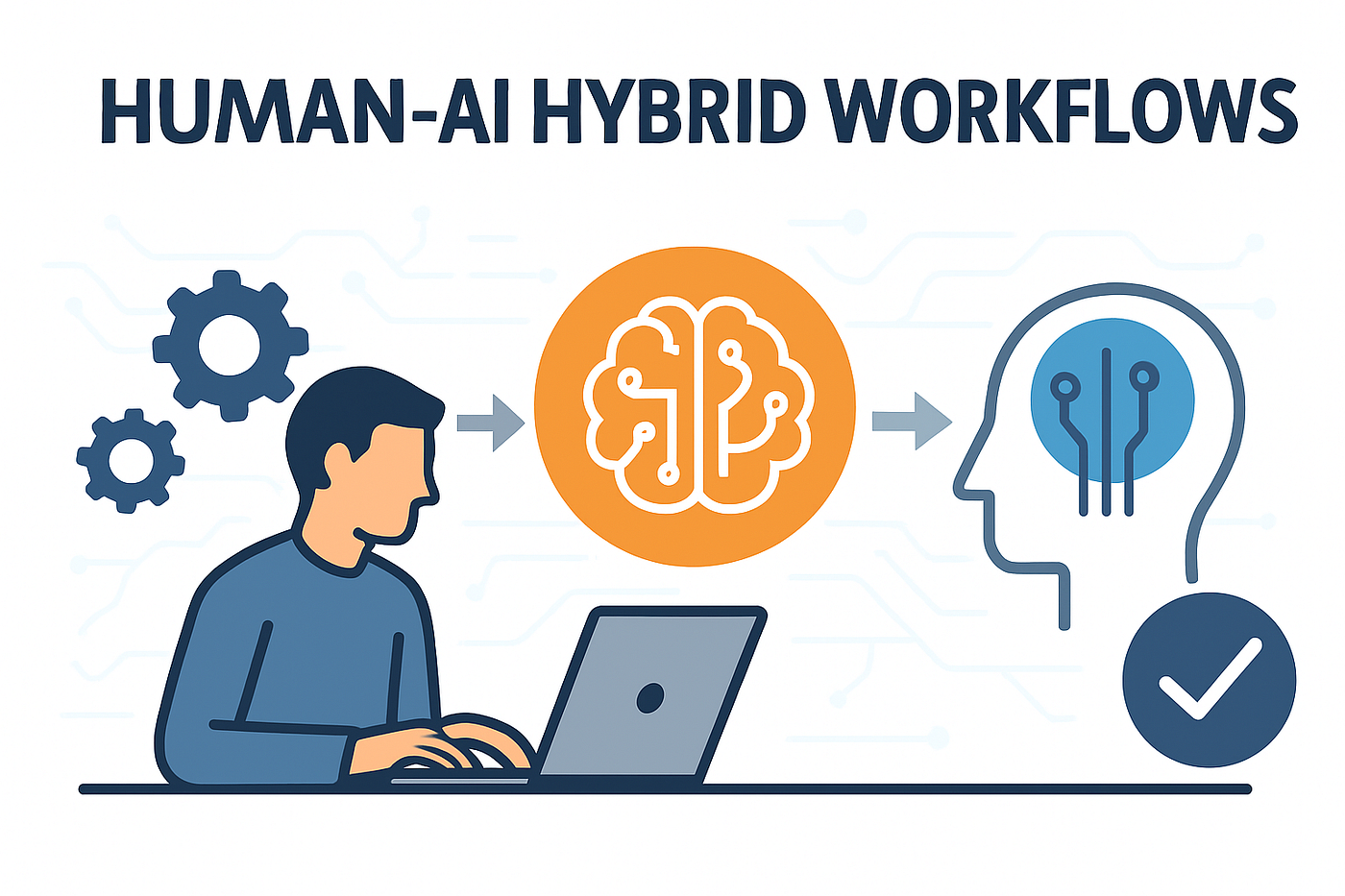
Hybrid Workflows: Where Human Strategy and AI Scale Converge
If the challenge with pure AI is lack of nuance, and the challenge with pure human output is scalability, then the solution is a hybrid approach. This is where AI Content Generation Singapore delivers its true power: it amplifies human intelligence without replacing it. At the core of hybrid workflows is this principle: AI generates and humans validate. You start by defining audience personas, search intent profiles, and outcome-linked KPIs. Then, using AI Content Generation Singapore, you create draft structures, topic clusters, and base content that covers core themes across regions, languages, and search signals. From there, human editors — especially those with local expertise — refine language, embed cultural context, and ensure that localized search nuances are respected. This process not only improves quality but also reduces time-to-publish significantly. Another advantage of hybrid workflows is dynamic optimization. AI tools can analyze performance data — such as engagement signals, bounce rates, and keyword movements — at a scale that humans can’t. They can then suggest iterative updates to existing content. Human strategists interpret those patterns and make judgment calls about what truly matters for business outcomes. In fast-moving Asian markets like Singapore, where consumer behavior shifts rapidly and search trends can change on a dime, this combination of automated scale and human intelligence is critical. It ensures that SEO efforts remain responsive, relevant, and aligned with both search intent and business goals.

Tactical Playbook: Best Practices for AI-Fueled Asian SEO
To extract real value from AI Content Generation Singapore, organizations need a disciplined playbook — not just access to impressive tools. The first rule is strategic prompt engineering. AI is only as good as the instructions it receives. Brands must craft prompts that reflect regional keyword priorities, cultural nuance, and desired style. Second, integrate AI into existing workflows instead of isolating it. For example, use it to generate outlines based on target keyword clusters, then assign those to writers or editors who bring local insight. Always enforce an editorial review process before publication. Third, anchor your AI content strategy to real data. Merge your SEO analytics with your AI workflows so that the content you generate isn’t based on assumptions about what users want — it’s grounded in what they actually search for. This includes recurring audits of search trends, SERP features, and competitor movement. Fourth, ensure compliance with linguistic and regulatory norms. Particularly in multilingual environments like Singapore, Malaysia, and Indonesia, translation mistakes can erode credibility. Cross-verify AI-generated translations with native speakers and subject matter experts. Fifth, prioritize unique value. Never publish AI content that merely replicates what’s already ranking; enrich it with insights, examples, or perspectives that differentiate your brand. Lastly, measure impact continuously — not just by rankings but by engagement, conversions, and business influence. When you apply these practices, AI Content Generation Singapore evolves from a content churning tool into a precision instrument for competitive advantage.
Conclusion: AI Content Isn’t the Answer — the Strategy Is
After grinding through realities, results, risks, and workflows, one truth stands out: AI Content Generation Singapore is a lever, not a strategy. It accelerates what you already know about your audience, search patterns, and brand voice — but it doesn’t replace the thinking that makes content meaningful in the first place. In the context of Asian SEO, where language diversity and cultural complexity are the norm, this distinction becomes existential. Brands that succeed will be those that marry the velocity of AI with the wisdom of human insight. They will use AI Content Generation Singapore to scale ideas and then refine those at a level of nuance that wins both search engines and human trust. Ultimately, effectiveness isn’t measured by how much content you produce — it’s measured by how well that content connects, converts, and contributes to business outcomes in diverse, competitive Asian markets. AI enables speed and breadth; strategy delivers depth and resonance. When these forces converge, the result is not just higher rankings, but sustainable growth, relevance, and authority.