

Asia’s Digital Future: Why AI Marketing Isn’t Just a Trend, It’s the New Baseline
April 15, 2026 at 4:27 pm
From Mumbai to Manila: The Real Impact of AI Marketing in Emerging Asian Economies
April 17, 2026 at 6:08 pm

Something fundamental has changed inside marketing teams across Asia—and it didn’t arrive with a press release. It slipped in quietly, embedded in tools, workflows, and expectations. Today, what used to take weeks now happens in hours. What used to require teams now requires systems.
Asia-Pacific isn’t just participating in AI adoption—it’s leading it. Over half of business leaders in the region are already using AI to automate workflows, outpacing global averages . This isn’t theoretical anymore. It’s operational.
The pressure driving this shift is simple: capacity. Around 84% of workers in the region report lacking time or energy to meet demands . AI fills that gap—not as a luxury, but as infrastructure.
This is where AI Content Generation Singapore becomes more than a trend. It’s a signal. A signal that markets like Singapore are not just adopting AI—they are operationalizing it faster than most.
The quiet revolution is not about replacing marketers. It’s about redefining what marketing teams are capable of. And the teams that understand this early are already pulling ahead.
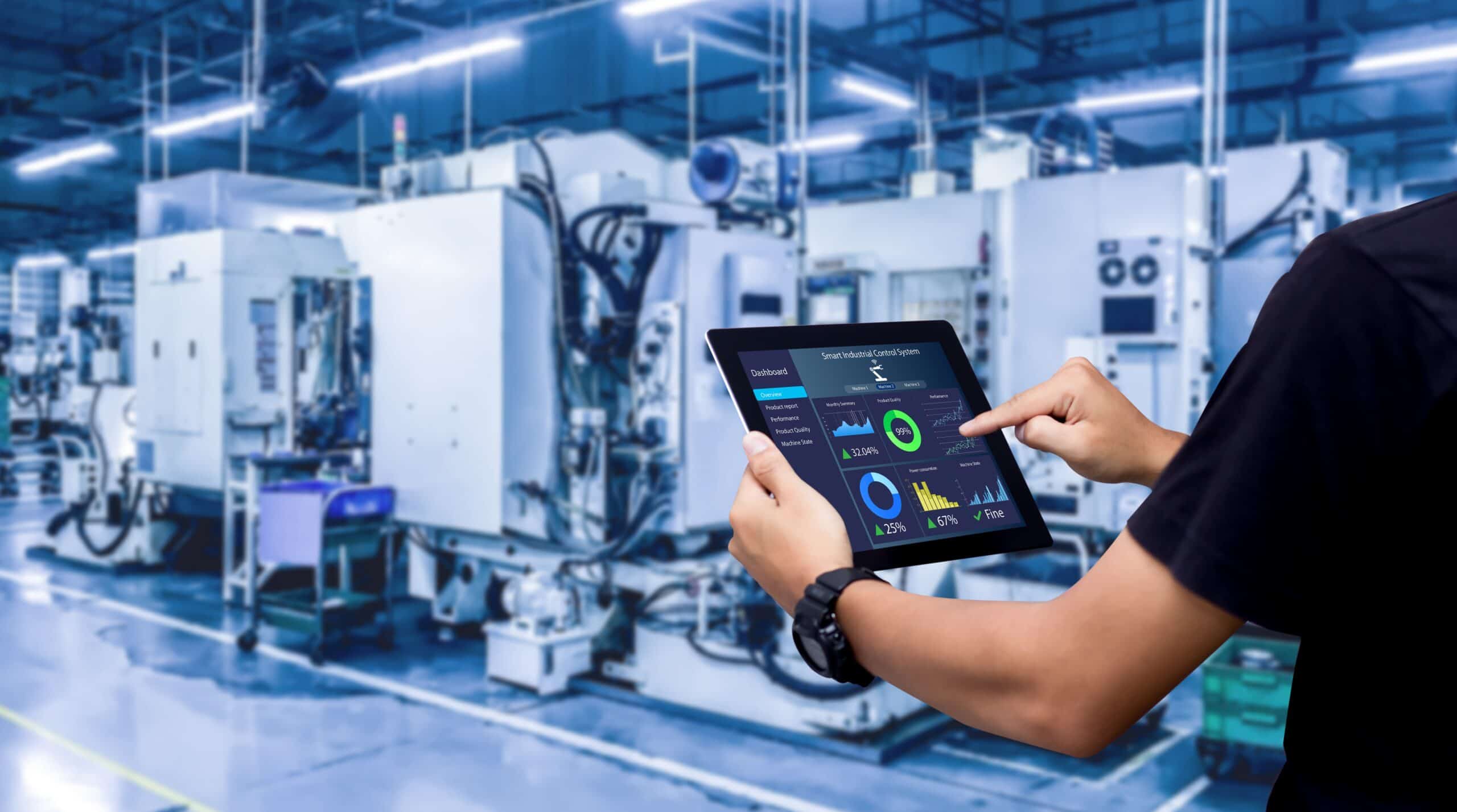
From Execution Factories to Strategic Control Centers
Marketing teams used to be execution engines—producing campaigns, writing content, managing channels. AI has disrupted that model completely.
Today, the execution layer is increasingly automated. Content drafts, campaign variations, performance reports—these are now generated in minutes. In fact, AI-driven marketing tools have significantly improved efficiency, enabling faster content production and real-time optimization across campaigns .
This is why AI Content Generation Singapore is becoming embedded into everyday workflows. It’s not about replacing human creativity—it’s about removing friction from execution.
The result? Marketing teams are shifting upward. Less time doing. More time deciding.
But there’s a catch. Many teams are still stuck in partial adoption. They use AI for isolated tasks—copywriting here, analytics there—but fail to integrate it into a cohesive system. This creates a dangerous illusion of progress.
The real transformation happens when AI is not a tool—but a layer across everything.
That’s the difference between teams experimenting with AI and teams being rebuilt around it.

Lean Teams, Massive Output: The New Performance Benchmark
The old assumption was simple: more output requires more people. AI has broken that equation.
Across Asia, lean marketing teams are now producing at levels that would have required entire departments just a few years ago. This is not anecdotal—it’s structural. AI enables smaller teams to scale content, campaigns, and insights simultaneously.
In Southeast Asia, adoption is accelerating rapidly, with some markets reporting AI usage rates as high as 93% in marketing-related functions . The implication is clear: scale is no longer tied to headcount.
This is where AI Content Generation Singapore becomes a force multiplier. One strategist, equipped with the right AI stack, can now operate like an entire content team.
But this efficiency creates a new pressure: differentiation.
When everyone can produce more, the advantage shifts from volume to clarity. From speed to strategy.
The teams that win are not the ones producing the most—but the ones producing with intent.

The Content Explosion—And the Strategic Void Beneath It
AI has solved one of marketing’s oldest problems: content scarcity. But in doing so, it has created a new one—content saturation.
Today, brands can generate blogs, ads, emails, and videos at scale. But scale without direction leads to noise. And noise does not convert.
Across Asia, marketers are rapidly adopting AI tools for personalization, targeting, and content creation . Yet many are discovering a hard truth: more content does not equal better marketing.
This is where AI Content Generation Singapore becomes a double-edged sword. It amplifies whatever strategy exists. If the strategy is weak, AI accelerates the weakness.
The real challenge is not generating content—it’s knowing what should be created in the first place.
Human judgment becomes more important, not less.
Because while AI can generate answers, it cannot define direction.

From Data Overload to Real-Time Intelligence
Marketing teams have always had data. What they lacked was the ability to act on it fast enough.
AI changes that.
Across Asia-Pacific, businesses are increasingly using AI to transform raw data into actionable insights—enabling faster decision-making and real-time personalization . Campaigns are no longer reactive. They are adaptive.
Consumers are evolving alongside this shift. Around 38% of APAC consumers already use AI in their buying process, influencing decisions at scale . This means marketing is no longer just data-driven—it is AI-mediated.
This is why AI Content Generation Singapore is tightly connected to analytics. Content is no longer created in isolation. It is generated based on signals, patterns, and predictions.
The marketing loop—analyze, optimize, execute—is compressing into a continuous cycle.
Speed is no longer a competitive advantage. It’s the baseline.

The New Marketer: Hybrid, Technical, Strategic
The profile of a marketer is changing faster than most organizations can keep up.
The modern marketer is no longer just a communicator. They are part strategist, part technologist, part systems thinker.
In Asia-Pacific, this shift is already visible. Employees increasingly view AI as a “thought partner” rather than just a tool . That mindset changes everything.
To operate effectively, marketers now need to understand:
- How to prompt AI systems
- How to design workflows across tools
- How to interpret AI-generated insights
- How to maintain brand voice at scale
This is where AI Content Generation Singapore becomes a skill, not just a solution. Knowing how to use AI is no longer enough. Knowing how to orchestrate it is what separates average teams from elite ones.
The uncomfortable truth is this: many marketers are still trained for a world that no longer exists.
And the gap is widening.
Adapt or Fade: The Reality Facing Marketing Teams
The quiet revolution is no longer quiet if you know where to look.
AI is not replacing marketing teams—but it is redefining what a marketing team looks like. Smaller, faster, more strategic. Less execution, more orchestration.
But adoption alone is not enough. Across Southeast Asia, only about 18% of companies have moved beyond experimentation into full AI integration . The rest are stuck in limbo—aware of the opportunity, but unable to operationalize it.
This is the dividing line.
On one side: teams using AI occasionally.
On the other: teams built around it.
This is why AI Content Generation Singapore represents more than a capability—it represents a strategic direction.
The future of marketing in Asia will not be decided by who uses AI.
It will be decided by who builds their entire system around it.
And by the time it becomes obvious, it will already be too late to catch up.
