

Beyond Efficiency: How AI Can Help Marketing Teams Discover New Revenue Opportunities
October 27, 2026 at 3:43 pm
AI Marketing Budget Allocation: How to Invest Where Growth Is Most Likely
October 28, 2026 at 11:47 pm

Asia presents enormous opportunities for B2B companies looking to expand their customer base, enter new markets, and build sustainable revenue streams. But opportunity alone does not guarantee growth. A prospecting strategy that generates meetings in Singapore may struggle to produce the same results in Indonesia, Japan, Thailand, or India. The reason is simple: buyers do not make decisions in exactly the same way, and businesses cannot expect a single outreach strategy to work everywhere.
Each market has its own commercial realities, communication preferences, competitive pressures, and expectations around trust. Some buyers prioritise efficiency, measurable outcomes, and clear commercial value. Others may place greater emphasis on established relationships, credibility, internal consensus, or long-term supplier partnerships. Understanding these differences is essential for any company serious about regional growth.
This is where artificial intelligence can change the way businesses approach prospecting. AI-powered B2B lead generation helps marketing and sales teams analyse company data, identify promising accounts, detect buying signals, and tailor outreach to specific audiences. Instead of relying on broad contact lists and repetitive messages, businesses can develop more focused strategies based on evidence and market context.
However, technology is not a substitute for understanding people. AI can process information at scale, but businesses still need human judgment to interpret cultural nuances, validate insights, and build meaningful relationships.
For companies pursuing regional expansion, B2B Lead Generation for Singapore can serve as part of a broader strategy for identifying qualified prospects and connecting with relevant business opportunities across Asia. The objective is not simply to generate more leads. It is to find the right buyers, understand what matters to them, and create conversations that can eventually produce revenue.
One of the most common mistakes in regional B2B prospecting is treating Asia as a single, unified audience. The region contains vastly different economies, industries, business structures, and purchasing environments. A prospecting strategy built around Singapore’s business ecosystem may need substantial adjustments before it can work effectively in Vietnam, Japan, Indonesia, or India.
Singapore, for example, is an important regional headquarters location where many international companies coordinate their operations across Southeast Asia. Buyers may be accustomed to evaluating suppliers through structured proposals, professional networking, and clearly defined business outcomes. In other markets, purchasing decisions may involve different approval processes, more extensive relationship-building, local procurement requirements, or additional stakeholders.
These differences influence everything from the ideal customer profile to the first outreach message. A company selling marketing automation software, for instance, should not assume that every business in the region has the same digital maturity, budget, or readiness to adopt new technology. A prospect operating in a mature technology environment may be looking to improve efficiency, while another business may still be evaluating how automation fits into its existing operations.
AI can help businesses make these distinctions more visible. By analysing firmographic information, industry classifications, company websites, hiring activity, expansion announcements, and other legitimate business signals, AI tools can help identify which markets contain the strongest opportunities. This information can then support more precise segmentation and prioritisation.
Nevertheless, market intelligence must be validated. Public information may be outdated, incomplete, or misleading, particularly in markets where reliable company data is harder to obtain.
For businesses investing in B2B Lead Generation for Singapore, the same principle applies to regional expansion: understand the commercial environment before scaling outreach. A smaller, well-researched prospect list can be far more valuable than thousands of contacts selected without a clear understanding of their needs.
Use AI to Find Buyers Who Actually Have Potential
A large database does not automatically create a strong sales pipeline. Many businesses still measure prospecting success by the number of contacts collected, emails sent, or names added to a CRM. These metrics may indicate activity, but they do not necessarily reveal whether the company is reaching buyers who have a genuine reason to purchase.
Effective B2B lead generation begins with a clear understanding of the ideal customer profile. This includes the industries a business serves, the size of companies it can support, the problems its offering solves, and the commercial conditions that make a prospect more likely to buy.
AI can strengthen this process by analysing multiple data points simultaneously. Instead of filtering prospects only by job title or company size, businesses can combine firmographic information with relevant buying signals, such as regional expansion, new department formation, technology investment, or recruitment for roles associated with a specific business need.
For example, a marketing agency targeting companies expanding across Southeast Asia might prioritise organisations opening new regional offices, hiring demand-generation specialists, or investing in international sales operations. These signals do not guarantee buying intent, but they provide a stronger starting point for research than an arbitrary contact list.
Predictive lead scoring can further help sales teams prioritise accounts based on their similarity to previous successful customers, observed engagement, and other relevant indicators. The model should be evaluated against actual sales outcomes rather than accepted simply because it produces a numerical score.
Regional differences also matter. A scoring model developed for Singapore may not perform equally well in another market if purchasing cycles, company data availability, or customer characteristics differ. Businesses should test their models by market and refine their criteria as reliable evidence accumulates.
A disciplined B2B Lead Generation for Singapore strategy should therefore focus on prospect quality, not database size. AI becomes valuable when it helps teams spend more time on accounts with a credible business fit and less time chasing contacts that were never likely to convert.
Personalize Outreach Without Losing Your Brand Voice
Generic outreach is easy to produce and even easier to ignore. When buyers receive messages that could have been sent to any company in their industry, they have little reason to respond. The problem becomes more pronounced when businesses enter multiple Asian markets and assume that translating an existing email is enough to make it relevant.
Effective personalisation starts with understanding the prospect’s business situation. A manufacturing company exploring operational automation has different priorities from a professional services firm trying to improve its pipeline or a technology company expanding into new territories. Their challenges, buying criteria, and expectations of a potential supplier will differ accordingly.
AI can help sales and marketing teams adapt their messaging to these differences. It can summarise public company information, identify relevant business challenges, propose industry-specific value propositions, and generate variations for different decision-makers. A chief executive may care about revenue growth and strategic risk, while a marketing director may focus on lead quality, campaign efficiency, and conversion rates.
Cultural awareness is equally important, but it requires more than inserting local phrases or translating a subject line. Communication preferences vary among individuals and organisations, even within the same country. Some buyers prefer concise, direct messages. Others expect a more formal introduction, stronger evidence of credibility, or additional context before engaging with an unfamiliar supplier.
AI-generated outreach should therefore be reviewed for accuracy, tone, and relevance. A message that references an incorrect company initiative or assumes a business problem that does not exist can damage credibility instead of building it. Personalisation must be grounded in verifiable information rather than invented familiarity.
Businesses can also test different approaches across markets, measuring positive replies, qualified meetings, and subsequent sales opportunities instead of relying on email opens alone.
For companies developing B2B Lead Generation for Singapore, the goal is to combine automation with genuine relevance. AI should reduce the time required to research and personalise outreach, while human judgment ensures that every message communicates a clear reason for starting a conversation.
Choose Prospecting Channels Based on Buyer Behaviour
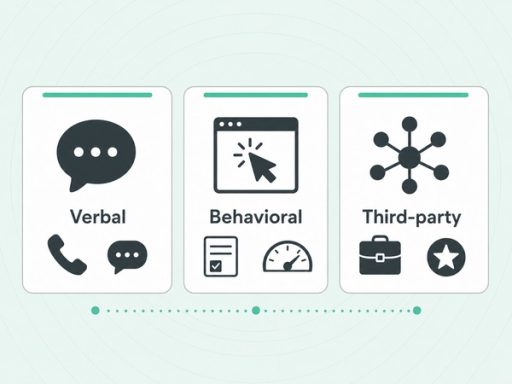
Even a well-written message can fail when it reaches the right person through the wrong channel. B2B buyers discover suppliers, evaluate credibility, and communicate with potential partners through different combinations of email, professional networks, industry events, referrals, webinars, and local business communities.
The right channel depends on the market, industry, seniority of the buyer, and complexity of the purchase. LinkedIn may be useful for identifying professional contacts and researching companies, while email can support structured outreach and ongoing communication. Industry conferences, trade associations, and local networking events may be particularly valuable when buyers need to evaluate a supplier’s credibility before entering a commercial discussion.
Businesses should avoid assuming that a channel performs equally well across every country. Platform usage, professional networking habits, accessibility, and local business practices can influence engagement. Research is necessary before allocating significant resources to any particular channel.
AI can help identify patterns in campaign data. By comparing qualified replies, meeting bookings, pipeline contribution, and conversion rates across channels, businesses can determine where their efforts are producing meaningful results. AI can also help coordinate activities, such as recommending a follow-up after a prospect attends a webinar or interacts with relevant content.
The objective is to build a connected prospecting system rather than operate isolated campaigns. A prospect might first encounter a company through an educational article, later receive a personalised email, and eventually arrange a meeting after reviewing a relevant case study. Each interaction should provide value and move the relationship forward.
Automation must still be used responsibly. Businesses should consider applicable privacy laws, direct-marketing requirements, consent obligations, and platform rules before collecting information or initiating outreach. Regional campaigns require careful attention to local compliance rather than a single set of assumptions.
A strong B2B Lead Generation for Singapore programme should connect channel selection to buyer behaviour and measurable business outcomes. More messages across more platforms do not necessarily create better results. The real advantage comes from reaching the right people through channels they are comfortable using, with information that deserves their attention.
Turn Initial Interest Into Lasting Business Relationships
Generating an initial response is only the beginning of the sales process. Many B2B purchases involve several stakeholders, internal evaluations, budget discussions, and competing priorities. A prospect who expresses interest today may not be ready to purchase for weeks or months. Without a thoughtful nurturing strategy, businesses risk losing promising opportunities simply because they follow up too aggressively, too infrequently, or with irrelevant information.
AI can help marketing and sales teams organise this process around each prospect’s needs and level of engagement. By analysing CRM records, previous interactions, content engagement, and sales feedback, AI-assisted systems can help recommend suitable next steps. These might include sharing an educational resource, inviting a prospect to a webinar, providing a relevant case study, or arranging a more detailed discussion.
The key is to make each interaction useful. A prospect evaluating a new marketing platform may benefit from information about integration requirements, implementation challenges, or expected commercial outcomes. A company exploring regional expansion may need guidance on market selection, local demand, and how to reach decision-makers. Repeating the same promotional message does little to address these different concerns.
Buyer behaviour should also influence the pace of follow-up. Some prospects may welcome a direct invitation to discuss their requirements, while others need more time to evaluate options internally. AI can help teams recognise engagement patterns, but these patterns should guide decisions rather than trigger automatic pressure.
CRM integration is essential to maintaining continuity. When marketing and sales share accurate records, teams can see which content a prospect has received, what questions have been raised, and whether a conversation is already underway. This reduces duplicate outreach and helps ensure that communications remain consistent.
For companies pursuing B2B Lead Generation for Singapore, effective nurturing means treating leads as potential business relationships rather than entries in a spreadsheet. AI can help teams maintain timely, relevant communication at scale, but trust is built through honest information, dependable follow-through, and a clear understanding of what the buyer needs.
Measure What Creates Revenue, Not Just Activity
A prospecting campaign can generate thousands of contacts, hundreds of email responses, and a steady stream of meetings while contributing very little to actual revenue. This is why businesses need to look beyond surface-level activity and evaluate whether their AI-driven lead generation is attracting qualified buyers and creating commercially valuable opportunities.
The first step is to establish clear performance indicators. Depending on the sales model, these may include positive reply rate, qualified lead rate, meeting-to-opportunity conversion, cost per qualified lead, sales pipeline contribution, customer acquisition cost, and eventual revenue generated. Tracking these metrics together provides a more complete picture than measuring lead volume alone.
Regional analysis is particularly important when operating across Asia. A market with a longer sales cycle may appear weaker in the early stages of a campaign even when its opportunities have strong long-term potential. Another market may produce a high volume of responses but few qualified meetings. Comparing these markets without accounting for their differences can lead to poor budget decisions.
AI analytics can help uncover patterns in prospect quality, outreach performance, and conversion behaviour. For instance, a campaign may reveal that a particular industry segment produces fewer replies but significantly more qualified opportunities. Another may show that prospects from a specific company size respond well to educational content before accepting a sales meeting.
These insights should inform practical adjustments to targeting, messaging, channel selection, and follow-up. Businesses should also monitor the accuracy of their lead-scoring models and investigate whether certain markets or company types are consistently misclassified.
Reliable measurement depends on clean data and alignment between marketing and sales. Teams need shared definitions of a qualified lead, consistent CRM records, and feedback on what happens after a prospect is handed over to sales.
A performance-focused B2B Lead Generation for Singapore strategy should ultimately connect prospecting activity to pipeline quality and commercial results. AI is not valuable simply because it automates work. Its value lies in helping businesses make better decisions, allocate resources more intelligently, and improve the likelihood that marketing activity becomes sustainable revenue.
Conclusion
Expanding B2B prospecting across Asia requires more than a larger contact database or a more sophisticated automation platform. It requires a clear understanding of local markets, the ability to identify genuine business opportunities, and the discipline to adapt outreach according to buyer needs. Companies that ignore these fundamentals may scale their activity without improving their results.
AI offers a practical way to bring greater precision to this process. It can help teams analyse company data, prioritise promising accounts, recognise relevant buying signals, personalise communication, coordinate follow-ups, and evaluate campaign performance. When these capabilities are connected to a well-defined sales strategy, businesses can spend less time on low-value tasks and more time developing meaningful commercial opportunities.
However, AI should strengthen human expertise, not replace it. Cultural understanding, relationship-building, commercial judgment, and trust remain essential in B2B sales. A prospecting system is only as effective as the quality of its underlying data, the relevance of its messaging, and the decisions people make using its insights.
The most practical approach is to start with a focused group of target markets. Define the ideal customer profile, research local buying behaviour, test a small number of channels, and establish clear performance benchmarks. Use the results to refine the strategy before expanding into additional markets. This approach reduces unnecessary complexity and creates a stronger foundation for regional growth.
For organisations looking to improve B2B Lead Generation for Singapore while reaching relevant business audiences across Asia, combining AI-powered targeting with market-specific execution can create a more disciplined path to growth.
Ultimately, successful prospecting is not about contacting the most people. It is about understanding which buyers matter, why they might need your solution, and how to earn the opportunity to work with them. AI can help businesses find that path more efficiently. The responsibility to make every interaction relevant, credible, and commercially meaningful remains firmly with the people behind the strategy.
