

AI Marketing Budget Allocation: How to Invest Where Growth Is Most Likely
October 28, 2026 at 11:47 pm

For years, B2B lead generation has been driven by a familiar objective: generate more leads, fill the database, and pass as many contacts as possible to the sales team. On paper, the strategy looks productive. Marketing reports impressive acquisition numbers, campaigns generate clicks, and contact lists continue to grow. Yet revenue does not always follow. Sales representatives spend hours chasing unresponsive prospects, qualifying unsuitable companies, and following up with decision-makers who have no immediate intention of buying.
The problem is not necessarily a shortage of leads. It is the failure to distinguish potential customers from prospects who are genuinely moving towards a purchasing decision.
Buying readiness changes the equation. Instead of treating every contact as an equally valuable opportunity, businesses examine whether a prospect has a relevant business problem, the authority to influence a decision, the resources to consider a solution, and a reason to act within a particular timeframe. These factors provide a more meaningful foundation for prioritising sales activity.
Artificial intelligence can strengthen this approach by analysing patterns across customer interactions, CRM records, website behaviour, and campaign engagement. Rather than relying exclusively on static criteria, AI-powered systems can help identify prospects whose combined activities suggest a stronger likelihood of progressing through the sales pipeline. These signals are not guarantees of future purchases, but they can help teams make better-informed decisions.
For companies competing in Singapore’s demanding B2B environment, this distinction matters. Effective B2B Lead Generation for Singapore requires more than building a large prospect database. It requires understanding which businesses have relevant needs, which decision-makers are actively exploring solutions, and when a meaningful conversation is most likely to happen.
The objective is not to eliminate prospecting. It is to make prospecting more intelligent. When marketing teams prioritise buying readiness alongside customer fit, they can reduce wasted effort, improve lead quality, and create a pipeline built around genuine commercial opportunities rather than impressive-looking numbers.
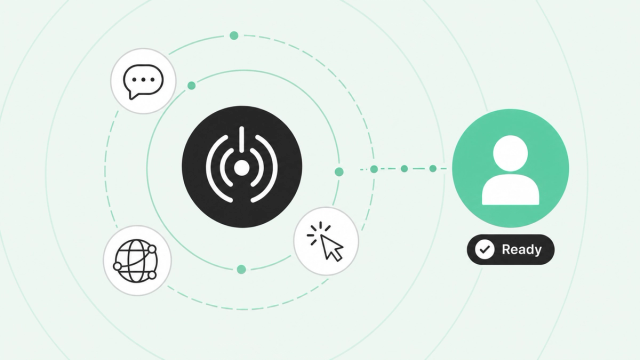
Read the Signals Behind the Sale Before Your Competitors Do
Buying readiness rarely announces itself in a single, obvious moment. A prospect may not request a consultation today, but their behaviour could reveal that a business problem is becoming harder to ignore. They might revisit a service page, compare different solutions, attend a webinar, download an industry report, or begin researching implementation costs. Individually, these actions offer limited insight. Together, they can help reveal a more meaningful picture of purchasing interest.
This is where AI-powered lead generation becomes valuable. AI systems can analyse patterns across multiple data sources, helping marketers identify changes in engagement that deserve closer attention. They can consider how recently a prospect interacted with a business, which content attracted their interest, and whether similar patterns appeared among customers who eventually purchased.
For example, a Singapore-based company that repeatedly explores B2B lead generation services, reviews case studies, and submits a detailed enquiry may warrant more immediate attention than a contact who downloaded a general marketing guide months ago. However, even repeated engagement should not automatically be interpreted as a buying decision. Competitors, researchers, and existing customers can display similar behaviour.
A stronger B2B Lead Generation for Singapore strategy combines first-party behavioural data with company information, relevant business developments, and direct qualification. Signals such as a new leadership appointment, expansion into another market, or recruitment for a role associated with a particular business challenge may provide additional context when verified and relevant.
The key is to assess signals according to their strength, freshness, and reliability. A direct request for a proposal is generally more actionable than an isolated website visit. A series of recent interactions may be more informative than a single old engagement record.
AI should therefore help teams recognise patterns, not pretend to read minds. Businesses that interpret buying signals carefully can approach prospects with better timing, more relevant messages, and a clearer understanding of why a conversation may be worthwhile.

Turn Lead Scoring Into a Practical System for Prioritizing Opportunities
A lead scoring model is only useful when it helps a business make better decisions. Assigning points to website visits and email clicks may create an impressive-looking dashboard, but a high score means little if the prospect has no genuine need, lacks purchasing influence, or operates outside the company’s target market.
Traditional scoring systems often depend on fixed rules. A webinar registration might receive five points, a content download another ten, and a consultation request twenty. These rules are easy to understand, but they can oversimplify buyer behaviour. AI-assisted scoring can analyse historical conversion patterns to identify combinations of characteristics and activities associated with successful opportunities.
A practical model should begin with three dimensions: fit, intent, and engagement. Fit measures whether a company matches the ideal customer profile. Intent examines evidence that the organisation may be considering a relevant solution. Engagement evaluates the prospect’s interactions with the business. Recency and negative signals should also influence prioritisation.
For example, an ideal-fit company with little recent activity may belong in a nurturing programme. A similarly qualified company that requests a consultation and explains an urgent operational challenge may deserve immediate sales attention.
For B2B Lead Generation for Singapore, this approach can help businesses distinguish between organisations worth monitoring and prospects who merit direct engagement. The exact scoring weights should be based on historical sales outcomes, not arbitrary assumptions or universal formulas.
Equally important, the score must lead to a defined action. High-priority prospects might be routed to sales for prompt follow-up, developing opportunities could receive targeted educational content, and unsuitable leads could be excluded from active campaigns.
Sales representatives should retain the ability to challenge a score when conversations reveal information the model cannot see. Budget constraints, internal approval processes, contract renewals, and changing business priorities can all affect purchasing timelines.
Ultimately, AI scoring should improve human judgement rather than replace it. The real achievement is not assigning every lead a number. It is helping the team decide who to contact, when to engage, and what evidence justifies the next step.
Connect Your Data Before Expecting AI to Deliver Better Leads
Many businesses already possess valuable information about their prospects. Website analytics reveal browsing patterns. Email platforms track campaign interactions. CRM systems contain sales histories. Marketing automation tools record responses to campaigns, while sales representatives gather important details during conversations.
The problem is that these insights often remain scattered across disconnected systems. Marketing may see an engaged contact, while sales sees an incomplete CRM record. A prospect might have requested information previously, but that context disappears when another team member follows up. In such circumstances, adding AI does not automatically create a smarter pipeline. It can simply accelerate an existing problem.
A more effective approach begins with connecting the information that genuinely supports qualification. Businesses should establish consistent contact and account records, remove duplicates, standardise key fields, and agree on how interactions and sales outcomes are recorded. They should also establish appropriate permissions and safeguards for personal and business data.
Once the foundations are in place, AI can help combine behavioural information with company characteristics and historical outcomes. This gives marketing and sales a more complete view of the account, including how engagement has changed and which actions might be appropriate next.
For companies pursuing B2B Lead Generation for Singapore, connected data is particularly valuable when multiple stakeholders influence a purchasing decision. A marketing manager may explore a solution first, while a finance leader evaluates costs and an executive approves the investment. Looking at only one contact can obscure the broader buying process.
Teams should also agree on qualification standards. Marketing-qualified leads, sales-qualified leads, and accepted opportunities need clear definitions that both departments understand. Sales feedback must return to marketing so the organisation can learn which leads actually progress.
This is not glamorous work. Cleaning records, correcting processes, and resolving integration issues rarely attract the same attention as launching a new AI tool. Yet these fundamentals determine whether the technology can produce useful recommendations.
AI performs best when it has reliable information, clear objectives, and a practical route from insight to action. Better data creates the conditions for better decisions, and better decisions create the foundation for a stronger pipeline.
Make Every Outreach Message Match the Buyer’s Stage
One of the most common mistakes in B2B marketing is treating every prospect as if they are ready for a sales conversation. A person researching industry challenges may need education before considering a solution. Someone comparing providers may want evidence, pricing information, and implementation details. A decision-maker who has requested a proposal, however, may expect a direct response and a clear next step.
Sending the same message to all three creates unnecessary friction. The first prospect may feel pressured, the second may receive insufficient detail, and the third may lose interest because the response fails to address an immediate need.
AI can help businesses adapt outreach to the prospect’s likely stage of readiness. By analysing available engagement history, account characteristics, and previous interactions, AI-assisted systems can recommend relevant content, suggest follow-up timing, and help sales teams personalise communications. Marketing automation can then deliver suitable educational material to prospects who are not yet ready for direct engagement.
For example, a company exploring B2B Lead Generation for Singapore for the first time might benefit from an article explaining how to improve lead quality. A prospect comparing agencies may respond better to a clear explanation of service scope, qualification methods, and reporting processes. A qualified buyer with a defined timeline may prefer a consultation focused on business objectives and implementation requirements.
The distinction is not simply about changing a person’s name in an email template. Effective personalisation demonstrates an understanding of the prospect’s business situation and provides information that helps them make progress.
However, personalisation must remain grounded in evidence. AI should not invent business challenges, assume that a website visit confirms purchase intent, or make intrusive references to behavioural data. Every message should offer a legitimate reason for contact and a useful next step.
Businesses should also monitor whether personalised outreach improves meaningful outcomes, including qualified replies, meetings, opportunities, and eventual conversions. Higher email activity alone does not prove that a strategy is working.
The objective is to make every interaction more relevant. When the message matches the buyer’s needs and timing, sales teams can build trust earlier, reduce unnecessary follow-ups, and create a more natural path from initial interest to commercial discussion.
Measure Pipeline Quality, Not Just the Number of Leads Generated
A pipeline filled with unqualified contacts can make a marketing campaign look successful while concealing serious commercial weaknesses. Lead volume is easy to count, but it does not reveal whether prospects have a genuine need, whether sales representatives can convert them, or whether the resulting opportunities will generate profitable revenue.
Businesses need to measure what happens after a lead enters the system. The first question is whether marketing-qualified leads are accepted by sales. The next is how many progress into genuine opportunities. From there, teams should examine win rates, sales cycle duration, acquisition costs, and the value of opportunities created.
For B2B Lead Generation for Singapore, these measures can help organisations understand whether their targeting and qualification processes are attracting the right companies. If lead volume increases while opportunity conversion declines, the campaign may be attracting attention without reaching enough suitable buyers. If fewer leads generate more qualified opportunities, the strategy may be improving even though the headline volume is lower.
AI can support this analysis by identifying patterns in conversion outcomes, highlighting weak stages in the funnel, and helping teams investigate which prospect characteristics correlate with stronger results. These findings should be treated as evidence to test rather than unquestionable explanations of success.
Businesses should establish a baseline before changing their lead generation process. They can then compare performance over a meaningful period, accounting for differences in sales cycles, campaign sources, customer segments, and opportunity value. Where possible, controlled experiments can help determine whether a new scoring or outreach approach contributes to better outcomes.
It is also important to examine false positives and missed opportunities. If highly scored leads consistently fail to convert, the model may be overvaluing weak signals. If promising buyers receive low scores, the model may be overlooking important characteristics or relying on incomplete data.
Ultimately, the strongest measurement framework connects marketing activity to commercial results. AI should help businesses understand not only how many prospects enter the pipeline, but also how effectively those prospects progress towards revenue.
Conclusion
The future of B2B lead generation is not about contacting every possible prospect or automating more messages than the competition. It is about recognising where meaningful opportunities exist, understanding what buyers need, and responding when the conditions for a productive conversation are strongest.
AI can help businesses make this shift by connecting customer data, identifying behavioural patterns, improving lead prioritisation, and supporting more relevant communication. Yet technology alone cannot create a reliable sales pipeline. Businesses still need a clear ideal customer profile, trustworthy data, realistic qualification criteria, and a sales team capable of understanding the commercial context behind each opportunity.
For companies investing in B2B Lead Generation for Singapore, the starting point should be an honest assessment of the current process. Are sales representatives spending too much time pursuing unsuitable prospects? Are qualified leads receiving follow-up too late? Do marketing and sales teams agree on what makes an opportunity valuable? Can the business identify why certain leads convert while others disappear?
These questions reveal where AI can make a practical difference. A company struggling with poor data quality should improve its information management before investing in sophisticated predictive models. A business with strong data but inconsistent follow-up may benefit more from intelligent routing and workflow automation. Another organisation may need better account targeting or a clearer nurturing strategy before it can improve conversion rates.
A disciplined B2B Lead Generation for Singapore strategy should therefore develop in stages: establish the fundamentals, identify meaningful buying signals, prioritise prospects, personalise engagement, and measure commercial outcomes. The process should evolve as new evidence emerges from actual sales performance.
For businesses ready to strengthen their B2B Lead Generation for Singapore approach, the opportunity lies in combining AI’s analytical capabilities with human judgement and commercial experience. A well-designed B2B Lead Generation for Singapore programme does more than fill a database. It helps the business focus its resources on the right accounts, at the right time, with a clearer reason to engage.
The ultimate goal is simple: stop treating every lead as an opportunity and start building a pipeline around the buyers most likely to create one.
