

Generative Engine Optimisation (GEO) for B2B Singapore: How to Make Your Brand Visible to AI — and the Buyers Who Use It
May 28, 2026 at 9:09 am
Intent Data for B2B Singapore: How to Reach Your Buyers Before Your Competitors Do
May 29, 2026 at 10:55 am

Organic growth in Asia has shifted away from fragmented publishing and keyword-heavy tactics. Search engines today prioritize depth, relevance, and structured authority rather than isolated articles competing for attention. The reality is simple: content without architecture fails to scale.
Businesses across Asia are now operating in an environment where competition is not just about visibility, but about credibility. Search systems evaluate how well a website covers a topic as a whole, not just individual pages. That means scattered blogs no longer work. What works is structured ecosystems of content that reinforce each other.
This is where AI Content Generation Singapore becomes a strategic lever. It allows businesses to move beyond manual guesswork and into structured planning powered by data, intent mapping, and semantic analysis. Instead of reacting to trends, brands can anticipate them.
The shift is especially visible in Asian markets, where digital competition is intense and user behavior varies widely across regions. Brands that fail to adapt to structured content systems fall behind quickly, even if they produce high volumes of content.
The real advantage now lies in creating connected content environments. Every article must serve a purpose within a larger ecosystem, reinforcing authority rather than existing in isolation.

Stop Publishing Random Content: Why Topic Clusters Are the New SEO Power Structure
Random content publishing is one of the fastest ways to dilute SEO performance. Without structure, even high-quality articles struggle to gain traction because they lack contextual support.
Topic clusters solve this by organizing content around a central pillar supported by related subtopics. Instead of targeting disconnected keywords, brands build thematic authority that search engines can easily interpret.
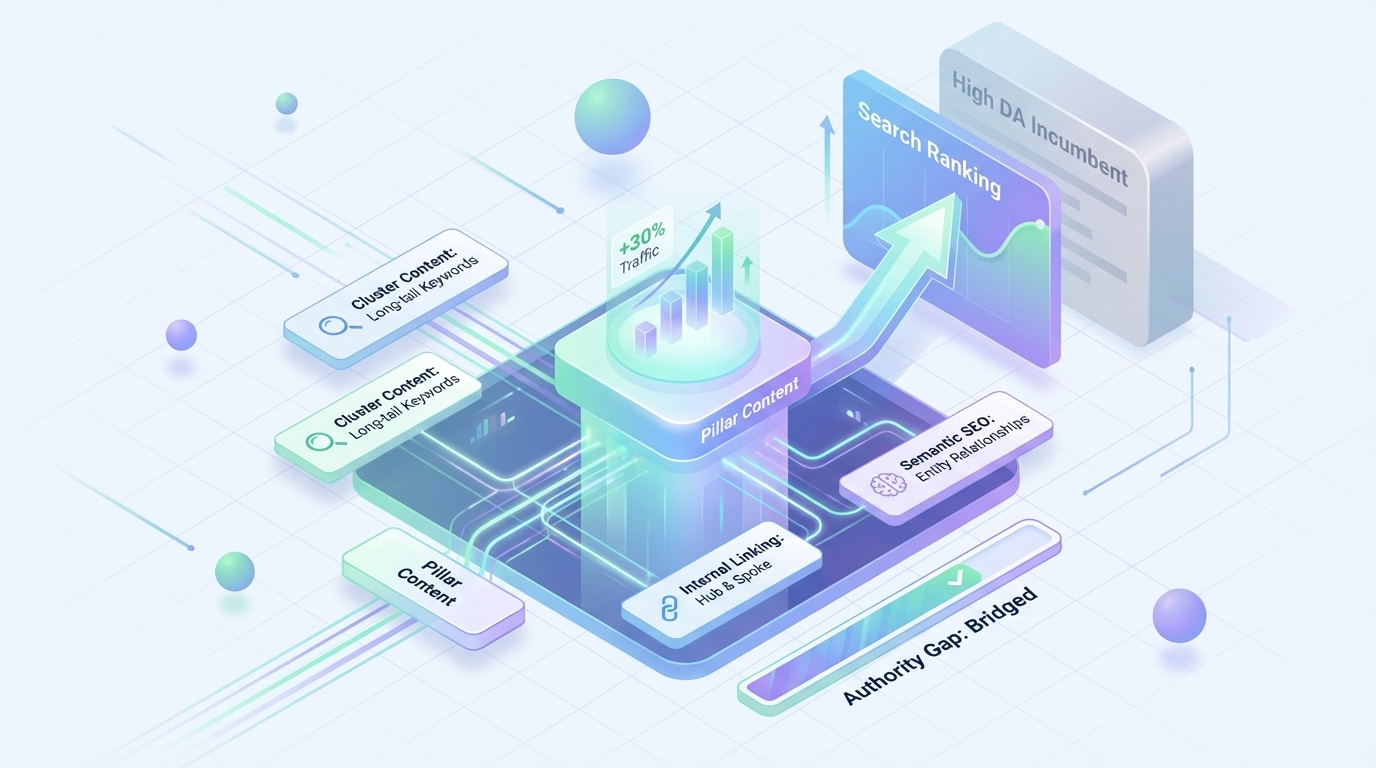
A pillar page acts as the main hub, while cluster content explores specific angles in depth. Internal linking then connects everything into a unified system. This structure signals expertise and improves ranking potential across the entire topic.
Using AI Content Generation Singapore makes this process significantly more efficient. AI tools can analyze search patterns, group related keywords, and identify content gaps that humans often miss. This accelerates the planning stage and reduces wasted content effort.
The advantage of topic clusters goes beyond SEO. They improve user experience by guiding readers through a logical content journey. Instead of bouncing between unrelated pages, users move deeper into a structured knowledge system.
Search engines reward this behavior. When users engage longer and explore more pages, it signals that the content is valuable and trustworthy.
Businesses that continue publishing isolated articles are effectively competing against themselves. Those that adopt topic clusters are building compounding authority.

AI Is Reshaping Content Strategy: How Smart Systems Build Stronger Topic Clusters
Building topic clusters manually is slow, inconsistent, and often incomplete. It requires deep research, strategic mapping, and continuous updates. AI changes this entirely.
With AI Content Generation Singapore, businesses can analyze entire content landscapes in minutes. AI identifies keyword relationships, clusters semantic themes, and suggests content structures that align with user intent.
This transforms content planning from reactive to predictive. Instead of guessing what to write next, brands can see exactly what topics support their authority and where gaps exist.
AI also improves consistency. One of the biggest challenges in content marketing is fragmentation across teams and writers. AI ensures that tone, structure, and topic relevance remain aligned across all content pieces.
For example, a business in the B2B space can use AI to map an entire content ecosystem around lead generation. Instead of writing random articles about sales, marketing, and CRM tools separately, AI can structure them into interconnected clusters that reinforce one another.
This approach builds stronger topical authority faster. It also reduces wasted effort on content that does not contribute to long-term SEO growth.
In competitive markets across Asia, speed and structure matter. Businesses that adopt AI-driven content systems are not just producing more content—they are building smarter systems of visibility.
Building Authority Instead of Articles: The Framework Behind High-Impact Topic Clusters
Strong topic clusters are not accidental. They are engineered through deliberate structure and strategic planning.
The process begins with selecting a pillar topic that represents a broad, high-value subject within your industry. This becomes the central anchor for all related content.
Next comes intent mapping. Understanding why users search for specific topics is more important than the keywords themselves. Are they researching, comparing, or ready to purchase? Each intent requires a different content approach.
This is where AI Content Generation Singapore plays a critical role. AI tools can break down search behavior and suggest supporting content that strengthens the pillar instead of competing with it.
Cluster content is then created around subtopics that expand the main theme. Each piece must serve a distinct purpose while linking back to the pillar page. This creates a structured ecosystem of relevance.
Internal linking is not optional—it is essential. It connects the entire cluster and helps search engines understand content relationships.
Many businesses fail because they overproduce content without structure. This leads to keyword cannibalization and diluted authority.
A strong topic cluster avoids this by ensuring every piece has a defined role. The result is not just better rankings, but sustained organic growth.

Asia Is Not One Market: Why Localization Defines Organic Success
One of the biggest misconceptions in digital marketing is treating Asia as a single unified market. In reality, it is a highly fragmented ecosystem with distinct languages, cultures, and search behaviors.
What works in Singapore may not resonate in Indonesia. What performs well in Malaysia may fail in Thailand. Localization is not optional—it is essential for growth.
Businesses must adapt content not just linguistically, but contextually. Search intent varies significantly across regions, even for the same topic.
Using AI Content Generation Singapore, brands can analyze regional search patterns and tailor content clusters accordingly. AI helps identify local keyword variations, cultural nuances, and engagement trends.
This enables businesses to build region-specific cluster strategies instead of relying on generic global content.
Localized topic clusters also improve trust. Users engage more deeply when content reflects their environment, language, and needs.
Search engines reinforce this by rewarding relevance at the local level. This means localization directly impacts rankings, visibility, and conversion rates.
The future of organic growth in Asia belongs to brands that understand regional complexity and build content ecosystems designed for it.

Measuring What Actually Matters: Tracking the Real ROI of Topic Clusters
Many businesses fail to measure content success correctly. Traffic alone does not represent real growth. True performance comes from authority, engagement, and conversion impact.
Topic clusters should be measured as ecosystems, not isolated pages. This means tracking how entire content groups perform together.
Key indicators include keyword ranking improvements across multiple pages, internal link engagement, session duration, and conversion pathways.
With AI Content Generation Singapore, businesses can also identify underperforming content within clusters and optimize it before rankings decline.
This creates a feedback loop where content is continuously improved rather than left stagnant.
Another important metric is topical authority growth. This measures how well a website dominates a specific subject area over time.
Strong clusters reduce reliance on paid ads because they generate sustained organic visibility. Instead of constantly buying traffic, businesses earn it through structured relevance.
The key insight is simple: content success is not immediate. It compounds. Topic clusters build momentum over time, becoming stronger as more supporting content is added.
Conclusion
The future of SEO in Asia is shifting toward structured content ecosystems powered by intelligence, not volume. Businesses that continue relying on outdated publishing models will struggle to compete.
Search engines are evolving into intent-driven systems that prioritize depth and context. This means surface-level content will lose visibility over time.
Brands that embrace structured ecosystems will dominate. They will not just publish content—they will build interconnected authority systems designed for long-term growth.
This is where AI Content Generation Singapore becomes foundational. AI enables businesses to scale content strategy intelligently, ensuring every piece contributes to a larger ecosystem.
Topic clusters are no longer a strategy. They are the infrastructure of organic visibility.
The brands that succeed in Asia will be those that treat content as an engineered system, not a marketing task.
In a digital environment defined by competition and speed, structure wins over randomness every time.
