

The AI Advantage Is No Longer Using ChatGPT—It’s Building an AI-Powered Marketing System
September 29, 2026 at 11:07 pm
AI B2B Lead Generation in 2027: From Finding Prospects to Predicting Buying Intent
September 30, 2026 at 5:45 pm

Marketing automation was supposed to make marketing easier.
And it did.
For years, businesses have used automation to trigger emails, segment audiences, schedule social posts, score leads, distribute content, and generate reports. It removed repetitive work and allowed marketing teams to operate at a scale that would have been impossible manually.
But automation has a ceiling.
Most automated systems still depend on humans to define the rules, decide what happens next, and intervene when circumstances change.
That is where the next evolution of AI marketing begins.
Marketing teams are increasingly moving toward systems that do more than execute instructions. AI agents can increasingly analyze information, plan multiple steps, use connected tools, execute actions, evaluate results, and continue working toward a defined objective. Industry research already shows that some marketing organizations are moving from generative AI assistance toward agent-led workflows, although fully autonomous multi-agent campaigns remain relatively early.
The distinction is important.
Automation asks: “What should happen when this condition occurs?”
Autonomy asks: “What are we trying to achieve, and what actions should happen next?”
That shift could reshape marketing teams in 2027.
For businesses considering an AI Marketing Agency Singapore, the opportunity is therefore becoming much larger than simply producing content faster or automating another campaign.
The real opportunity is building an intelligent marketing system that can continuously observe, decide, execute, learn, and improve while keeping humans responsible for strategy and critical decisions.
Traditional marketing automation works because humans create the rules.
If a prospect downloads an ebook, send an email.
If a lead reaches a certain score, notify sales.
If a customer abandons a purchase, trigger a reminder.
These workflows are valuable because they eliminate repetitive manual work. But they remain fundamentally reactive. The system does what it has been instructed to do.
Autonomous marketing introduces another layer.
Instead of defining every individual action, marketers can give an AI system a broader objective and allow it to determine some of the steps required to reach that objective.
That is the fundamental difference between automation and autonomy.
Automation follows a map.
Autonomy can evaluate the road.
For example, an automated lead-nurturing system might send three predefined emails over seven days. An autonomous system could potentially examine engagement, account information, website activity, and other approved signals and determine that a particular prospect requires different content, a different sequence, or human intervention.
This does not mean humans disappear.
Quite the opposite.
The more autonomous marketing becomes, the more important strategy, governance, brand judgment, and oversight become.
Research from BCG’s 2026 CMO survey illustrates where the market currently stands: nearly a third of surveyed marketers reported moving toward agent-led workflows, while only 8% reported campaigns in which multiple agents operated autonomously.
That gap matters.
The industry is moving, but it is not yet operating at full autonomy.
For an AI Marketing Agency Singapore, this creates an important distinction between simply implementing AI tools and designing an AI-powered marketing operating system.
The future is not about automating everything blindly.
It is about deciding which decisions should be automated, which should be augmented by AI, and which should remain firmly in human hands.
The companies that understand that difference will be better positioned for the next phase of marketing.
AI Agents Are Becoming the New Digital Marketing Workforce
The next generation of marketing technology will not simply consist of smarter software tools.
It will increasingly include AI agents designed to perform specific objectives across connected workflows.
Think about a traditional marketing department.
One person researches the market.
Another manages content.
Another works on SEO.
Another handles lead generation.
Someone monitors campaigns.
Someone prepares reports.
Someone analyzes customer behavior.
Someone coordinates sales handoffs.
Now imagine specialized AI agents supporting each of those functions.
A research agent could monitor market developments.
A content agent could transform approved ideas into multiple formats.
An SEO agent could identify search opportunities.
A lead-generation agent could analyze accounts and buying signals.
An analytics agent could monitor campaign performance.
A customer-intelligence agent could identify recurring themes in customer interactions.
The important distinction is that an agent is not simply another chatbot.
A conventional AI tool waits for an instruction and produces an output.
An agent can potentially receive an objective, determine a sequence of actions, use authorized tools, evaluate results, and continue until it reaches a stopping point or requires human intervention.
This changes the role of an AI Marketing Agency Singapore.
The agency of the future may increasingly be responsible for designing the architecture that connects these intelligent systems.
That means defining objectives.
Connecting data.
Creating workflows.
Establishing permissions.
Building brand guidelines.
Creating approval checkpoints.
Monitoring performance.
And determining when an AI agent should stop and escalate to a human.
This is important because autonomous does not mean uncontrolled.
A marketing agent operating with access to customer data, advertising platforms, CRM systems, and publishing tools needs boundaries.
The smartest businesses will not simply ask, “What can this AI agent do?”
They will ask, “What should this AI agent be allowed to do?”
That question will become increasingly important as AI moves from generating recommendations to taking real actions.
Campaigns Are Becoming Continuous Growth Engines Instead of One-Off Projects
For decades, marketing has been organized around campaigns.
Plan the campaign.
Create the assets.
Launch.
Monitor.
Analyze.
Report.
Repeat.
The problem is that customers do not behave according to campaign calendars.
A prospect can become interested today.
A competitor can launch something tomorrow.
A market can shift next week.
A previously successful message can stop working without warning.
This is where autonomous marketing introduces a different operating model.
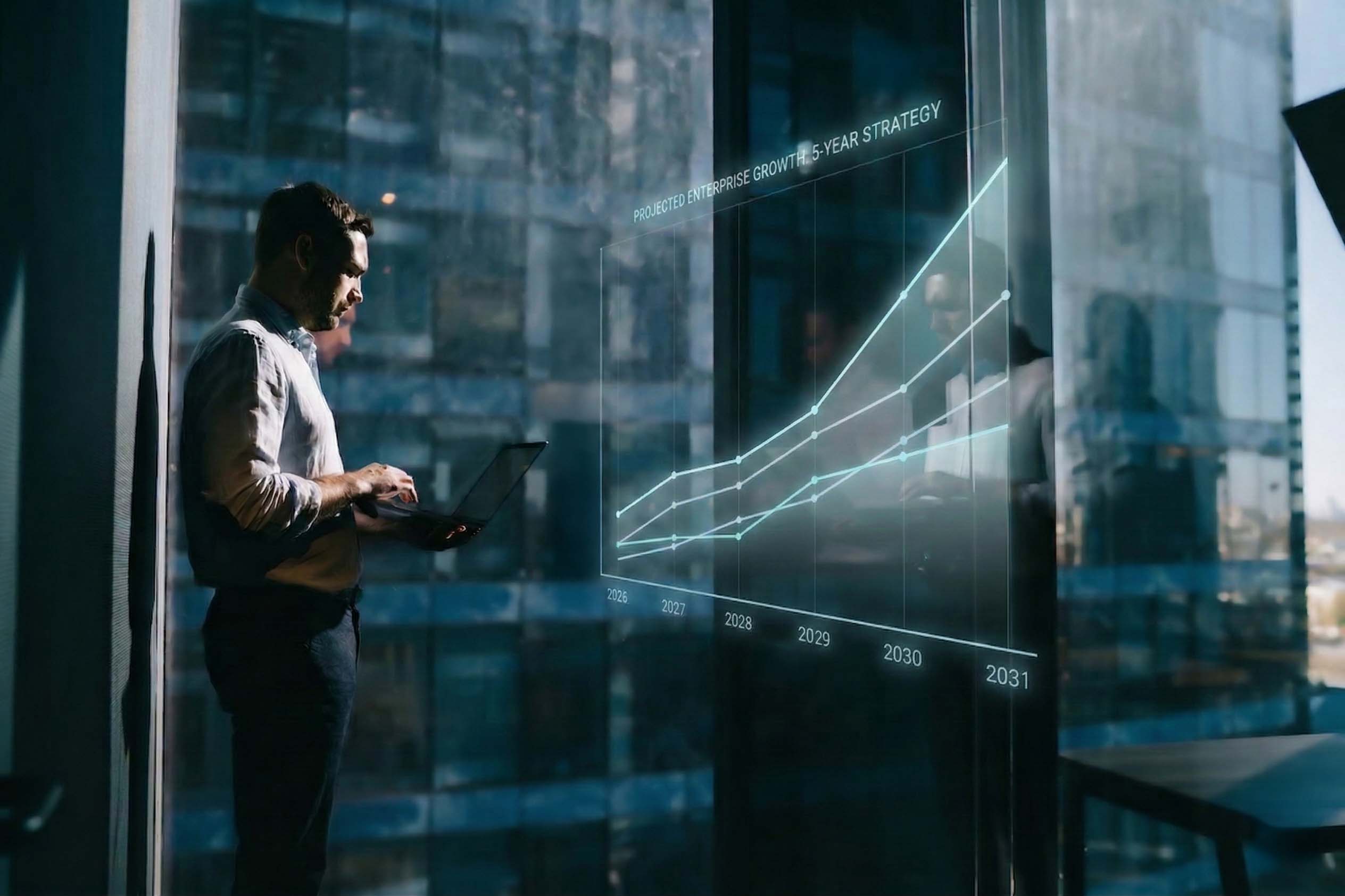
Instead of treating a campaign as a fixed project, AI can help turn marketing into a continuous feedback loop.
The system observes.
It identifies patterns.
It recommends an action.
It executes approved changes.
It measures the response.
Then it feeds that information into the next decision.
Braze describes autonomous marketing in similar terms: AI agents can plan, execute, optimize, and iterate campaigns with minimal human intervention.
That does not mean every marketing decision should happen automatically.
It means the time between insight and action can become dramatically shorter.
For an AI Marketing Agency Singapore, this creates an opportunity to move clients away from campaign-only thinking toward continuous marketing intelligence.
Imagine a B2B campaign targeting decision-makers across Singapore.
The system notices that one industry segment is engaging significantly more with a particular message.
Instead of waiting until the monthly report, the marketing system could identify the pattern, recommend a new content angle, generate approved variations, adjust the nurturing workflow, and alert the marketing team.
The campaign becomes a living system.
That is fundamentally different from simply scheduling more emails.
The real value of AI autonomy is not speed for its own sake.
It is the ability to shorten the distance between information and action.
In 2027, marketing teams may spend less time asking what happened last month and more time asking what the system is learning right now.
That could fundamentally change the rhythm of marketing operations.
Hyper-Personalization Will Move From Segments to Individual Buyer Context
Personalization has been one of marketing’s favorite promises for years.
Yet much of today’s personalization remains relatively shallow.
First-name personalization.
Industry segmentation.
Location-based campaigns.
Basic behavioral triggers.
These techniques are useful, but they are not truly individualized.
AI could take personalization into a much more dynamic phase.
Instead of simply knowing that someone belongs to a particular segment, an AI-powered marketing system could potentially combine multiple approved signals to understand the individual’s or account’s current context.
What content did they engage with?
Which product pages did they visit?
What business problem appears relevant?
What stage of the buying journey might they be in?
What conversations have already taken place?
What information should they receive next?
That context can potentially influence the website experience, content recommendations, email messaging, lead nurturing, and sales handoff.
Gartner predicts that by 2028, 60% of brands will use agentic AI to facilitate streamlined one-to-one interactions, while also emphasizing the need for stronger data governance and transparency.
That forecast points toward a major change in how companies think about personalization.
But there is a catch.
More personalization is not automatically better personalization.
Customers want relevance.
They do not necessarily want to feel monitored.
This is why businesses working with an AI Marketing Agency Singapore need to think beyond technology.
They need clear data policies.
They need responsible use of customer information.
They need consent.
They need transparency.
They need boundaries around what AI can infer and what it can do.
Trust becomes part of the marketing architecture.
The goal should not be to make customers feel that a machine knows everything about them.
The goal should be to make every interaction more useful.
That is the difference between personalization that creates value and personalization that creates discomfort.
By 2027, the best AI marketing systems may not simply know more about customers.
They may know how to use the right information at the right moment without crossing the line.
B2B Lead Generation Will Shift From Static Lists to Dynamic Buying Signals
B2B lead generation has traditionally relied heavily on databases.
Find companies that fit the ideal customer profile.
Identify decision-makers.
Add them to a list.
Start outreach.
The problem is obvious.
A company can fit your ideal customer profile and still have absolutely no reason to buy from you today.
This is where AI-powered lead generation can change the equation.
Instead of asking only, “Does this company look like our ideal customer?”
Marketing teams can increasingly ask, “Is something happening inside this company that suggests a potential buying opportunity?”
That could include a new executive appointment.
Expansion into a new market.
A new product launch.
Changes to the company’s technology stack.
Hiring activity.
New strategic initiatives.
Increased engagement with relevant content.
Changes in website behavior.
AI systems can potentially process large volumes of these signals continuously.
For an AI Marketing Agency Singapore, this means B2B lead generation can become more focused on timing and intent rather than simply volume.
That is a major shift.
A database tells you who exists.
A dynamic intelligence system can help identify who deserves attention now.
The next layer is personalization.
Instead of sending identical outreach to hundreds of businesses, AI can help marketers develop messaging around the specific business context of each account.
But there is an uncomfortable truth.
AI does not magically fix bad lead generation.
If your data is poor, your AI system will make decisions based on poor information.
If your positioning is weak, AI will simply help you distribute weak messaging faster.
If your ICP is wrong, greater automation can amplify the problem.
That is why AI-powered B2B lead generation requires strategy before scale.
The goal is not to generate more leads simply because AI makes it easier.
The goal is to identify better opportunities, understand their context, and engage when the conversation is actually relevant.
That is where autonomy becomes commercially meaningful.
The Marketing Team of 2027 Will Look More Like an AI Command Center
The biggest change may not happen inside the technology.
It may happen inside the marketing department itself.
Today’s marketing teams spend considerable time coordinating tasks.
Request the content.
Wait for approval.
Send the campaign.
Pull the report.
Analyze the results.
Create another spreadsheet.
Schedule another meeting.
Then repeat.
As AI agents become more capable, many of these operational layers could shrink.
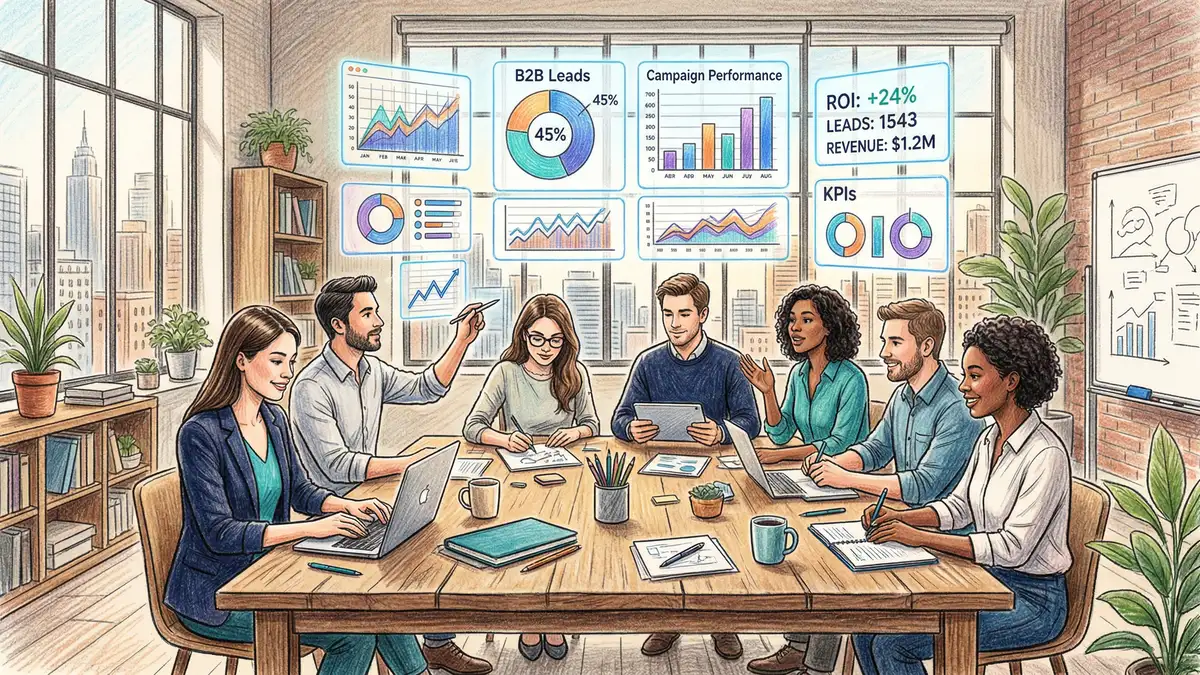
Marketing leaders may increasingly manage a combination of human specialists and AI systems.
Humans could focus more heavily on strategy, creative direction, positioning, brand development, customer understanding, partnerships, and complex decisions.
AI systems could increasingly support research, production, analysis, optimization, personalization, and repetitive execution.
That does not mean the CMO becomes less important.
It could make the CMO more important.
Someone still needs to determine the company’s marketing objectives.
Someone needs to decide which markets deserve investment.
Someone needs to define the brand.
Someone needs to decide what the company should never automate.
Someone needs to take responsibility when an AI system makes a bad decision.
For an AI Marketing Agency Singapore, this means the service model is changing as well.
The value is increasingly moving from “we can produce more marketing assets” toward “we can help you design a marketing system that operates intelligently.”
That requires a different skill set.
AI workflow design.
Data integration.
Agent orchestration.
Marketing strategy.
Analytics.
Governance.
Human oversight.
The transition will not happen overnight.
In fact, current research suggests most companies are still somewhere between experimentation and deeper implementation. BCG found that while AI transformation is widely recognized among CMOs, only a minority had reached genuinely autonomous multi-agent campaign execution.
That means 2027 is unlikely to be a world where every marketing department suddenly runs itself.
It is more likely to be a year where the gap between AI-assisted teams and AI-native marketing operations becomes increasingly visible.
The marketing leader’s job will increasingly become orchestration.
Not simply managing people.
Managing intelligence.
Conclusion
There is a dangerous misconception spreading through the marketing industry.
Buy the latest AI tool and you have an AI strategy.
You do not.
A company can have ChatGPT, an AI writing platform, an AI image generator, an automation platform, an analytics tool, and a dozen other subscriptions and still operate exactly like a traditional marketing department.
More tools do not automatically create more intelligence.
The competitive advantage will increasingly come from how those tools and systems work together.
A mature AI marketing architecture may include connected customer data, AI agents, CRM systems, content workflows, search intelligence, analytics, lead-generation systems, marketing automation, and human approval layers.
The objective is not to create a machine that operates without people.
The objective is to create a system where machines handle more of the repetitive complexity while humans remain responsible for the decisions that require judgment.
That is the real meaning of autonomy.
An AI Marketing Agency Singapore can help businesses move toward this model by connecting individual capabilities into a broader marketing system.
The first step should not be asking which AI tool to buy.
Start with the business objective.
What are you trying to improve?
More qualified leads?
Better customer acquisition?
Higher content efficiency?
Faster campaign optimization?
Better account intelligence?
Improved customer retention?
Once the objective is clear, the next question becomes which parts of the workflow should be automated, augmented, or delegated to AI agents.
Then come the guardrails.
What data can the system access?
What can it change?
What can it publish?
What requires human approval?
How is performance measured?
What happens when the system makes a mistake?
These questions matter because autonomy without governance is simply risk at scale.
The companies preparing for 2027 should therefore focus less on collecting AI tools and more on building AI capability.
The future of marketing is not necessarily about replacing the marketing team.
It is about changing what the marketing team is capable of doing.
Automation gave marketers machines that could follow instructions.
AI agents are giving them systems that can increasingly work toward objectives.
That is a much bigger shift.
The marketing teams that adapt will not simply produce more.
They will operate differently.
They will use data faster.
Respond to market signals sooner.
Personalize interactions more intelligently.
Automate more of the operational workload.
And spend more human time on the things machines still cannot own: judgment, creativity, strategy, trust, and responsibility.
By 2027, the defining question may no longer be whether a company uses AI.
Almost everyone will.
The harder question will be whether the company has built a marketing system capable of using AI intelligently.
The future belongs neither entirely to humans nor entirely to machines.
It belongs to the organizations that know how to make both work together.
