

B2B Demand Generation in Singapore: How to Build a Full-Funnel Pipeline Engine
June 5, 2026 at 8:56 am
AI Content Generation Asia: How to Maintain Brand Voice Consistency
June 8, 2026 at 10:38 am

There is a version of LinkedIn outreach that most Singapore B2B professionals have experienced on the receiving end. A connection request arrives from someone they have never met. They accept. Within 24 hours, a generic pitch lands in their inbox. They ignore it, or worse, they remember the sender as someone to avoid.
This is not social selling. This is cold outreach wearing social media’s clothes. And it is responsible for a great deal of the scepticism that surrounds the idea of using LinkedIn to build pipeline.
Real social selling is something quite different. It is the discipline of using digital channels — primarily LinkedIn — to build genuine professional relationships with the right people, demonstrate expertise through consistent valuable content, and create the conditions in which sales conversations happen naturally, at the right time, with buyers who already know and trust you.
Done well, social selling is one of the most effective pipeline-building strategies available to Singapore B2B sales professionals in 2026. This guide explains exactly how it works, why it fits Singapore’s relationship-driven B2B culture particularly well, and how to build a social selling programme that consistently generates qualified pipeline.

Why Social Selling Matters More Than Ever in Singapore B2B
Singapore’s B2B buying environment has changed fundamentally over the past decade, and social selling has emerged as a direct response to that change.
The most significant shift is one we discuss across our entire content library: today’s B2B buyer completes 60 to 70 percent of their purchase research before speaking to any salesperson. They are on LinkedIn. They are reading content, following thought leaders, and observing which companies and individuals show up consistently in their feed with genuinely useful perspectives. By the time they are ready to engage a vendor, they have already formed strong opinions about which companies are credible and which are not.
This means the traditional sales model — build a list, make calls, pitch the product — is becoming less effective as a standalone approach. The buyers who matter most are increasingly unreachable through cold outreach alone, because their attention is already allocated to the sources they have chosen to trust. Social selling is how you earn a place among those trusted sources, before the buying process formally begins.
Singapore’s B2B culture amplifies this dynamic. Business relationships here are genuinely relationship-driven. Decision-makers in Singapore are more likely to engage with a vendor whose people they recognise, whose perspectives they have seen articulated thoughtfully, and whose brand carries visible credibility in their professional network. Social selling, done consistently, builds exactly that kind of recognisable credibility at scale.
The data supports this. Sales professionals who practise social selling create 45 percent more opportunities than those who do not, and are 51 percent more likely to hit quota, according to LinkedIn’s own research. For Singapore B2B companies looking to make their lead generation programmes more efficient, social selling is one of the highest-leverage investments available.
The Four Pillars of Effective B2B Social Selling
Establish your professional brand. Before your sales team can use LinkedIn to generate pipeline, every individual involved needs a profile that communicates genuine expertise and credibility. Not a digital CV, but a buyer-centric profile: a headline that speaks to the value you deliver rather than your job title, an About section that articulates who you help and how, and a content history that demonstrates your knowledge of the problems your buyers face. In Singapore’s B2B market, where professional reputation carries significant weight, this foundation is not optional.
Find the right people. Social selling is not about volume — it is about precision. LinkedIn’s Sales Navigator is the most powerful prospecting tool available to B2B sales professionals in Singapore, allowing you to filter by job title, seniority, industry, company size, geography, and dozens of other signals. The goal is to build a targeted list of the right people at the right companies, rather than connecting with everyone who might conceivably be a buyer.
Engage with insights. This is the step most social sellers skip. Engaging with insights means consuming the content your target buyers are posting, leaving thoughtful comments that add genuine value to the conversation, sharing perspectives on industry developments, and contributing to professional discussions in ways that showcase your expertise without pitching anything. The goal is to become a familiar, credible presence in your target buyers’ feeds before you ever send a message.
Build relationships. Social selling ultimately culminates in the one-to-one relationship: the warm connection request that lands in a context where the prospect has seen your name multiple times, followed by personalised outreach that references something specific and relevant about their business, and a message sequence that adds value before making any ask. This is where social selling converts into actual pipeline, and it works far better when the first three pillars are already in place.
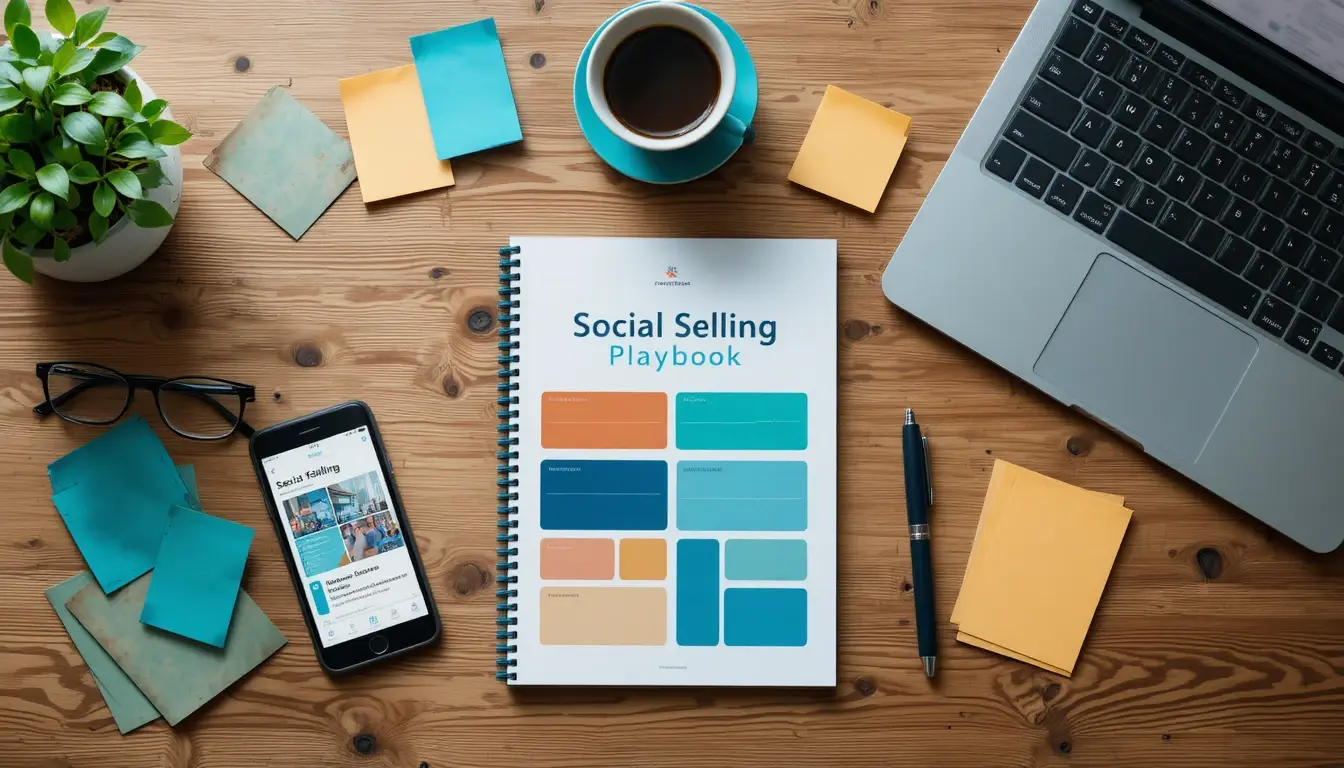
Building a Social Selling Programme for Your Singapore B2B Team
Profile optimisation at scale. The starting point for any social selling programme is ensuring that every sales professional and senior team member has a profile that works. This means a company-wide profile audit, a template for the key sections, and ideally a facilitated session where the team builds their updated profiles together. In Singapore’s B2B context, where buyers will almost certainly check the LinkedIn profile of any salesperson who reaches out, a strong profile is a basic commercial requirement.
Content to share. Individual social selling is dramatically more effective when there is a library of company content to draw from. Sales professionals cannot be expected to generate all their own content from scratch, but they can share, comment on, and add personal perspectives to content that the marketing team produces. This is why social selling and content marketing are deeply connected: the content engine feeds the social selling programme with the assets it needs to stay relevant and credible in prospects’ feeds.
A daily cadence. Social selling does not work as a sporadic activity. The sales professionals who generate real pipeline from LinkedIn are the ones who have built a sustainable daily habit: fifteen to twenty minutes reviewing their target list for posting activity, leaving three to five substantive comments, sharing one piece of content with a personalised observation, and checking their connection queue and messages.
Outreach templates and sequences. While social selling is inherently personal, having well-crafted templates for connection requests, first messages, and follow-ups gives the sales team a foundation to personalise from. The best outreach in Singapore B2B is specific: it references something the prospect has posted, a challenge relevant to their industry, or a piece of content that addresses a problem they are visibly facing.
Integration with CRM and marketing automation. Social selling activity should not exist in a silo. Connection requests, messages, and LinkedIn profile views from target accounts should feed into your CRM so that the sales team has full visibility of every touchpoint in a prospect’s journey.
Social Selling and Account-Based Marketing: A Powerful Combination
For Singapore B2B companies running account-based marketing programmes, social selling adds a critical human dimension that paid media and content alone cannot deliver.
ABM identifies your highest-value target accounts and concentrates your marketing effort on them. Social selling is what happens at the individual level within those accounts: sales professionals connecting with and building relationships with the specific decision-makers and influencers inside each target organisation.
The combination is powerful because it operates on two levels simultaneously. At the account level, your ABM programme ensures that the company’s brand is visible through paid LinkedIn, targeted content, and retargeting. At the individual level, your sales team’s social selling effort ensures that the people inside that account are developing a personal relationship with your team members. When the time comes to approach the account, the buyer has been warmed both by brand-level and individual-level contact.
In Singapore’s B2B market, where the professional community in most verticals is relatively small and interconnected, the individual relationship layer that social selling provides is particularly valuable. The person your BDR has been engaging with on LinkedIn for three months may well be connected to four other decision-makers at the same target account. The network effects compound quickly.

Content Strategy for Social Sellers: What to Post and When
Post about problems, not products. The fastest way to lose your audience on LinkedIn is to turn your profile into a product marketing channel. Your target buyers are not following you to see what your company sells. They are following you because they are hoping to encounter a perspective that helps them do their job better or think about a problem differently. Lead with insight about the problems your buyers face. Your product will become relevant naturally once the relationship and credibility are established.
Share with a point of view. Reposting company content without adding your own perspective has limited social selling value. What builds reputation on LinkedIn is original thinking: a specific observation about a trend in Singapore’s B2B market, a counterintuitive take on a commonly held belief, a lesson from a client engagement (appropriately anonymised), or a question that surfaces a challenge your target buyers are navigating.
Be consistent, not prolific. Two to three high-quality posts per week, every week, for twelve months will build a far stronger LinkedIn presence than ten posts in January followed by silence. The LinkedIn algorithm rewards consistency, and your target audience builds a mental model of who you are through repeated, regular exposure. Social selling is a long game.
Engage more than you post. Many social sellers underestimate how much value comes from commenting on other people’s content relative to posting their own. A thoughtful, specific comment on a post by a target buyer gets your name in front of the person who posted and their entire engaged audience, and signals that you are paying attention to what they think. In Singapore’s B2B community, where the relevant professional network in most verticals is tight, this kind of visible engagement is disproportionately valuable.
Measuring Social Selling ROI: Connecting Activity to Pipeline
Activity metrics (weekly): connection request acceptance rate, number of meaningful comments posted, messages sent and responded to, and LinkedIn SSI score movement. These are leading indicators that tell you whether the programme is being executed consistently.
Engagement metrics (monthly): profile view growth from target account segments, content reach and engagement rate with the target audience, and the number of target account contacts added to the network.
Pipeline metrics (quarterly): conversations initiated through LinkedIn, meetings booked from social selling outreach, pipeline value sourced from LinkedIn-originated connections, and deal win rate for opportunities where social selling was part of the prospecting mix.
Connecting these three layers requires your CRM to be properly set up to track LinkedIn as a lead source. When this infrastructure is in place, the ROI of a well-run social selling programme is typically very compelling. Our AI marketing tools increasingly help us identify which social selling touchpoints correlate most strongly with pipeline outcomes in specific industries and account types.

Social Selling in the Context of Your Broader Demand Generation Strategy
Social selling does not exist in isolation. The most effective social selling programmes in Singapore are integrated into a broader demand generation strategy that ensures every element reinforces the others.
Your content marketing programme feeds social selling with the assets your team needs to stay relevant in buyers’ feeds. Your SEO programme drives organic traffic to the long-form content your sales team shares on LinkedIn, increasing the credibility signal of every post. Your ABM programme identifies the accounts worth prioritising, so your social selling effort is concentrated where it has the highest commercial value. And your marketing automation programme captures the leads that social selling generates and nurtures them through the buying journey.
When these elements work together, the result is a pipeline engine where every component makes the others more effective. Social selling warms accounts that ABM is targeting. Content marketing gives social sellers something valuable to share. SEO credibility reinforces the expertise that social sellers are demonstrating individually. And marketing automation ensures that no warm relationship is lost because the timing was not right for an immediate conversation.
Conclusion: Social Selling Is a Skill That Compounds
Social selling is not a quick fix. The sales professionals who generate the most pipeline from LinkedIn in Singapore are the ones who have been consistently building their network, sharing their expertise, and engaging with their target buyers for twelve, eighteen, twenty-four months. The early stages feel slow. The returns come later, and then they accelerate.
But that is exactly what makes social selling valuable as a strategic investment. The relationships you build, the reputation you establish, and the audience you grow are assets that appreciate over time and cannot be easily replicated by a competitor who starts later. In Singapore’s interconnected B2B professional community, a well-built social selling programme is one of the most durable competitive advantages a company can create.
If you would like to build a social selling programme for your Singapore B2B team, or integrate social selling into a broader lead generation and demand generation strategy, talk to the iSmart team. We have helped B2B companies across Singapore and Asia build the systems, skills, and content that turn LinkedIn into a consistent pipeline machine.
