

The AI Search Visibility Gap: Why Some Brands Get Mentioned While Others Stay Invisible
October 8, 2026 at 5:15 pm
How AI Can Turn Customer Signals Into Your Next Marketing Campaign
October 9, 2026 at 3:41 pm

Artificial intelligence has made content creation faster than most marketers could have imagined. A blog that once took hours to research and draft can now be structured in minutes. Social media posts, email campaigns, landing pages, video scripts and advertising copy can all be produced at scale.
But speed has created a new problem.
When everyone can produce content quickly, content itself becomes less distinctive.
The harder question is no longer whether AI can write. It clearly can. The bigger question is whether AI can understand what makes your brand sound like your brand.
That distinction matters.
A technology company should not sound like a luxury hotel. A financial services company should not communicate like a streetwear brand. A B2B consultancy should not suddenly sound like a generic motivational influencer simply because an AI tool generated its latest LinkedIn post.
This is where the next stage of AI content creation becomes more complicated.
Businesses adopting AI Content Generation Singapore strategies are discovering that producing more content is only half the battle. The other half is ensuring that every piece of content strengthens the same identity rather than slowly weakening it.
AI can generate words.
But your brand voice gives those words meaning.
The companies that understand this will use AI differently. They will not treat it as an unlimited content machine. They will build systems that teach AI what their business believes, how it communicates, what it avoids and what makes its perspective different.
The future of AI content creation will therefore not simply be about generating more.
It will be about generating content that still sounds unmistakably like you.
AI can produce polished content remarkably well. Give it a topic, audience and objective, and it can quickly generate an article that looks professional.
That creates a dangerous illusion.
Professional writing is not necessarily brand writing.
A piece of content can have perfect grammar, logical structure and strong readability while still feeling completely disconnected from the company publishing it. It may sound like something any competitor could have written.
This is one of the biggest challenges facing businesses investing in AI Content Generation Singapore.
Brand voice is more than choosing between “professional” and “casual.” Those labels are too broad to guide meaningful communication.
A brand voice can be direct without being aggressive. Intelligent without being academic. Friendly without becoming informal. Bold without becoming arrogant. Technical without becoming difficult to understand.
These distinctions are subtle.
They are also what make a brand recognizable.
Consider the difference between a company that says, “Our innovative AI-powered solutions help businesses improve operational efficiency” and one that says, “Stop wasting your team’s time on work software should already be doing.”
Both statements may communicate a similar benefit.
But they feel completely different.
The second has an attitude. It takes a position. It speaks with confidence. It sounds like someone has an opinion.
That is brand voice.
AI can imitate these characteristics when given enough direction and examples, but it does not automatically know which characteristics matter most to your business.
That means companies using AI Content Generation Singapore need to stop asking only, “Can AI write this?”
They need to ask, “Would our customers recognize that this came from us?”
If the answer is no, the technology is doing its job as a writer—but the marketing system is failing as a brand.
Your Brand Voice Is More Than a Few Words in a Style Guide
Many companies believe their brand voice is already defined.
Then ask different employees to describe it.
The answers can be surprisingly inconsistent.
One person says the brand is professional. Another says it is approachable. Someone else says it is innovative. Another says it should be authoritative.
All of these descriptions may be technically correct.
But they are not enough.
AI needs more than adjectives.
A useful brand voice framework should explain how the brand thinks and communicates. It should define preferred sentence structures, vocabulary, emotional positioning, messaging priorities, levels of formality and the types of phrases that should be avoided.
It should also contain examples.
Examples are powerful because they give AI something concrete to analyze. Instead of simply saying “sound confident,” a brand can provide examples of content that demonstrates what confidence actually means within that organization.
This becomes particularly important when businesses scale their AI Content Generation Singapore workflows across multiple channels.
A brand may have different content formats, but its underlying personality should remain recognizable.
A LinkedIn article may be more analytical. A social media post may be more conversational. A landing page may be more conversion-focused. An email may be more direct.
The format changes.
The identity should not.
This is where a strong brand memory becomes valuable.
AI should have access to approved messaging, positioning statements, terminology, previous high-quality content, audience insights and examples of what the company considers excellent communication.
It should also understand what not to say.
Banned phrases, exaggerated claims, unnecessary buzzwords and outdated positioning can be just as important as preferred language.
The goal is not to make every piece of content identical.
That would create another problem.
The goal is to create a recognizable communication fingerprint.
When AI Content Generation Singapore becomes guided by a clear brand framework, AI stops operating as a blank writing assistant and starts becoming part of a controlled content system.
That is a much more powerful role.

Generic AI Content Can Quietly Erase Your Brand Personality
The biggest threat from AI content is not necessarily bad writing.
It is sameness.
AI has made it incredibly easy to produce content that sounds polished, reasonable and familiar. The problem is that your competitors can generate something that sounds almost exactly the same.
This creates a new form of content saturation.
Everyone talks about innovation.
Everyone talks about transformation.
Everyone talks about customer-centricity, efficiency, personalization and the future of AI.
The words are not necessarily wrong.
They are simply becoming less memorable.
Research into AI content strategy increasingly points toward the same problem: increasing content volume does not automatically create differentiation. When businesses use similar tools and similar prompts, they can easily produce similar ideas and structures.
This is why AI Content Generation Singapore should never be treated purely as a volume strategy.
More articles do not automatically mean more authority.
More social posts do not automatically mean more engagement.
More landing pages do not automatically mean more leads.
Content still needs a point of view.
It needs an opinion worth remembering.
It needs examples that competitors cannot simply copy.
Most importantly, it needs the personality of the organization behind it.
Imagine reading ten articles about AI marketing from ten different agencies. If every article uses the same vocabulary, same structure and same generic predictions, the reader has little reason to remember any of them.
Now imagine one agency consistently challenges assumptions, uses sharp examples, speaks plainly and brings insights from actual marketing experience.
That brand becomes recognizable.
This is why human thinking becomes more valuable as AI content becomes more common.
AI can help create the draft.
The brand needs to provide the perspective.
Companies using AI Content Generation Singapore successfully will therefore need to protect the elements that machines cannot simply manufacture on demand: experience, judgment, conviction, original observations and a genuine understanding of customers.
Otherwise, AI does not strengthen the brand.
It slowly smooths the brand into everyone else.

Your Content History Could Become Your AI’s Brand Memory
One of the most valuable assets a company has is often sitting in plain sight.
Its existing content.
Years of blogs, sales presentations, website pages, campaign messages, customer communications, thought leadership articles and successful advertisements contain clues about how the brand communicates.
Most companies treat these assets as finished work.
AI changes their potential value.
They can become a form of brand memory.
A well-designed AI Content Generation Singapore system can use approved historical content as reference material. The purpose is not simply to copy old sentences. It is to identify patterns.
What topics does the company consistently prioritize?
What language does it use?
What arguments does it make?
How does it explain complex ideas?
What kind of examples does it prefer?
What tone does it use when educating versus selling?
Which phrases repeatedly appear in high-performing content?
Which approaches clearly do not work?
These insights can help create a more intelligent content framework.
However, there is an important distinction.
Not every piece of historical content should become a model for future content.
Some old content may be outdated. Some may have been written by external agencies. Some may reflect an old positioning strategy. Some may have performed poorly.
Brand memory needs curation.
The strongest AI Content Generation Singapore workflows therefore combine content archives with human judgment.
Teams should identify their best examples and explain why those examples represent the brand.
That creates something more useful than a traditional style guide.
It creates a living reference system.
Over time, this system can become more sophisticated as the company learns what resonates with its audience.
New campaign results can feed into the framework. Sales teams can contribute customer language. Marketing teams can add successful examples. Editors can document recurring mistakes.
The result is a feedback loop.
AI generates.
Humans evaluate.
The system learns what good looks like.
That is how a company moves from simply using AI to building an AI-enabled content capability.
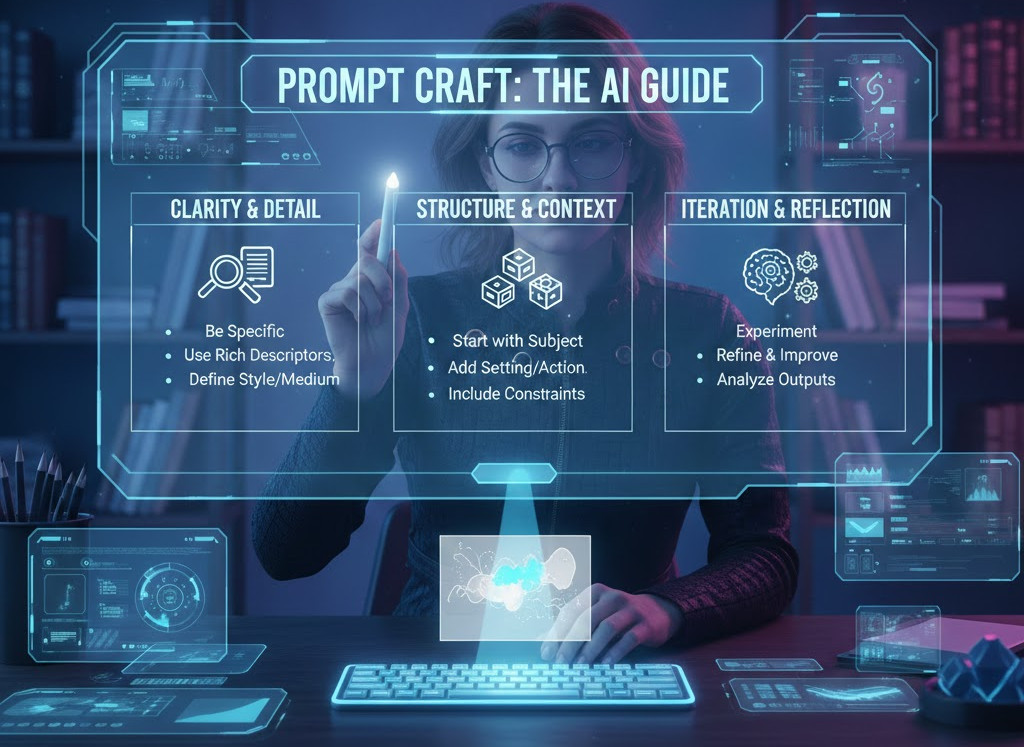
Better Prompts Help — But Prompting Alone Will Not Solve the Problem
There is enormous attention around prompt engineering.
And prompts matter.
A vague instruction such as “write a professional article about AI marketing” will naturally produce a very different result from a detailed instruction describing the audience, positioning, tone, structure and communication rules.
But there is a limit to what prompting can accomplish.
You cannot build a strong brand voice by writing increasingly complicated instructions into every individual prompt.
That approach eventually becomes inefficient.
Imagine asking every employee to manually describe the entire brand personality every time they create a social post, blog or email. The process becomes repetitive, inconsistent and difficult to manage.
The smarter approach is to build the brand intelligence into the workflow itself.
This could include a centralized brand knowledge base, approved prompts, content templates, reference articles, terminology guidelines, messaging frameworks and editorial standards.
The AI receives the right context before it begins generating.
Then humans review the output.
This matters because AI can still make mistakes even when the instructions are strong. It may overuse certain phrases. It may exaggerate claims. It may shift into an overly promotional tone. It may misunderstand an audience’s level of knowledge.
Editorial quality assurance therefore remains an important part of AI Content Generation Singapore. AI can accelerate drafting, research organization and content production, but human review protects factual accuracy, brand alignment, readability and strategic intent.
The best workflow is not AI versus humans.
It is AI plus human judgment.
AI handles scale.
Humans handle meaning.
AI identifies patterns.
Humans decide which patterns matter.
AI creates variations.
Humans determine which variation represents the brand.
That division of responsibility becomes increasingly important as content production accelerates.
The objective is not to eliminate the editor.
It is to give the editor a much stronger starting point.
The Future Is Brand-Aware AI, Not Just Faster AI
The next evolution of AI content creation will not simply be about larger models or faster generation.
It will be about context.
Businesses will increasingly expect AI systems to understand more than a content brief. They will expect them to understand the company behind the brief.
That means knowing the brand’s positioning, audience, products, communication style, market, customer objections and strategic priorities.
This is where AI Content Generation Singapore can become much more sophisticated.
Imagine creating a campaign where the AI understands that the company wants to be authoritative but never arrogant, innovative but never obsessed with buzzwords, professional but never overly corporate.
Now imagine that same system adapting the message for a blog, LinkedIn post, email, landing page and short-form video.
The formats can change.
The voice remains recognizable.
This becomes especially important for companies operating across Asia.
Different markets have different cultural expectations, language patterns and communication preferences. Localization is necessary, but localization should not destroy brand identity.
The challenge is therefore to adapt the message without losing the personality.
A strong AI content system can help marketers achieve this balance by separating what is flexible from what is non-negotiable.
Market-specific examples may change.
Core brand values should remain.
Local expressions may change.
Strategic positioning should remain.
Content format may change.
The underlying voice should remain recognizable.
This is where AI moves beyond simple generation.
It becomes a context-aware marketing assistant.
But there is a warning.
The more powerful the system becomes, the more important the underlying brand intelligence becomes.
AI cannot protect a brand that has never clearly defined itself.
It cannot consistently reproduce a personality that exists only in the founder’s head.
It cannot preserve strategic positioning that changes every week.
Before companies build sophisticated AI Content Generation Singapore systems, they need to establish what their brand actually stands for.
Technology can scale clarity.
It cannot manufacture clarity from nothing.
Conclusion
The future of content marketing will not belong to the company that generates the most words.
It will belong to the company whose words mean something.
AI has removed much of the friction involved in content production. That is an enormous opportunity. Small teams can now produce work that once required much larger departments.
But easier production creates a new competitive battlefield.
When everyone can publish, publishing becomes less valuable.
When everyone can generate polished copy, polished copy becomes less distinctive.
When everyone can create content at scale, brand voice becomes a competitive asset.
This is why businesses investing in AI Content Generation Singapore need to think beyond automation.
They need to document their voice.
They need to capture their best thinking.
They need to collect customer language.
They need to define their positioning.
They need to establish quality standards.
And they need to continuously teach their AI systems what good looks like.
The objective is not to make AI sound human for the sake of sounding human.
The objective is to make AI output sound like the right human brand.
That distinction is critical.
A successful AI content workflow should make a company more recognizable, not less. It should allow marketers to increase output without sacrificing personality. It should make localization easier without destroying consistency. It should accelerate execution while keeping strategic thinking firmly in the process.
Ultimately, AI does not create your brand voice.
Your experiences, beliefs, customers, people and decisions create it.
AI simply gives you a new way to scale it.
That means the central question for the next generation of AI content creation is changing.
It is no longer simply:
“Can AI create good content?”
The more important question is:
“Can AI create content that could only have come from us?”
The brands that can answer yes will have something far more valuable than a faster content engine.
They will have a scalable identity.
And in an increasingly crowded digital world, being recognizable may become one of the strongest competitive advantages a brand can own.
