

How to Get Your Business Cited by AI Search Engines in 2026
September 16, 2026 at 7:19 pm
AI Agents Are Coming for Marketing Workflows—What Should Your Team Automate First?
September 17, 2026 at 3:02 pm

For years, SEO was built around a relatively straightforward formula: identify valuable keywords, create content around those keywords, optimize the page, build authority, and compete for higher rankings.
That model still matters. But search is becoming less like a filing cabinet and more like a conversation.
People are increasingly asking search engines complete questions, adding context, refining their queries, comparing options, and continuing with follow-up questions. AI-powered search experiences can respond by synthesizing information from multiple sources rather than simply presenting a traditional list of links.
Consider the difference between searching for “AI marketing Singapore” and asking, “What should a Singapore B2B company look for when choosing an AI marketing partner?”
The second query contains intent, context, geography, business type, and a decision-making problem.
That changes the job of SEO.
An effective strategy now needs to understand what people are trying to accomplish, not simply what phrase they type into a search box.
This is where an experienced AI Marketing Agency Singapore can help businesses rethink their content strategy around customer questions, buying journeys, and meaningful search intent rather than keyword repetition.
The opportunity is significant, but so is the challenge. A page can rank well for a keyword and still fail to become useful in a conversational search environment.
AI search is increasingly concerned with context.
What does the business do? Who does it serve? What problem does it solve? What evidence supports its claims? How does its information relate to other trusted sources?
The old SEO question was:
“What keyword should we rank for?”
The new question is:
“What conversation do we need to be relevant to?”
That is a much harder question.
It is also a much more valuable one.
AI Search Is Learning to Understand Context — Not Just Keywords
Traditional search engines have always attempted to understand meaning and intent, but AI-powered search experiences are pushing this further by allowing users to interact through natural-language questions and follow-up prompts.
Instead of treating every query as an isolated event, conversational search can become a sequence of questions.
A user might begin with:
“What is AI marketing?”
Then ask:
“How does it work for B2B companies?”
Then:
“What does it cost in Singapore?”
Then:
“Which services should a company with a small marketing team prioritize?”
The topic remains connected, but the intent changes with every question.
This means content strategy cannot simply be built around individual keywords. It needs to address the broader subject and the different questions surrounding it.
For an AI Marketing Agency Singapore, this could mean developing content that explains AI marketing fundamentals, practical applications, implementation considerations, industry-specific use cases, measurement frameworks, and strategic decision-making.
The goal is not to manufacture content for every imaginable question.
That approach creates bloated websites filled with shallow pages.
Instead, businesses should build useful content ecosystems where related information connects naturally.
Clear headings help. Strong internal linking helps. Specific explanations help. Consistent terminology helps. Original research and credible sources help.
Most importantly, the content must actually answer the question.
AI search systems increasingly synthesize information from multiple sources. That makes clarity and context important because the system needs to understand what a page is saying before it can potentially use that information in an answer.
This creates a fundamental shift.
SEO is no longer simply about placing the right words in the right places.
It is about making your expertise understandable.
The businesses that recognize this early can build content that works across multiple search environments instead of designing every page around one narrow keyword.

Search Intent Is Becoming More Valuable Than Search Volume
Keyword volume has always been seductive.
A keyword with thousands of monthly searches looks impressive in a spreadsheet. It is easy to present to management. It is easy to put into a content calendar.
But search volume does not automatically equal commercial value.
A person searching “what is AI marketing” is at a very different stage from someone asking:
“Should my Singapore B2B company outsource AI marketing?”
The second search may have dramatically lower volume, but the commercial intent could be far stronger.
This is why modern SEO needs to move beyond keyword volume and examine the actual questions customers are asking.
An AI Marketing Agency Singapore can build content around different stages of the customer journey, from education and problem awareness through evaluation and purchase.
Think about search intent as a progression.
First comes curiosity.
Then understanding.
Then comparison.
Then validation.
Then decision-making.
The mistake many companies make is producing content almost exclusively for the first stage.
They publish definitions.
They publish “what is” articles.
They publish generic educational posts.
Then they wonder why the traffic does not produce meaningful business opportunities.
Conversational search makes the deeper stages increasingly visible.
Customers can ask highly specific questions about pricing, implementation, risks, alternatives, integrations, timelines, limitations, and expected outcomes.
Those questions reveal what actually matters.
SEO strategy should therefore map content to intent rather than simply mapping content to keywords.
A strong content strategy might include:
- Educational guides for early-stage research
- Comparison content for evaluation
- Industry-specific analysis for contextual relevance
- Implementation guides for serious buyers
- Case studies and evidence for validation
- Service pages for commercial intent
The keyword still has a role.
But it is no longer the strategy.
Intent is the strategy.

Topical Authority Is Becoming the Real SEO Battleground
Publishing one article targeting one keyword is not enough to establish meaningful authority around a subject.
Imagine a company wants to be recognized for AI marketing.
One article titled “What Is AI Marketing?” is a starting point.
But it does not demonstrate deep expertise.
A stronger content ecosystem might cover AI-powered lead generation, AI content creation, AI SEO, marketing automation, AI advertising, customer segmentation, AI analytics, implementation challenges, measurement, governance, and industry applications.
That creates a connected body of knowledge.
For an AI Marketing Agency Singapore, building this kind of topical depth can help create a stronger digital footprint around AI marketing and its practical business applications.
The important distinction is that topical authority should not mean publishing hundreds of variations of the same article.
More content does not automatically mean more authority.
In fact, low-value content can create the opposite effect by making a website repetitive, generic, and difficult to distinguish from competitors.
The better approach is to create depth.
Cover the subject from different business perspectives.
Explain difficult concepts clearly.
Provide original observations.
Use credible research.
Show practical examples.
Connect related articles through intelligent internal linking.
Develop pages that answer both basic and advanced questions.
AI search makes this especially important because generated answers may combine information from several sources. Content needs enough clarity and substance to establish what the business actually knows about a topic.
This is where many AI-generated content strategies go wrong.
They optimize for quantity.
But AI search does not eliminate the need for expertise.
It increases the importance of recognizable expertise.
The future belongs less to brands that simply publish the most content and more to brands that consistently contribute useful information to their category.
Stop Writing for Algorithms First — Build Content AI Can Understand and Humans Can Trust
There is a dangerous misunderstanding surrounding AI search optimization.
Some businesses assume the solution is to manipulate content into a format they believe AI systems will prefer.
That can lead to awkward writing, excessive keyword repetition, artificial question-and-answer sections, and mass-produced pages.
It misses the bigger point.
The strongest foundation is still useful content.
A page should make its core answer clear.
Its supporting evidence should be understandable.
Its claims should be defensible.
Its structure should make sense.
Its terminology should be consistent.
Its authorship and expertise should be clear where appropriate.
An AI Marketing Agency Singapore can use these principles when developing content strategies designed to work across both traditional search and AI-powered discovery.
For example, instead of writing a 2,000-word article that takes 1,500 words to reach its main point, lead with the answer.
Then explain the reasoning.
Then provide examples.
Then address limitations and practical considerations.
This structure benefits humans because readers can quickly understand the point.
It also creates clearly defined information that search systems can interpret.
Credibility matters too.
Research from current AI-search optimization analysis points toward the importance of expertise, trustworthy information, original data, and external evidence when attempting to become a source for AI-generated answers.
That means businesses should not hide their expertise.
Show who wrote the article.
Explain why they understand the subject.
Reference credible research.
Use original data when available.
Link to authoritative sources.
Keep important business information consistent across the web.
And above all, stop trying to sound intelligent.
Try to be useful.
There is a difference.
AI can generate fluent sentences.
Businesses still need to provide something worth saying.
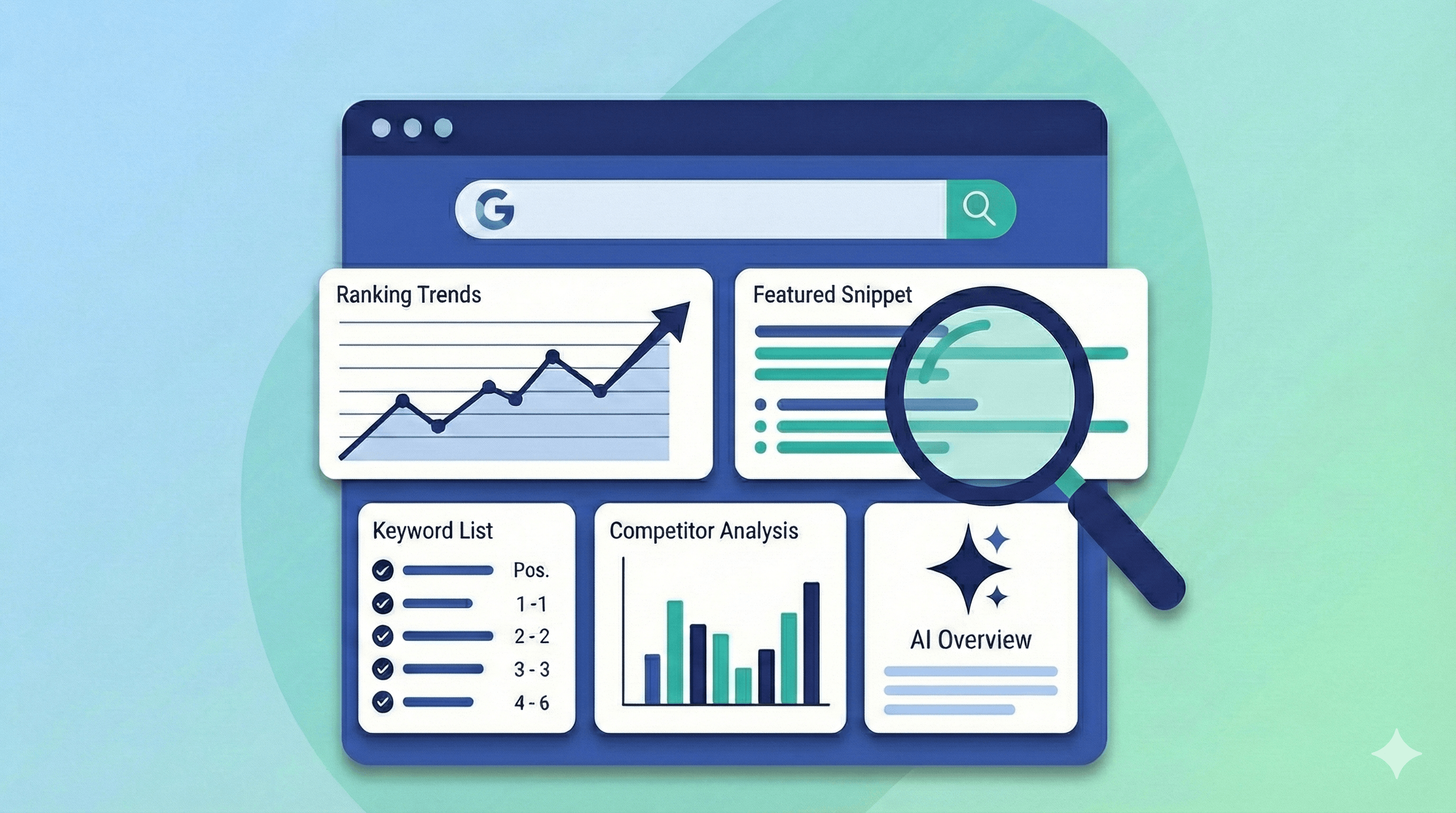
SEO Measurement Is Changing — Rankings Are Only One Piece of the Picture
For years, SEO reporting revolved around familiar numbers:
Keyword rankings.
Organic traffic.
Impressions.
Clicks.
Backlinks.
These metrics remain useful.
But AI search introduces another layer of visibility.
A customer may encounter your company inside an AI-generated answer without following a traditional blue-link journey.
Your brand might be mentioned.
Your content might be cited.
Your company could become part of a comparison.
A product or service could be recommended based on information gathered from multiple sources.
This means marketers need to start asking different questions.
Are customers encountering our brand when they ask relevant questions?
Which topics generate AI visibility?
Which pages are being cited?
Which third-party sources mention us?
Which questions do we appear to be associated with?
Are AI-driven visitors converting differently from conventional organic visitors?
An AI Marketing Agency Singapore can incorporate these questions into a broader measurement framework rather than treating SEO as a simple ranking exercise.
This does not mean abandoning Google Search Console, keyword tracking, or organic traffic reporting.
It means adding another layer.
Traditional SEO measures where you appear.
AI-search measurement increasingly asks whether you become part of the answer.
That distinction matters.
Current research indicates that AI-generated search experiences can reduce traditional click-through behavior, making visibility and attribution more complicated than simply measuring visits from search results.
Businesses therefore need a more complete picture of search performance.
Track rankings.
Track traffic.
Track conversions.
But also monitor brand mentions, citations, relevant AI responses, referral patterns, and the questions surrounding your category.
The objective is not to collect more dashboards.
It is to understand how people discover, evaluate, and trust your business in an increasingly AI-mediated search environment.
Conclusion
The biggest mistake businesses can make is treating AI search as another temporary SEO trend.
It is bigger than that.
The interface between people and information is changing.
Search is becoming more conversational.
Queries are becoming more contextual.
Users can ask follow-up questions instead of starting a new search every time.
AI systems can synthesize information from multiple sources and present an answer rather than simply handing users a list of websites.
That changes what businesses should build.
The foundation remains technical SEO.
The next layer is useful content.
Then comes topical authority.
Then comes credibility.
Then comes conversational relevance.
For an AI Marketing Agency Singapore, this creates an opportunity to help businesses connect these elements into a single strategy rather than treating SEO, content marketing, AI search, and brand authority as disconnected activities.
The practical roadmap is straightforward:
Start by identifying the real questions customers ask.
Map those questions to different stages of intent.
Build comprehensive topic clusters instead of isolated articles.
Create direct, evidence-backed answers.
Strengthen internal linking and website structure.
Develop recognizable expertise.
Build credible external references and brand signals.
Monitor how your company appears across traditional and AI-powered search.
Then update the strategy as search behavior changes.
The keyword is not dead.
It simply has a smaller job.
It helps identify language.
It does not fully explain intent.
The real competitive advantage is understanding the conversation behind the keyword.
Because the future of SEO may not be about fighting for position number one for a single phrase.
It may be about becoming one of the trusted sources that AI systems draw upon when customers ask difficult questions, compare solutions, and make important decisions.
The question businesses should be asking now is no longer:
“How do we rank for this keyword?”
It is:
“When our ideal customer starts asking questions about this problem, will our brand be part of the conversation?”
That is the new SEO battleground.
And the brands preparing for it will not simply chase search traffic.
They will build digital authority that travels with the customer from the first question to the final decision.
