

The End of Random Prospecting: AI Knows Your Next Customer Before You Do
July 22, 2026 at 2:52 pm
The Biggest Mistake B2B Companies Make When Using ChatGPT for Lead Generation
July 23, 2026 at 9:22 pm
Artificial intelligence has transformed content marketing faster than almost any technology before it. Businesses can now produce blog posts, product descriptions, emails, and social media content in minutes instead of days. Yet despite this incredible leap in productivity, one myth refuses to disappear: Google penalizes AI-generated content.
That misconception has caused countless businesses to hesitate. Some have abandoned AI entirely, while others continue publishing content with little confidence, fearing that every article will hurt their search rankings. Ironically, many companies focusing on avoiding AI are losing ground to competitors who understand how to use it strategically.
The truth is far more nuanced. Google has never declared war on artificial intelligence. What it actively fights is low-quality, manipulative, and unhelpful content—regardless of whether it was written by a human, AI, or a combination of both.
The internet has become saturated with articles generated at the click of a button. Many are repetitive, shallow, and written solely to target keywords rather than answer readers’ questions. These pages offer little value, and Google’s algorithms have become increasingly effective at identifying them. The issue isn’t the technology; it’s how people use it.
This presents a tremendous opportunity for businesses willing to take a smarter approach. AI can accelerate research, streamline writing, uncover new content ideas, and help marketers scale without sacrificing quality. When paired with human expertise, strategic editing, and genuine insights, AI becomes a competitive advantage rather than a liability.
Companies investing in AI Content Generation Singapore are already discovering that the real goal isn’t to publish more content. It’s to publish better content, faster.
In this article, we’ll separate SEO myths from reality, explore what Google actually rewards, explain why so much AI content fails to rank, and reveal how businesses can leverage AI Content Generation Singapore to build sustainable search visibility without compromising quality.
Google Isn’t Fighting AI—It’s Fighting Content That Wastes People’s Time
Many marketers still assume Google’s algorithms are designed to detect whether artificial intelligence wrote an article. That assumption couldn’t be further from reality.
Google’s mission has always been straightforward: deliver the most useful answer to every search query. The search engine doesn’t ask, “Was this written by AI?” Instead, it asks, “Does this content genuinely help the person searching?”
This distinction changes everything.
A poorly researched article written entirely by a human can rank just as poorly as an unedited AI-generated article. Likewise, an insightful article created with AI assistance—but strengthened through expert editing, original analysis, and practical experience—can perform exceptionally well.
Google’s Helpful Content System rewards pages that demonstrate genuine value. Readers should leave with better understanding, actionable advice, or meaningful solutions. If your content accomplishes that, the technology behind its creation becomes far less important.
Another major ranking factor is Google’s E-E-A-T framework: Experience, Expertise, Authoritativeness, and Trustworthiness. AI can certainly organize information, but it cannot replace firsthand experience, business knowledge, customer stories, or professional judgment. Those human elements transform ordinary content into authoritative resources that readers trust.
This is where many businesses misunderstand AI. They view it as a replacement for writers instead of an accelerator for experienced marketers.
Successful organizations use AI to handle repetitive tasks such as brainstorming, outlining, research, and drafting. Human experts then refine the content by adding original insights, validating facts, improving clarity, incorporating case studies, and ensuring every paragraph aligns with the audience’s intent.
Businesses embracing AI Content Generation Singapore understand that AI isn’t a shortcut around quality—it’s a tool that makes producing quality more efficient.
The companies winning today’s SEO race aren’t avoiding AI. They’re mastering it responsibly. By combining intelligent automation with human expertise, AI Content Generation Singapore enables brands to publish content that satisfies both search engines and real people.
Ultimately, Google rewards usefulness over process. Whether an article begins with a blank page or an AI prompt matters far less than whether it earns the reader’s trust, answers their questions, and delivers genuine value. That’s the principle that will continue shaping successful SEO for years to come.
Why Most AI Content Fails to Rank—And It’s Not Because AI Wrote It
When people claim that “AI content doesn’t rank,” they’re often confusing correlation with causation. The problem isn’t artificial intelligence itself. The problem is that many businesses publish AI-generated content exactly as it comes out of the tool, expecting search engines—and readers—to embrace it.
Unfortunately, Google has become remarkably good at recognizing content that offers little real value.
One of the biggest mistakes is producing generic articles that simply repeat information already found on hundreds of websites. AI models are trained on existing knowledge, which means they naturally generate common explanations unless guided by detailed prompts and refined by human expertise. If your article sounds exactly like everyone else’s, there’s no compelling reason for Google to rank it above the competition.
Another common issue is shallow content. Many AI-generated blogs answer only the most obvious questions while ignoring the deeper concerns readers actually have. Today’s users expect comprehensive resources, practical examples, industry insights, and actionable recommendations. Thin articles rarely satisfy search intent, regardless of who—or what—created them.
Accuracy is another challenge. AI can occasionally generate outdated statistics, misinterpret technical information, or confidently present incorrect facts. Publishing this information without verification damages credibility and weakens Google’s perception of your website’s trustworthiness.
Businesses also fall into the trap of keyword stuffing. Instead of writing naturally, they force target keywords into nearly every sentence, creating awkward copy that frustrates readers. Google’s algorithms have evolved far beyond counting keywords. They now evaluate context, relevance, readability, and overall user satisfaction.
Perhaps the biggest mistake is treating AI as an autopilot instead of a co-pilot.
Companies investing in AI Content Generation Singapore achieve stronger results because they understand that AI creates the first draft—not the final product. Every article undergoes editing, fact-checking, optimization, and enhancement before publication. That process transforms ordinary AI output into authoritative, engaging content that earns trust.
Original examples, customer success stories, expert opinions, and proprietary insights remain impossible to mass-produce through automation alone. These are precisely the elements Google increasingly rewards because they provide something readers can’t find elsewhere.
The businesses dominating search results aren’t avoiding AI. They’re combining it with human intelligence to create richer, more useful experiences. That’s the real difference between content that disappears into Google’s index and content that consistently earns rankings, traffic, and conversions through AI Content Generation Singapore.

The Winning Formula: How to Create AI Content Google Actually Wants to Rank
Artificial intelligence isn’t a magic button for SEO success, but it can become one of the most powerful productivity tools in modern content marketing when used strategically. The businesses consistently ranking on Google’s first page aren’t replacing human writers—they’re empowering them.
Everything begins with strategy.
Before a single word is generated, marketers should understand who they’re writing for, what questions their audience is asking, and what search intent they’re trying to satisfy. AI performs best when given clear direction. A vague prompt produces generic content, while a detailed brief generates a far stronger starting point.
Once the draft is created, the real work begins.
Experienced editors add perspective, industry expertise, and unique insights that AI simply cannot replicate. They include real client experiences, explain lessons learned from actual projects, provide practical examples, and offer opinions backed by experience. These additions create originality—the very characteristic Google values because it improves the user’s experience.
Fact-checking is equally essential. Every statistic, quotation, claim, and recommendation should be verified before publication. Trust is difficult to earn and easy to lose, making accuracy one of the strongest competitive advantages in today’s AI-driven landscape.
Formatting also plays a critical role. Long blocks of text discourage readers, while clear headings, concise paragraphs, bullet points, visuals, and logical flow improve readability. Google increasingly measures user engagement signals, and content that’s easier to consume often performs better.
Another overlooked strategy is continuously updating existing articles instead of endlessly publishing new ones. Refreshing statistics, expanding sections, improving internal links, and incorporating recent developments demonstrate that your content remains relevant over time.
Businesses embracing AI Content Generation Singapore recognize that sustainable SEO isn’t built through automation alone. It’s built by combining AI’s speed with human judgment, creativity, and strategic thinking.
Instead of asking, “Can AI write this article?” successful marketers ask a better question: “How can AI help us create the best article available on this topic?”
That subtle shift in mindset changes everything.
When organizations use AI Content Generation Singapore to accelerate research, organize ideas, improve consistency, and enhance productivity—while still relying on human expertise to elevate the final product—they create content that serves both readers and search engines.
The future of SEO doesn’t belong to businesses that reject AI. It belongs to those that learn how to use it responsibly, intelligently, and relentlessly in pursuit of higher-quality content.
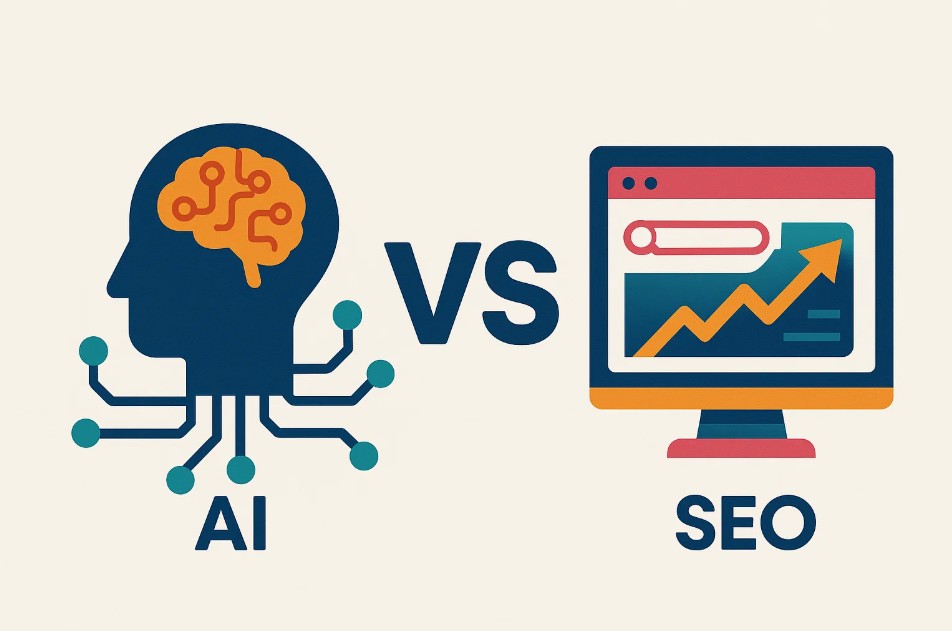
AI Doesn’t Replace Great SEO—It Multiplies It
The conversation around AI often centers on one question: “Will it replace content writers?” The better question is, “How much better can your content become when AI amplifies the expertise already inside your business?”
That’s where the real competitive advantage lies.
Search engine optimization has never been about publishing the most articles. It’s about publishing the most useful articles. AI simply allows businesses to execute proven SEO strategies with greater speed, consistency, and scale. Instead of spending hours brainstorming topics or researching supporting information, marketing teams can focus on creating insights that competitors cannot easily replicate.
Imagine cutting the time needed to build a comprehensive content calendar from several days to a few hours. Picture identifying long-tail keywords, clustering related topics, generating optimized outlines, and drafting initial articles in a fraction of the time. AI makes all of this possible without compromising quality—provided there’s a knowledgeable human steering the process.
Businesses leveraging AI Content Generation Singapore are discovering another significant advantage: consistency. Maintaining a steady publishing schedule has always been one of the greatest SEO challenges. AI helps remove creative bottlenecks, allowing marketing teams to consistently produce educational resources, thought leadership articles, industry commentary, and evergreen guides.
Beyond content creation, AI also excels at refreshing older content. Rather than letting existing blog posts become outdated, businesses can quickly identify opportunities to update statistics, improve readability, strengthen keyword coverage, expand explanations, and align articles with current search intent. These improvements often generate faster SEO gains than producing entirely new content.
AI also empowers marketers to personalize messaging across multiple audience segments. A single piece of content can be adapted for decision-makers, technical buyers, business owners, or different industries without starting from scratch each time.
The organizations achieving long-term SEO success aren’t using AI to flood the internet with content. They’re using AI Content Generation Singapore to create better experiences for readers while giving their marketing teams more time to focus on creativity, strategy, and business growth.
Ultimately, AI doesn’t diminish great SEO. It magnifies it.
The Costly AI Content Mistakes That Keep Businesses Off Google’s First Page
AI can dramatically improve content marketing, but only when used with discipline. Without a clear strategy, businesses often fall into predictable traps that prevent their content from ranking—and in many cases, damage their brand credibility.
One of the most common mistakes is publishing AI-generated drafts without meaningful editing. While today’s AI models produce impressively fluent writing, fluency is not the same as authority. Readers can quickly recognize content that feels generic, repetitive, or detached from real-world experience. Google’s algorithms are becoming equally adept at identifying pages that lack originality and practical value.
Another mistake is chasing quantity over quality. Some businesses believe publishing dozens of AI-generated articles each week will accelerate rankings. In reality, a library of mediocre content often dilutes a website’s authority instead of strengthening it. One comprehensive, insightful article frequently delivers more long-term SEO value than ten shallow posts.
Ignoring search intent is equally damaging. Ranking isn’t about inserting keywords into paragraphs—it’s about answering the questions behind those keywords. If readers leave your page because it fails to solve their problem, search engines notice. High bounce rates and low engagement send strong signals that the content isn’t meeting expectations.
Many companies also overlook the importance of internal linking, content updates, author credibility, and technical SEO. AI can assist with content creation, but it cannot compensate for poor website structure, slow loading speeds, broken links, or weak user experience. Effective SEO remains a holistic discipline.
Perhaps the most dangerous misconception is treating AI as a complete replacement for human expertise. AI is exceptional at accelerating workflows, organizing information, and generating ideas. It is not a substitute for industry knowledge, strategic thinking, customer understanding, or editorial judgment.
Organizations succeeding with AI Content Generation Singapore understand that every piece of content represents their brand. They review every article, validate every claim, strengthen every argument, and ensure every page offers something readers cannot easily find elsewhere.
When businesses combine AI efficiency with human excellence, they avoid the mistakes that hold competitors back—and position themselves for sustainable organic growth.
Conclusion
Artificial intelligence has fundamentally changed content marketing, and there’s no turning back. The businesses that continue debating whether AI should be used are asking yesterday’s question. The businesses leading tomorrow’s search results are focused on something far more important: how to use AI better than everyone else.
Google has made its priorities remarkably clear. It rewards content that demonstrates expertise, solves real problems, and provides genuine value. Whether that content begins with a keyboard, an AI prompt, or a combination of both is far less important than the quality of the final result.
That’s encouraging news for organizations willing to embrace AI responsibly.
Rather than fearing automation, forward-thinking businesses are using it to accelerate research, uncover new opportunities, improve efficiency, and scale content production without sacrificing standards. They understand that AI is a powerful assistant—but human experience, creativity, and strategic thinking remain the foundation of exceptional content.
The companies investing in AI Content Generation Singapore aren’t chasing shortcuts. They’re building smarter content workflows that produce authoritative articles, stronger customer engagement, and sustainable SEO performance. Every article is refined through expert review, strengthened with original insights, and optimized to serve real users instead of simply satisfying algorithms.
In an increasingly crowded digital landscape, average content will struggle to survive. Search engines are becoming better at identifying superficial information, while readers are becoming more selective about where they spend their attention. Businesses that rely solely on automation will find it increasingly difficult to earn trust, rankings, and conversions.
The winners will be those who combine AI’s speed with human wisdom.
If your goal is to create content that consistently ranks, attracts qualified traffic, and establishes your brand as an industry authority, now is the time to rethink your content strategy. Investing in AI Content Generation Singapore allows you to harness the efficiency of artificial intelligence while preserving the originality, expertise, and trustworthiness that Google—and your customers—value most.
Google doesn’t hate AI content. It hates content that fails people. Create content that genuinely helps your audience, and both your readers and your rankings will reward you.
