

AI Marketing for SMEs: How Smaller Teams Can Compete Without Enterprise Budgets
October 26, 2026 at 8:15 pm
Beyond Efficiency: How AI Can Help Marketing Teams Discover New Revenue Opportunities
October 27, 2026 at 3:43 pm
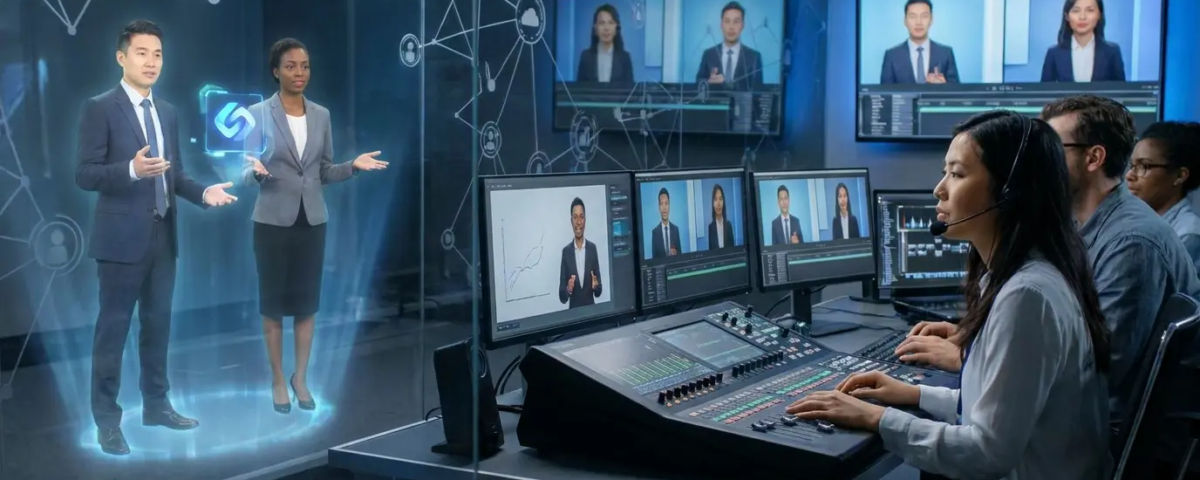
Business video content is entering a new era. For years, producing a professional marketing video required cameras, lighting equipment, locations, presenters, production crews, and considerable post-production work. For smaller businesses, these requirements often created a frustrating barrier. They understood the importance of video marketing, but the cost and complexity made consistent production difficult to sustain.
Artificial intelligence is changing that equation. Today, businesses can use synthetic brand ambassadors and AI-generated spokespeople to deliver product introductions, explain services, communicate company updates, and promote campaigns without organising a traditional filming session for every video. A digital presenter can be created, scripted, and adapted to different marketing needs, allowing businesses to rethink how they produce and distribute video content.
This shift is particularly relevant for companies exploring AI Content Generation Singapore to build a more consistent and scalable content strategy. Instead of treating every video as an isolated production project, businesses can develop repeatable workflows that connect scripts, visuals, digital presenters, and distribution into one coordinated process.
However, easier production does not automatically translate into better marketing. A synthetic presenter may look convincing, speak fluently, and deliver a polished message, yet still fail to engage an audience if the content lacks substance. Viewers are not simply looking for another face on their screens. They want useful information, credible communication, and a reason to pay attention.
The real opportunity lies in combining production efficiency with thoughtful storytelling. AI can help businesses produce more content, but human judgment must determine what deserves to be said, how it should be communicated, and why the audience should care.
For companies investing in AI Content Generation Singapore, synthetic brand ambassadors should therefore be viewed as more than a production shortcut. They are a new communication channel that can strengthen a broader marketing strategy when supported by clear positioning, consistent messaging, and genuine audience understanding.
The future of business video will not belong exclusively to companies with the biggest production budgets. It will increasingly favour those that know how to combine technology with purpose.
Beyond Digital Faces: What Synthetic Brand Ambassadors Actually Do
Not every AI-generated presenter serves the same purpose. Some are designed to represent a company across multiple marketing channels, while others exist primarily to entertain, educate, or influence a specific audience. Understanding these distinctions helps businesses avoid choosing technology simply because it looks impressive.
Synthetic brand ambassadors are digitally created personalities that represent a business, product, or service. They may have a consistent appearance, voice, personality, and communication style, allowing a brand to build a recognisable identity across its content. These personalities can appear in social media videos, advertisements, product explainers, and corporate presentations.
AI spokespeople serve a more specific communication function. They deliver scripted messages, introduce services, explain technical concepts, and present information in a structured format. A company might use an AI spokesperson to explain a software feature, introduce a new service offering, or communicate a campaign message to different audience segments.
Virtual influencers occupy a different space. They are designed to participate in social media culture, build communities, and generate audience engagement through an ongoing digital persona. Their effectiveness depends not only on appearance but also on personality, storytelling, and the relevance of their content.
For businesses exploring AI Content Generation Singapore, the important decision is not which avatar looks the most realistic. It is which format best serves the intended audience and business objective.
A B2B technology company may benefit from a professional presenter explaining complex services. A consumer brand might prefer a distinctive virtual character that supports a broader creative campaign. A professional services firm, meanwhile, may find that its actual executives remain the strongest representatives of its expertise.
AI can support all these approaches, but it should not erase the distinctions between them. A digital spokesperson is not automatically an influencer, and an attractive virtual personality is not automatically a credible business representative.
The smartest companies will define the role before selecting the technology. They will establish the personality, communication style, target audience, and boundaries of the synthetic identity before producing content at scale.
That discipline turns AI-generated presenters from visual novelties into purposeful business communication assets.

The Business Advantage: Producing More Video Without Carrying the Full Production Burden
For many businesses, video marketing has never suffered from a lack of ideas. The real obstacle is execution. Producing a single polished advertisement can involve scheduling presenters, securing locations, coordinating equipment, managing revisions, and organising post-production. When every campaign requires a fresh production process, consistency becomes expensive.
Synthetic brand ambassadors offer an alternative. Once a suitable digital presenter and production workflow have been established, businesses can create variations of approved scripts, adapt messaging for different audiences, and develop multiple content formats without arranging a new physical shoot for every video.
Consider a Singapore-based B2B software company launching a product across Southeast Asia. It could use an AI spokesperson to introduce the same core service in English and other supported languages, with localised scripts addressing different market needs. The underlying message remains consistent while the presentation adapts to each audience.
This approach can also help smaller companies compete more effectively. Through AI Content Generation Singapore, businesses can explore workflows that connect script development, AI-generated visuals, synthetic presenters, editing, and content distribution. The objective is to reduce repetitive production work while preserving quality and strategic control.
Potential applications include product demonstrations, corporate introductions, service explainers, educational videos, employee onboarding, and short-form social media advertisements. AI presenters can also support B2B lead generation by introducing a business problem, explaining a solution, and directing viewers towards a relevant landing page or enquiry form.
However, lower production barriers should not be confused with guaranteed cost savings or improved campaign performance. AI tools may require subscriptions, specialist skills, editing time, quality assurance, and additional revisions. Poorly executed content can also waste advertising expenditure regardless of how cheaply it was produced.
Businesses should therefore evaluate the entire workflow rather than focusing exclusively on the cost of generating an avatar.
A disciplined AI Content Generation Singapore strategy should measure production efficiency alongside audience retention, qualified enquiries, and conversion performance. The goal is not to flood every channel with synthetic presenters. It is to produce the right content, for the right audience, with less unnecessary friction.
The competitive advantage comes from combining repeatable production with meaningful communication. AI makes content easier to produce. Business strategy determines whether that content is worth watching.
The Trust Problem: Why a Perfectly Rendered Avatar Can Still Lose the Audience
Realistic faces do not automatically create human connection. In fact, the more convincingly a synthetic presenter resembles a real person, the more noticeable its weaknesses can become. Slightly unnatural expressions, poorly synchronised speech, repetitive gestures, and awkward pacing can make an otherwise polished video feel artificial.
The problem extends beyond visual quality. Audiences evaluate business communication through credibility, relevance, and intent. They want to understand whether a product solves their problem, whether a company can substantiate its claims, and whether the information deserves their attention.
An AI spokesperson that delivers generic sales language with a flawless smile may fail to answer these fundamental questions. A less sophisticated video containing a sharp insight, useful demonstration, or honest explanation may be far more persuasive.
This is why AI Content Generation Singapore should be approached as a content strategy challenge rather than a technology demonstration. The presenter must serve the message, not become the message itself.
Businesses can improve credibility by writing conversational scripts, using natural sentence structures, matching voice characteristics to the brand, and allowing sufficient pauses for the information to register. Visual choices should also reflect the context. A financial services explainer, for example, may require a restrained professional presentation, while a social media advertisement can adopt a more energetic style.
Accuracy matters just as much as appearance. AI-generated presenters must not invent customer experiences, professional qualifications, product capabilities, or endorsements. A fictional avatar cannot legitimately be presented as a satisfied customer who personally used a product when that experience never occurred.
Transparency is equally important when viewers could reasonably mistake synthetic content for authentic footage or believe that a real individual personally delivered a message. The appropriate disclosure depends on the applicable rules, platform requirements, and context.
Ultimately, businesses should test synthetic presenters against alternatives rather than assume audiences will prefer them. Measure viewing completion, engagement quality, click-through rates, and qualified enquiries. Read comments for signs of confusion or distrust.
A strong AI Content Generation Singapore workflow should also include human review before publication. Human judgment remains essential for understanding nuance, cultural expectations, and the emotional weight of a message.
The goal is not to make artificial people indistinguishable from real people at any cost. It is to make business communication useful, credible, and appropriate for the audience receiving it.
The New Rules of AI Video: Consent, Disclosure, and Brand Safety
As synthetic presenters become easier to create, the responsibilities surrounding their use become harder to ignore. Businesses can no longer treat AI-generated video as a purely technical production decision. They must consider identity rights, audience expectations, factual accuracy, and the rules governing commercial communication.
The first principle is straightforward: creating a digital likeness does not automatically grant permission to use it. Replicating an employee’s face, imitating an executive’s voice, or generating an advertisement featuring an identifiable person can raise questions about consent, privacy, intellectual property, and commercial usage rights. Written authorisation and clearly defined usage terms are important safeguards, although the precise legal requirements vary by jurisdiction.
Disclosure also requires careful judgment. The Interactive Advertising Bureau’s updated 2026 framework recommends a risk-based approach to AI transparency, focusing on uses that could mislead consumers about identity, authenticity, or real-world events.
Businesses should assess the rules applicable to their target markets and the policies of each publishing platform instead of assuming that one disclosure practice applies everywhere.
For companies exploring AI Content Generation Singapore, governance should be built into the production process from the beginning. This includes deciding who can approve an avatar, which voices may be used, what claims require evidence, and when an AI-generated presentation needs an explicit disclosure.
Consider a synthetic spokesperson promoting a business service. If the presenter makes an unsupported claim about guaranteed results, the fact that AI produced the video does not remove the advertiser’s responsibility. Similarly, a synthetic customer testimonial must not create the false impression that a real customer experienced results that never occurred.
A practical governance process should include documented consent, appropriate licensing, script verification, visual and audio review, disclosure checks, and final human approval. Businesses should also maintain records of approved avatar assets and the contexts in which they can be used.
These safeguards are not simply administrative burdens. They help prevent expensive mistakes, protect brand credibility, and establish clear accountability as production becomes more automated.
An effective AI Content Generation Singapore strategy needs creative freedom, but that freedom must operate within clear boundaries. The companies most likely to sustain long-term success will be those that innovate without treating trust as an afterthought.
From Digital Presenter to Business Results: Building an AI Spokesperson Strategy That Works
The difference between an impressive AI demonstration and an effective marketing campaign lies in the system behind it. Businesses that want synthetic brand ambassadors to generate measurable results must connect production decisions to clear commercial objectives.
Start by defining the job of the video. Is it designed to increase brand awareness, explain a complicated service, attract qualified leads, support sales conversations, or improve customer onboarding? Each objective requires a different message, creative format, and measurement approach.
Next, establish the audience’s needs. A business owner considering marketing services may respond to a practical explanation of wasted advertising expenditure, while a marketing director may care more about campaign attribution, workflow integration, and performance reporting. The synthetic presenter should communicate in a way that reflects these differences.
Script development comes next. A strong video begins with a relevant problem or compelling observation, develops one central idea, and gives viewers a logical next step. AI can help generate initial scripts and creative variations, but subject-matter expertise and editorial judgment must determine which versions deserve publication.
Companies adopting AI Content Generation Singapore can integrate synthetic presenters into a broader workflow involving content planning, visual production, localisation, editing, distribution, and performance analysis. This allows marketing teams to reuse approved messages across TikTok, LinkedIn, landing pages, email campaigns, and sales enablement materials without treating every channel as an isolated operation.
Measurement should extend beyond views and likes. Track audience retention, completion rates, click-through rates, qualified enquiries, conversion rates, and the cost of acquiring meaningful business opportunities. Compare synthetic-presenter videos with human-presenter videos, voiceover-led advertisements, and product-focused demonstrations where appropriate.
Businesses should also document what they learn. Which opening messages attract the right audience? Which presenter styles support credibility? Which calls to action produce qualified leads rather than empty engagement?
A mature AI Content Generation Singapore approach uses these findings to refine future campaigns instead of endlessly producing new content without learning from previous results.
Finally, assign clear responsibilities. Someone must own the message, someone must verify the claims, and someone must approve the finished video. Automation can accelerate execution, but accountability must remain visible.
When objectives, creative direction, governance, and measurement work together, synthetic brand ambassadors become more than digital performers. They become part of a repeatable marketing system designed to support real business outcomes.
Conclusion
Synthetic brand ambassadors and AI spokespeople are changing the economics of business video. They give companies new ways to develop advertisements, explain services, communicate across markets, and maintain a consistent publishing schedule without depending entirely on traditional filming.
For smaller businesses, this creates an opportunity to compete with more established brands on production consistency and creative experimentation. For larger organisations, it offers possibilities for localisation, internal communications, product education, and scalable content operations. Yet neither group should assume that a digital presenter automatically produces stronger marketing.
The real challenge is maintaining the qualities that make business communication effective. Audiences still expect truthful claims, relevant information, coherent storytelling, and a credible reason to engage with a brand. A synthetic spokesperson can deliver a message, but it cannot independently establish the company’s reputation or prove the value of its services.
This is where AI Content Generation Singapore becomes part of a broader strategic conversation. Businesses need to think beyond individual videos and consider how AI-generated content fits into their brand identity, customer journey, distribution strategy, and commercial goals.
That means deciding where synthetic presenters offer genuine value and where human participation remains essential. A digital spokesperson may be suitable for repeatable educational content, product introductions, and straightforward service explainers. Sensitive communications, complex negotiations, and situations that depend heavily on personal relationships may benefit from a real representative who can demonstrate experience, empathy, and accountability directly.
The strongest approach is not to replace human creativity with automated production. It is to use AI where it improves efficiency while preserving human oversight where judgment matters most.
Businesses should also remain attentive to evolving disclosure expectations, consent requirements, and platform policies. These considerations should influence creative planning from the outset, not become last-minute obstacles after a campaign has been produced.
Ultimately, AI Content Generation Singapore should support a marketing strategy built around business value, not content volume alone. More videos are useful only when they help the right people understand a product, trust a company, or take a meaningful next step.
The future belongs to businesses that can combine AI’s production capabilities with human insight, disciplined governance, and measurable performance. Synthetic brand ambassadors may become a familiar part of everyday marketing, but the brands that stand out will still be those with something worthwhile to say.
