

How AI Can Identify Entire B2B Buying Committees—Not Just Individual Leads
September 21, 2026 at 6:46 pm
Zero-Click Search Is Here: How Businesses Can Win Visibility Without a Website Click
September 22, 2026 at 6:53 pm

For years, B2B sales teams have relied on the same basic formula: build a database, identify decision-makers, send emails, make calls, follow up, and hope someone is ready to buy.
It worked when business data moved slowly.
Today, it is a different game.
A spreadsheet containing company names, job titles, email addresses, employee counts and industries may look like a valuable sales asset. But the moment that spreadsheet is exported, it starts aging. People change jobs. Companies restructure. Budgets move. Priorities shift. New technologies are adopted. Projects are cancelled. New buying committees are formed.
Most importantly, the information rarely tells you what is happening inside an account right now.
That is the fundamental weakness of a static lead list.
A company may perfectly match your ideal customer profile and still have zero interest in buying your solution this quarter. Another company may suddenly be researching a problem you solve, visiting relevant pages, evaluating vendors and involving multiple stakeholders. Yet if both companies sit inside the same spreadsheet, they can look almost identical.
This is where modern B2B Lead Generation for Singapore needs to evolve.
The question is no longer simply, “Who fits our target market?”
The better question is, “Who fits our target market and is showing meaningful signs of buying?”
That distinction changes everything.
Static lists are still useful as a foundation. You need accurate company and contact information before you can build a serious sales operation. But data alone is not intelligence.
A database tells you who exists.
Intent data can help reveal who is moving.
For sales teams operating in competitive B2B markets, that difference can determine where limited time and attention are invested.
The future is not necessarily about abandoning databases. It is about making them dynamic, continuously enriched and connected to the signals that indicate changing buyer behaviour.
The spreadsheet is not dead.
The spreadsheet as the entire prospecting strategy is.
Contact Data Tells You Who They Are. Intent Data Tells You What They May Be Doing.
There is a fundamental difference between contact information and buying intent.
Contact data tells you that a person exists.
Intent data provides additional context about activity that may indicate an emerging business need.
Imagine you are selling enterprise cybersecurity software.
A company with 2,000 employees, a large IT department and operations across Asia may fit your ideal customer profile. Traditional lead generation would put that company on your target list.
But now imagine another company with similar characteristics has recently expanded its security team, published technology-related job openings, repeatedly engaged with cybersecurity content, visited several pages related to security solutions and started researching vendors.
The second account may provide more useful context for sales prioritisation.
This is the shift from fit-based prospecting to signal-based prospecting.
For businesses investing in B2B Lead Generation for Singapore, this distinction is becoming increasingly important because B2B buyers rarely announce their intentions directly at the beginning of their journey.
They research quietly.
They compare providers.
They read reviews.
They consume content.
They visit websites.
They ask colleagues.
They investigate solutions.
By the time a prospect fills out a form or speaks to a salesperson, a significant amount of research may already have happened.
That means sales teams need visibility into the journey before the traditional “lead” appears.
Intent data can include many different types of signals. Website engagement is one example. Content consumption is another. Search behaviour, account activity, technology changes, hiring patterns and interactions with marketing campaigns can also provide useful context, depending on the data source and its quality.
None of these signals should automatically be treated as proof that a company is ready to buy.
That is an important distinction.
Intent is not certainty.
A person researching “CRM software” could be a buyer, a researcher, a student or simply someone gathering information.
The real value comes from combining multiple signals with firmographic information, account context and previous engagement.
One weak signal may mean very little.
Several relevant signals appearing together can provide a much stronger reason for a sales team to investigate.
That is where intent data becomes more than another marketing buzzword.
It becomes context.
And context is what static lead lists have historically struggled to provide.
AI Is Turning Mountains of Intent Signals Into Usable Sales Intelligence
Intent data creates another problem.
There can be too much of it.
A modern B2B organisation can generate enormous amounts of information across websites, CRM systems, email campaigns, advertising platforms, social channels and other digital touchpoints.
A human sales manager cannot realistically examine every signal from every account every day.
This is where artificial intelligence becomes useful.
AI can process large volumes of structured and unstructured information, identify patterns and surface accounts that deserve closer attention.
For companies investing in B2B Lead Generation for Singapore, the opportunity is not simply to collect more data. It is to turn scattered data into actionable intelligence.
Imagine a system that brings together several pieces of information.
A target account matches your ideal customer profile.
Someone from the organisation visits several pages related to your solution.
The company has recently increased hiring in a relevant department.
Several employees engage with a specific topic.
The account has previously interacted with your marketing campaigns.
A decision-maker has recently entered your database.
Individually, these events may not mean much.
Together, they may create a pattern worth investigating.
AI can help identify that pattern faster than a salesperson manually reviewing hundreds of accounts.
This does not mean AI magically knows which company will become a customer.
It means AI can help sales and marketing teams make sense of signals that would otherwise remain fragmented.
The real transformation is therefore not “AI replaces sales.”
It is “AI reduces the amount of information salespeople have to manually process.”
That distinction matters.
The salesperson still needs to determine whether the signal is legitimate. They still need to understand the business problem. They still need to engage the right stakeholders and have a meaningful conversation.
AI can help narrow the field.
Humans still have to work the opportunity.
This also creates a new requirement for data quality. Poor data fed into an intelligent system can still produce poor recommendations. AI does not eliminate bad data. It can sometimes process bad data faster.
That is why modern B2B organisations need a connected foundation involving CRM data, account information, behavioural signals, marketing activity and sales feedback.
The goal is not more dashboards.
The goal is better decisions.
The Old Lead Score Is Not Enough Anymore
Traditional lead scoring has played an important role in B2B marketing.
A prospect gets points for opening an email, visiting a page, downloading content or matching certain demographic criteria.
Eventually, the score reaches a threshold.
The lead is passed to sales.
Simple.
But buying behaviour is rarely that simple.
A prospect who downloaded an ebook six months ago may have a higher score than someone who visited your pricing page yesterday. Yet the second prospect could potentially be closer to a purchasing conversation.
This is where static scoring models can become misleading.
The problem is not that lead scoring is useless.
The problem is treating the score as a final answer rather than one piece of evidence.
For organisations building B2B Lead Generation for Singapore, the future of qualification is likely to involve more dynamic signals.
Consider two accounts.
Account A has accumulated 85 points over six months through content downloads and email engagement.
Account B has accumulated only 55 points but has suddenly shown several relevant behaviours over the past two weeks.
Which one deserves attention?
The answer cannot be determined from the score alone.
Sales teams need to understand what changed.
That is the difference between a static score and dynamic intent intelligence.
Instead of asking only, “How many points does this lead have?” the organisation can begin asking:
What has this account done recently?
Has engagement increased?
Are multiple people from the same company becoming active?
Is the activity related to a specific product or problem?
Has the account recently changed its technology, workforce or business structure?
Has a previously inactive account suddenly returned?
These questions provide a richer picture.
This also creates an opportunity for marketing and sales alignment.
Marketing can monitor account-level engagement and develop nurturing strategies around emerging interests.
Sales can receive more relevant context before reaching out.
CRM systems can capture the resulting interactions.
The feedback can then improve future prioritisation.
The result is a more adaptive sales process.
The lead score does not disappear.
It becomes one signal among many.
And that is a much more realistic representation of how modern B2B buying actually works.
AI-Powered Intent Data Can Completely Change the Prospecting Workflow
The biggest advantage of intent intelligence may not be the technology itself.
It is the change in workflow.
Traditional prospecting often begins with a list.
Sales representatives receive hundreds or thousands of contacts and work through them systematically.
That approach creates a volume problem.
If the list is large, salespeople spend significant time researching accounts that may never become opportunities.
An intent-driven workflow starts differently.
First, the organisation defines its ideal customer profile.
Then, it identifies relevant accounts.
From there, the system monitors available signals and changes in behaviour.
When meaningful activity appears, the account can be enriched with relevant company and contact information.
The salesperson then receives context rather than simply a name and email address.
This is where B2B Lead Generation for Singapore can become more strategic.
Instead of asking salespeople to “contact these 500 companies,” marketing and sales can work toward a more intelligent question:
“Which accounts deserve human attention right now, and why?”
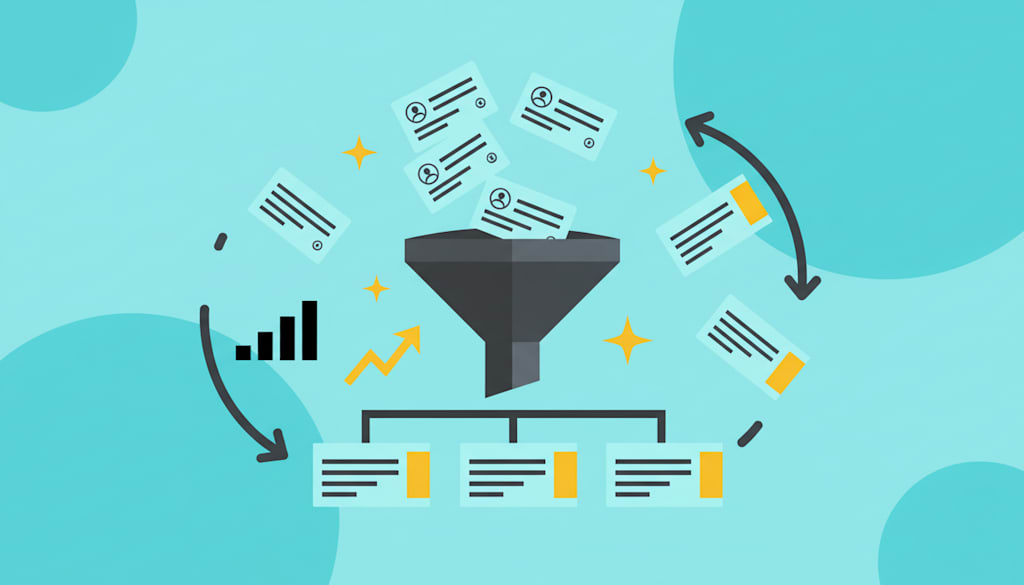
The workflow might look like this:
Identify the right accounts.
Monitor relevant signals.
Detect meaningful changes in activity.
Assess the strength and relevance of those signals.
Identify potential stakeholders.
Research the account.
Personalise the outreach.
Record the response.
Feed the response back into the system.
This creates a feedback loop.
The sales team does not simply receive leads. It generates information about which signals correlate with meaningful conversations.
Over time, that information can improve targeting and prioritisation.
This is particularly valuable in complex B2B sales where multiple stakeholders may be involved. iSmart Communications, for example, positions B2B lead generation around a combination of CRM automation, account-based marketing, databases, SEO, email, social media and other channels rather than relying on a single source of leads.
That broader approach matters because buying journeys are rarely linear.
A buyer may discover a company through search, consume content, engage with an email, discuss the solution internally and return weeks later.
The sales system needs to recognise the journey.
Static lists cannot do that alone.
Intent intelligence can help make the journey visible.
AI Does Not Replace the Salesperson. It Gives the Salesperson Better Context.
There is a temptation to frame AI-powered sales as a battle between humans and machines.
That is the wrong frame.
The more practical question is: What should machines handle so humans can spend more time doing what humans are actually good at?
AI can process data.
It can identify patterns.
It can flag unusual changes.
It can help prioritise accounts.
It can automate repetitive research.
But a sales conversation is more complicated.
A salesperson needs to understand business priorities.
They need to ask difficult questions.
They need to recognise objections.
They need to build credibility.
They need to understand internal politics within a buying committee.
They need to know when to push and when to listen.
None of that disappears because a machine identifies an intent signal.
In fact, better intelligence can make the human part of selling more valuable.
For B2B Lead Generation for Singapore, this means technology should be used to strengthen the connection between marketing intelligence and sales execution.
Imagine receiving an alert that says only:
“Company X is a hot lead.”
That is not particularly useful.
Now imagine receiving:
“Company X matches your ICP, has recently engaged with content related to your solution, several employees have interacted with relevant campaigns, and activity has increased compared with the previous period.”
That is a different starting point for a conversation.
The salesperson can research the account.
They can identify the likely business problem.
They can develop a relevant opening.
They can approach the conversation with context instead of generic messaging.
There is still a need for judgement.
Intent signals can be noisy. Some activity may be irrelevant. Some data may be incomplete. Some signals may have innocent explanations.
That is why AI-powered prospecting should not become an automated machine for spamming everyone who triggers an alert.
The goal is not to contact more people simply because technology makes it possible.
The goal is to make each sales interaction more informed.
Technology should reduce wasted effort, not remove human judgement.
The strongest sales teams will likely be those that combine machine-scale intelligence with human-level understanding.
Conclusion
The B2B sales database is not disappearing.
What is disappearing is the assumption that a database alone is enough.
A company can have one million contacts and still struggle to find the right prospects at the right moment.
Another company can have a much smaller target universe but use stronger signals, better account intelligence and more disciplined sales execution.
The competitive question is changing.
It is no longer simply about who has the largest database.
It is about who can identify meaningful changes in buying behaviour, interpret those changes intelligently and respond without wasting the prospect’s time.
That is the larger opportunity behind B2B Lead Generation for Singapore.
The modern B2B demand-generation engine increasingly connects several layers of intelligence.
CRM data provides history.
Firmographic data provides context.
Intent signals provide behavioural clues.
AI helps identify patterns.
Marketing automation helps respond at scale.
Account-based marketing provides focus.
Salespeople provide judgement and relationships.
Together, these systems create something a static spreadsheet never could: a living picture of the market.
This does not mean every intent signal represents a buying opportunity.
It does not mean AI can predict the future with certainty.
And it certainly does not mean sales teams should stop building relationships.
It means B2B organisations have an opportunity to become more precise about where they invest their attention.
The old model was straightforward:
Build a list.
Contact the list.
Follow up.
Repeat.
The emerging model is more dynamic:
Identify the right accounts.
Monitor relevant signals.
Understand what changed.
Prioritise intelligently.
Engage with context.
Learn from the response.
Adapt.
That is a fundamental shift in how B2B prospecting works.
Static lead lists gave sales teams names.
Intent intelligence can give those names context.
And in a market where buyers have more information, more choices and more ways to avoid generic sales outreach, context may become one of the most valuable assets a sales team can have.
The future of B2B sales is not about having more leads.
It is about knowing which signals deserve attention before the opportunity becomes obvious to everyone else.
The real question for B2B leaders is no longer whether they have enough leads.
It is whether their sales organisation can recognise when an account is starting to move.
