

AI Search Optimization in 2027: What Will Replace Traditional SEO Tactics?
September 23, 2026 at 5:35 pm
AI Marketing in 2027: What Will Separate Market Leaders From Everyone Else?
September 24, 2026 at 7:16 pm

For decades, marketing operated around the campaign calendar.
Teams planned campaigns weeks or months ahead. They decided on the audience, developed creative assets, scheduled emails, launched advertisements, published content and then waited for the numbers to come back.
It was orderly. It was measurable. And for a long time, it worked.
But the market has become faster than the campaign cycle.
Customer behaviour can change within hours. Search behaviour shifts. New competitors enter conversations. A social post suddenly gains traction. A prospect visits a website multiple times before filling out a form. Someone who appeared cold yesterday can become highly engaged today.
The problem is that traditional campaign-first marketing often treats these changes as exceptions instead of signals.
A campaign may continue running because it was approved two weeks ago, even though the audience has already moved on.
This is where an AI Marketing Agency Singapore approach becomes increasingly relevant. The value of AI is not simply producing more advertisements, articles or social posts. Its deeper value is helping businesses interpret what is happening and respond faster.
McKinsey describes the emerging model as a shift from campaigns toward continuous growth, where insights, creativity, personalization and orchestration operate together.
That changes the fundamental question.
Instead of asking, “How did our campaign perform?”
Marketing leaders can increasingly ask:
“What are customers doing right now?”
“What changed?”
“What signal are we missing?”
“What should we do next?”
That is a very different operating model.
Campaigns are not disappearing completely. They still have a role. But they are becoming components inside a larger, always-on marketing system.
The future belongs less to companies that simply execute campaigns efficiently and more to companies that can learn, adapt and act continuously.
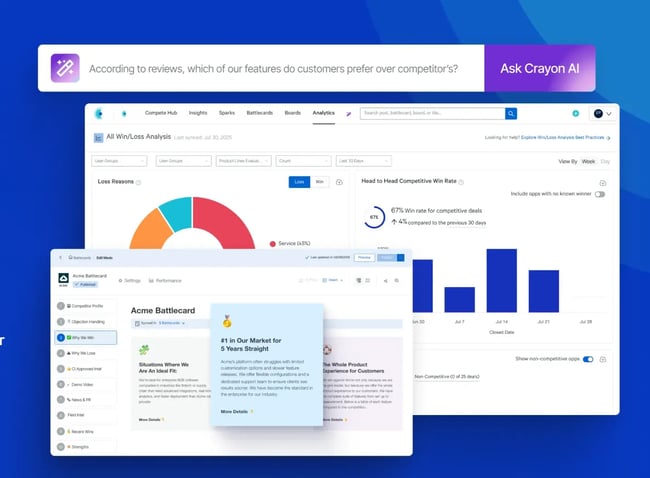
Stop Waiting for the Campaign Report. Start Reading the Market in Real Time.
Traditional marketing often operates on delayed information.
A campaign launches. Data accumulates. The team waits for enough information to appear. Someone prepares a report. A meeting is scheduled. Decisions are made. Changes are approved.
By the time action happens, the original opportunity may already be gone.
AI changes the economics of that delay.
An intelligent marketing system can continuously process signals from website behaviour, content engagement, CRM activity, email interactions, advertising performance, search behaviour and other customer touchpoints.
The objective is not simply collecting more data.
It is turning data into usable intelligence.
This is one of the areas where an AI Marketing Agency Singapore can help businesses rethink how marketing intelligence is used. Instead of treating data as something reviewed at the end of a campaign, businesses can use it as an ongoing source of decision-making.
Consider a simple scenario.
A prospect reads three articles about a specific business problem. They return to the website two days later. They download a guide. They visit a service page. Then they spend several minutes reviewing a pricing or enquiry page.
A campaign-first system might simply record these activities.
A real-time system asks a more important question:
“Does this behaviour indicate a change in intent?”
That distinction matters.
AI can help identify patterns across large volumes of interactions that would be difficult for a marketing team to monitor manually. Real-time personalization systems, for example, can adapt experiences based on current behaviour and available customer data.
Marketing therefore moves from historical reporting toward continuous observation.
The goal is not to eliminate analysis.
The goal is to shorten the distance between signal and action.
That is where marketing starts becoming a growth engine rather than a collection of disconnected campaigns.
Every Customer Interaction Leaves a Signal. AI Helps You Act on It.
Customers rarely announce their buying intentions clearly.
They leave clues.
They search for specific problems. They read certain pages. They watch videos. They open emails. They ignore others. They return to a website. They compare solutions. They ask questions. They interact with content.
Individually, these actions may appear insignificant.
Collectively, they can reveal a pattern.
This is where AI-powered marketing becomes particularly powerful.
An AI Marketing Agency Singapore can help businesses build marketing systems around these signals rather than relying exclusively on predefined audience segments.
Traditional segmentation might classify someone as a “technology decision-maker” or a “high-value prospect.”
AI-enabled systems can go further by considering what that person is doing now.
Are they becoming more engaged?
Has their behaviour changed?
Which topics are attracting their attention?
Which channel are they responding to?
Are they showing signs of purchase intent?
The shift is subtle but important.
Marketing stops treating customers as static profiles and starts treating them as changing states.
That creates the possibility of adaptive marketing journeys.
Someone showing low engagement might receive educational content.
Someone repeatedly researching a specific problem might receive deeper resources.
Someone demonstrating strong intent might be routed toward sales or a more commercially relevant experience.
The exact execution will vary by business, industry and customer journey. But the principle remains the same: the next marketing action should reflect the most relevant information available at that moment.
Salesforce describes this type of real-time engagement as marketing that adapts to changing customer behaviour, signals and intent instead of relying solely on batch-and-blast campaigns.
This is the real promise of AI.
Not automation for automation’s sake.
Responsiveness.
The ability to recognise that a customer who interacted with your brand yesterday may not be the same marketing opportunity today.
When every interaction becomes a signal, marketing becomes less about pushing messages and more about responding intelligently.
More Content Is Not the Answer. More Relevant Content Is.
The internet has never had a shortage of content.
It has a shortage of attention.
AI has made content production dramatically easier. Businesses can now generate blog drafts, social posts, advertisements, emails, videos and other marketing assets at a scale that would have required much larger teams in the past.
But there is a dangerous trap here.
If every company simply uses AI to produce more generic content, the result is not better marketing.
It is more noise.
The next advantage will come from relevance.
An AI Marketing Agency Singapore can help businesses move beyond content volume by connecting content creation with customer signals, audience intent and business objectives.
Imagine a company selling B2B technology solutions.
Instead of publishing the same message for everyone, its marketing system could identify different concerns among different audiences.
A CFO may care about cost and financial efficiency.
An operations leader may care about productivity and implementation.
A marketing leader may care about customer acquisition and measurable growth.
The underlying product may be the same.
The conversation should not be.
AI can make it easier to create variations of content while maintaining brand guidelines, tone and strategic direction.
But personalization should not become an excuse for robotic communication.
The human layer remains essential.
Brand positioning, creative judgment, emotional intelligence and strategic storytelling cannot simply be delegated to a machine and forgotten.
The strongest model combines both sides.
Humans define the strategy and boundaries.
AI helps interpret signals and scale execution.
This is especially important because Singapore marketers are already reporting significant pressure around personalization. Salesforce’s 2026 research found that 100% of surveyed Singapore marketers reported barriers to personalization, with fragmented and poor-quality data among the major challenges.
The lesson is straightforward.
AI does not automatically create relevant marketing.
Good data, clear strategy and intelligent orchestration are what turn AI into relevant marketing.
The future is not about publishing more.
It is about becoming more useful at precisely the moment the customer needs you.
Static Lead Lists Are Giving Way to Living B2B Buying Signals
B2B marketing has traditionally relied heavily on databases.
Find the right company.
Find the right job title.
Add the contact to a list.
Send the campaign.
Follow up.
Measure responses.
The problem is that a database tells you who someone is.
It does not necessarily tell you what they are doing right now.
A company can fit your ideal customer profile and still have zero interest in buying.
Another company may suddenly become highly relevant because its business circumstances have changed.
That is where AI-powered B2B lead generation begins to change the model.
An AI Marketing Agency Singapore can help businesses connect prospect information with behavioural and intent signals to create a more dynamic view of potential buyers.
Instead of relying entirely on static attributes, marketers can consider patterns such as content engagement, website activity, repeated interactions, topic interest and changes in behaviour.
The objective is not to predict the future with certainty.
It is to identify stronger signals of potential relevance.
This matters because B2B buying rarely involves one person.
A purchase may involve executives, finance, operations, IT, procurement and end users. Each stakeholder can enter the buying process at a different time and consume different information.
AI can help marketing teams detect relationships between these signals and create a more complete picture of the buying journey.
That changes the role of lead generation.
The goal is no longer simply to generate a larger database.
It is to identify meaningful opportunities earlier and give sales teams better context.
This is also where marketing and sales can become more tightly connected.
Instead of marketing saying, “Here are 5,000 leads,” the conversation can become:
“Here are the accounts showing meaningful engagement, these are the behaviours we observed, and this is why they may deserve attention.”
That is a much more useful conversation.
The future of B2B lead generation is therefore moving toward intelligence, timing and context.
The list is still useful.
But the signal is where the value begins.
AI Does Not Replace the Marketing Team. It Rewires How the Team Works.
There is a lazy way to think about AI in marketing.
Automate everything.
Reduce the team.
Generate more content.
Send more messages.
Move faster.
That is not necessarily transformation.
It can simply be old marketing with more automation.
The deeper change is operational.
An AI Marketing Agency Singapore can help businesses rethink which decisions should remain human-led and which repetitive processes can be supported by AI.
The marketing team should still determine positioning.
It should still define the brand voice.
It should still understand the customer.
It should still decide what the company should stand for.
AI can then support the operational loop around those decisions.
The emerging model looks more like this:
Observe → Understand → Decide → Act → Learn → Optimise.
AI can assist with observation by monitoring large amounts of information.
It can support understanding by identifying patterns and relationships.
It can assist decision-making by surfacing possible next actions.
It can support execution through content, personalization and workflow automation.
Then it can help analyse what happened and feed those lessons back into the system.
That creates a continuous learning loop.
McKinsey describes this emerging marketing environment as one where marketers increasingly need to orchestrate data, technology and AI-enabled execution rather than simply manage traditional campaigns.
This does not make marketers less important.
It makes strategic judgment more important.
When machines can generate ten variations of an advertisement, the valuable question becomes which strategic idea deserves those ten variations.
When AI can produce a hundred pieces of content, the question becomes which message is worth amplifying.
When automation can execute thousands of interactions, the question becomes whether those interactions are actually useful.
AI increases execution capacity.
Human judgment determines whether that capacity creates value.
That is the real organisational shift.
Marketing teams are moving from being campaign producers toward becoming operators of an intelligent growth system.
Conclusion
The campaign is not disappearing.
Product launches will still happen.
Seasonal promotions will still matter.
Events will still require promotion.
Brand campaigns will still create cultural moments.
What is changing is the role of the campaign.
The campaign is no longer necessarily the entire marketing system.
It is one component inside a continuous growth engine.
An AI Marketing Agency Singapore can help businesses make this transition by connecting strategy, data, content, lead generation, personalization and automation into a more responsive marketing ecosystem.
That ecosystem should continuously observe what customers are doing.
It should identify meaningful changes.
It should adjust messaging where appropriate.
It should prioritise promising opportunities.
It should learn from performance.
And it should feed those insights back into future decisions.
That is fundamentally different from launching a campaign and waiting for the final report.
It is also why simply adding AI tools to an existing marketing department may not be enough.
McKinsey’s 2026 research argues that many organisations are experimenting with AI but have not yet fundamentally rewired their marketing workflows around it.
The difference between using AI and becoming an AI-enabled marketing organisation is therefore significant.
One adds technology.
The other changes the operating model.
For business leaders, the strategic question is no longer simply, “How can we use AI in marketing?”
A better question is:
“How should marketing operate now that AI can continuously observe, analyse, create, personalise and optimise?”
That question reaches beyond campaigns.
It reaches into data architecture, customer experience, content strategy, sales alignment, technology and organisational design.
The companies that adapt will not necessarily abandon campaigns.
They will stop depending on campaigns as the primary engine of growth.
Marketing will become a living system.
It will listen.
It will learn.
It will respond.
And it will continuously improve.
That is the real end of campaign-first marketing.
Not the end of campaigns.
The end of waiting.
