

Will Every Company Need an AI Marketing Department by 2030?
August 18, 2026 at 7:04 pm
Why AI Search Is Creating Winners and Losers in B2B Marketing
August 20, 2026 at 6:13 pm
For years, marketers have worried about automation taking their jobs. Now that generative AI can write copy, analyze data, create images, generate videos, personalize campaigns, and automate customer interactions, that fear has become more understandable. But the bigger story is not that AI is replacing marketing. It is that AI is rapidly replacing many of the repetitive tasks that once consumed a marketer’s day.
The distinction matters. A marketer spending hours compiling reports, researching prospects, producing variations of ad copy, or manually segmenting audiences is operating very differently from a marketer using AI to accelerate those activities and focus on higher-value decisions.
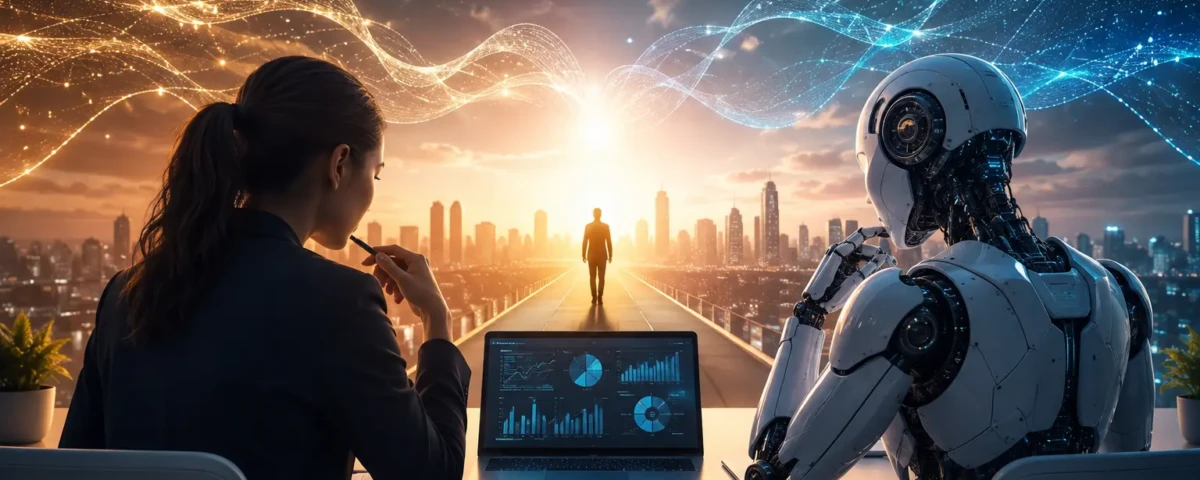
Modern AI marketing combines machine capability with human judgment. AI can process enormous amounts of information quickly, identify patterns, automate repetitive workflows, and support personalization at scale. Human marketers still need to determine what the business should say, who it should say it to, why the message matters, and how it connects to the company’s broader commercial strategy. This combination is already becoming central to modern marketing strategies in Singapore and across Asia.
That is where an AI Marketing Agency Singapore can become valuable. The goal should not be to replace the marketing team with machines. It should be to give marketers better tools, better intelligence, and more time to think.
The real threat is therefore not AI itself. It is refusing to adapt while competitors learn how to use it.
The marketers who thrive will not necessarily be the ones who know every AI tool. They will be the ones who understand how to combine technology with strategy, creativity, customer insight, and commercial judgment.
AI Can Execute at Machine Speed — But Strategy Still Needs a Human Brain
AI has an obvious advantage: speed.
A marketer can spend an afternoon analyzing campaign performance, while AI can process large volumes of information almost instantly. It can identify patterns across customer behavior, compare audience segments, generate content variations, assist with keyword research, predict potential outcomes, and automate repetitive marketing activities.
That capability changes the economics of marketing.
AI can help marketers analyze customer behavior, personalize messaging, automate processes, generate predictive insights, and monitor campaigns in real time. These capabilities can improve efficiency while giving marketing teams more opportunities to make data-driven decisions.
But speed is not strategy.
A machine can generate 50 headlines. It does not automatically know which headline fits the company’s positioning. It can summarize customer feedback. It does not necessarily understand the emotional reason a buyer chooses one supplier over another. It can identify that a campaign is underperforming. It still requires human judgment to determine whether the problem is the offer, positioning, creative execution, audience, timing, or something deeper.
This is why an AI Marketing Agency Singapore should not simply be measured by how many AI tools it uses. The real question is whether those tools create better marketing decisions.
The smartest organizations will use AI to remove friction from execution while keeping humans responsible for direction.
Think of AI as the engine, not the driver.
The engine can make the vehicle dramatically faster. But without someone who knows where to go, speed becomes irrelevant.
That distinction will define the next generation of marketing teams.

The Marketers AI Cannot Easily Replace Are the Ones Who Think Beyond the Prompt
The easiest marketing tasks for AI to automate are usually the ones with predictable structures.
Write a product description. Summarize a report. Create social media variations. Generate email subject lines. Analyze a spreadsheet. Repurpose an article.
These tasks are valuable, but they are not the full definition of marketing.
Great marketing involves ambiguity. It requires understanding people, markets, competitors, culture, timing, positioning, and business objectives. It requires knowing when conventional wisdom is wrong. Sometimes the strongest campaign comes from challenging an assumption rather than following the data.
That is where human marketers retain enormous value.
A strong marketer can recognize that a technically accurate message feels completely wrong to a customer. They can understand why a competitor’s campaign resonates emotionally. They can identify an opportunity that does not yet appear clearly in the data. They can make a judgment call when the information is incomplete.
AI can support those decisions, but it does not remove the need for them.
An AI Marketing Agency Singapore can use AI to enhance research, personalization, automation, predictive analytics, and campaign optimization, while experienced marketers remain responsible for strategic interpretation. This combination of AI capability and human expertise is particularly important when marketing across diverse markets in Singapore and Asia.
The future marketer therefore needs to become less obsessed with producing more and more obsessed with deciding better.
That is a profound shift.
The value of a marketer will increasingly be measured not by how quickly they can complete a task, but by how effectively they can use technology to solve a business problem.
AI can generate possibilities.
Marketers must decide which possibilities are worth pursuing.
Meet the AI-Augmented Marketer: Faster, Smarter, and More Dangerous to Competitors
The AI-augmented marketer is not a science-fiction character. This role is already emerging.
Imagine a marketer beginning the morning with an AI system that summarizes campaign performance, highlights unusual changes in customer behavior, identifies promising leads, and recommends areas requiring attention.
Instead of spending hours collecting information, the marketer starts with insights.
The marketer then uses AI to research an audience, generate initial creative concepts, create multiple content variations, personalize messaging, automate parts of the customer journey, and analyze performance. Human expertise remains involved at every important stage: deciding the positioning, reviewing outputs, correcting mistakes, refining the message, and determining the next strategic move.
This is augmentation.
The difference is productivity without sacrificing judgment.
An AI Marketing Agency Singapore can help businesses build this kind of approach by combining AI-powered marketing capabilities with human expertise. AI can support data analysis, customer segmentation, automation, predictive insights, customer experience, and real-time campaign monitoring.
The result is not necessarily a smaller marketing department.
It can be a more capable one.
A team that previously spent 40 hours producing and distributing content might use AI to compress much of the production workload and redirect those hours toward strategy, experimentation, customer research, sales alignment, and campaign optimization.
That is the real opportunity.
AI gives marketers leverage.
And leverage changes what a small team can accomplish.
The marketer of the future will increasingly operate less like a factory worker completing individual tasks and more like an architect designing systems that allow people and machines to work together.
That is a far more valuable role.
The Skill Set Is Changing: Marketers Must Learn to Direct Machines
The next generation of marketing talent will need a different combination of skills.
Knowing how to use AI tools will matter, but tool knowledge alone will not be enough. Platforms will change. Models will improve. New interfaces will appear. What matters more is the ability to understand how AI can be applied to marketing problems.
Marketers will need stronger AI literacy.
They will need to know how to construct useful prompts, evaluate AI outputs, verify information, interpret data, design workflows, automate repetitive processes, and recognize where human review is necessary.
But technology skills must sit alongside traditional marketing fundamentals.
Positioning still matters.
Customer psychology still matters.
Brand strategy still matters.
Storytelling still matters.
Sales alignment still matters.
An AI Marketing Agency Singapore can provide technological capabilities, but businesses still need marketers who understand the commercial context behind those capabilities. AI should improve the connection between data, strategy, execution, and measurable business outcomes rather than become another disconnected software layer.
The strongest marketers will therefore become hybrids.
Part strategist.
Part technologist.
Part analyst.
Part creative thinker.
Part experimenter.
They will understand enough about AI to know what is possible, enough about marketing to know what matters, and enough about business to know what actually drives revenue.
This is also why blindly trusting AI is dangerous.
AI-generated content can be inaccurate. AI-generated strategies can reinforce poor assumptions. AI-generated recommendations can look sophisticated while missing the real business problem.
Human judgment remains the quality-control layer.
The winning marketer will not ask, “What can AI do for me?”
They will ask a better question:
“What can I accomplish now that I could not accomplish efficiently before?”
That mindset creates much greater strategic value.
Businesses Must Stop Asking Whether AI Will Replace Their Team
The wrong question for business leaders is, “Will AI replace our marketers?”
A better question is, “What would our marketing team achieve if every marketer had an intelligent assistant?”
That shift changes the conversation from fear to capability.
Businesses can begin by identifying repetitive processes that consume disproportionate amounts of marketing time. Reporting, research, content repurposing, audience analysis, lead qualification, campaign monitoring, and certain administrative workflows may offer immediate opportunities for AI assistance.
From there, teams can introduce AI gradually rather than attempting a chaotic overnight transformation.
An AI Marketing Agency Singapore can help organizations identify where AI can strengthen marketing processes while retaining human oversight. AI-powered marketing can support personalization, automation, predictive analytics, campaign optimization, and real-time monitoring, but implementation still needs clear objectives and responsible human decision-making.
Companies also need governance.
Who approves AI-generated content?
How is factual accuracy checked?
What customer information can AI systems access?
How is brand voice protected?
How are performance improvements measured?
These questions matter because AI adoption without process discipline can create faster mistakes instead of better marketing.
The objective should be measurable improvement.
Are campaigns becoming more efficient?
Is lead quality improving?
Are marketers spending more time on strategic work?
Are customers receiving more relevant experiences?
Is the marketing team producing better results with the same resources?
Those are the metrics that matter.
AI should not become another shiny technology initiative that generates excitement for three months and then disappears into the software graveyard.
It should become part of how marketing operates.
The companies that understand this early will have an advantage that goes beyond technology.
They will have a workforce that knows how to use technology better than competitors do.
Conclusion
Marketing is entering a period where individual productivity can increase dramatically.
One marketer with the right AI systems can research faster, create more variations, analyze more information, personalize more communications, and automate more processes than was practical only a few years ago.
But productivity alone does not guarantee success.
The real advantage comes from combining machine intelligence with human judgment.
That is why the future belongs to AI-augmented marketers.
They will use AI to remove repetitive work without surrendering responsibility for strategic decisions. They will automate execution while becoming more deeply involved in positioning, customer understanding, experimentation, and growth.
An AI Marketing Agency Singapore represents this broader shift: using AI not as a substitute for marketing expertise, but as a force multiplier for it. The combination of AI and human expertise can help businesses improve efficiency, personalization, predictive insights, customer experiences, and competitive positioning.
The uncomfortable truth is that some marketing roles will change significantly. Some tasks will disappear. Some traditional workflows will become obsolete. And some marketers who refuse to adapt will eventually find themselves competing against people who can accomplish the same work dramatically faster.
But that does not mean marketing itself is disappearing.
Quite the opposite.
As AI makes execution easier, strategic thinking becomes more valuable.
The marketer’s job is moving upward.
From producing to directing.
From executing to orchestrating.
From collecting data to interpreting it.
From creating one campaign at a time to building intelligent systems that continuously learn and improve.
The future will not belong to marketers who fight AI.
It will not belong to marketers who blindly hand everything over to AI either.
It will belong to marketers who know how to make AI work harder, while keeping humans responsible for the decisions that matter.
AI will change marketing. The marketers who learn to harness it will change what marketing can achieve.
