

How CEOs Should Think About AI Marketing Investments
August 3, 2026 at 7:03 pm
The Biggest AI Marketing Myths Costing Companies Money
August 4, 2026 at 6:19 pm

There was a time when B2B appointment setting relied almost entirely on persistence. Sales representatives spent hours building prospect lists, manually researching companies, cold calling decision-makers, and sending hundreds of nearly identical emails hoping a handful would receive a reply. It was a numbers game where success depended on volume rather than precision. While this approach delivered results in the past, today’s B2B buyers have changed dramatically.
Modern decision-makers are overwhelmed with sales messages every day. Executives receive countless emails, LinkedIn connection requests, and cold calls, making it increasingly difficult for businesses to capture attention. Generic outreach no longer works because buyers expect personalized conversations that address their specific challenges and business goals. Companies that continue relying solely on traditional appointment setting methods are finding it harder to generate qualified meetings and maintain healthy sales pipelines.
This shift has created a new opportunity for businesses willing to embrace artificial intelligence. AI-assisted appointment setting enables organizations to identify higher-quality prospects, personalize outreach at scale, automate repetitive tasks, and prioritize leads based on genuine buying intent. Instead of spending valuable hours searching for opportunities, sales professionals can focus on building relationships and closing deals.
Companies investing in intelligent outreach are also strengthening their overall B2B Lead Generation for Singapore strategy by connecting marketing insights with sales execution. AI doesn’t simply automate activity—it makes every interaction more meaningful and measurable.
The businesses that dominate tomorrow’s markets will not necessarily have the largest sales teams. They will have the smartest ones—teams empowered by technology to engage the right prospects at precisely the right moment. That is why AI-assisted appointment setting is no longer a futuristic concept; it is rapidly becoming the new standard for sustainable B2B growth.
AI-Assisted Appointment Setting Is More Than Automation—It’s Intelligent Selling
Many people mistakenly believe AI simply automates repetitive tasks. While automation is one component, AI-assisted appointment setting goes far beyond scheduling emails or managing calendars. It transforms the entire prospecting process into an intelligent system that continuously learns, adapts, and improves.
Artificial intelligence analyzes enormous amounts of business data, including industry trends, company growth signals, hiring activity, website behavior, buying intent, CRM history, and engagement patterns. By combining these insights, AI helps sales teams identify which prospects are most likely to convert into customers. Instead of chasing every lead equally, businesses can focus their resources where they matter most.
This intelligence enables highly personalized outreach that feels authentic rather than automated. AI can help generate tailored email introductions, recommend optimal sending times, suggest relevant conversation topics, and even identify shared business interests before the first meeting. The result is outreach that resonates with decision-makers instead of being ignored.
Organizations that integrate AI into their B2B Lead Generation for Singapore initiatives are discovering that quality consistently outperforms quantity. Rather than sending thousands of generic messages, they deliver fewer but significantly more relevant conversations, leading to higher response rates and stronger conversion performance.
AI also provides continuous learning. Every opened email, replied message, scheduled meeting, and successful opportunity becomes additional data that improves future campaigns. Over time, appointment setting becomes smarter, faster, and increasingly predictable.
Perhaps the greatest misconception is that AI replaces sales professionals. In reality, it removes administrative burdens so experienced salespeople can devote more time to what humans do best: understanding complex business problems, building trust, negotiating solutions, and nurturing long-term relationships. AI amplifies human capability—it does not replace it.
Throughout this evolution, businesses investing in B2B Lead Generation for Singapore gain a significant competitive advantage by combining data-driven intelligence with authentic human engagement.
The future of appointment setting belongs to organizations that recognize AI as a strategic partner rather than merely another software tool.
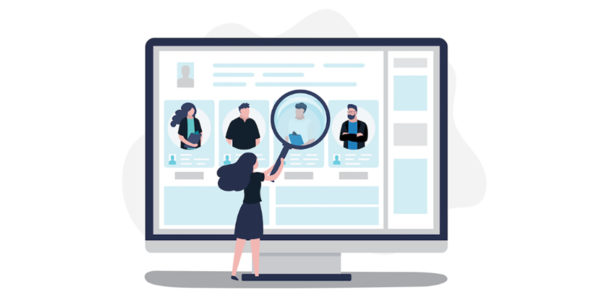
Stop Chasing Every Prospect—Let AI Find the Buyers Who Are Ready to Talk
One of the biggest challenges in B2B sales has never been finding companies—it has been identifying the companies that are actually ready to buy. Traditional appointment setting often forces sales development representatives (SDRs) to work through long prospect lists, hoping to uncover a handful of qualified opportunities. This approach consumes valuable time, increases acquisition costs, and often leads to inconsistent results.
AI changes this equation entirely.
Instead of treating every prospect equally, AI evaluates hundreds of buying signals simultaneously. Company expansion, executive hiring, funding announcements, website visits, content engagement, technology adoption, industry trends, previous CRM interactions, and online behavior all contribute to a more accurate picture of purchase intent. Rather than guessing who might be interested, AI helps sales teams prioritize those already showing indicators that they are entering the buying cycle.
This intelligence dramatically improves outreach effectiveness. AI can recommend which prospects deserve immediate attention, which accounts should receive nurturing campaigns, and which contacts are unlikely to convert in the near future. Sales teams become proactive instead of reactive.
Beyond identifying opportunities, AI also personalizes communication at scale. It can suggest customized email subject lines, tailor messaging to a prospect’s industry, recommend relevant case studies, and optimize follow-up timing based on previous engagement. Every interaction feels more relevant because it is informed by real data rather than assumptions.
Organizations implementing B2B Lead Generation for Singapore are increasingly combining AI with marketing automation and CRM platforms to create a unified sales ecosystem. Marketing campaigns generate valuable behavioral insights, while AI transforms those insights into prioritized sales opportunities. The result is a healthier pipeline filled with prospects who are genuinely interested instead of simply being available.
AI also ensures consistency. Every lead is evaluated using the same intelligent criteria, eliminating much of the subjective decision-making that often causes promising opportunities to be overlooked. Managers gain greater confidence in pipeline quality because lead qualification is based on measurable data rather than individual opinion.
The impact extends beyond appointment setting. Sales representatives spend less time researching companies, less time writing repetitive emails, and less time pursuing low-probability prospects. Instead, they invest their energy where it matters most—building meaningful conversations with buyers who are already demonstrating intent.
Businesses embracing B2B Lead Generation for Singapore are discovering that AI doesn’t just increase productivity; it fundamentally improves the quality of every stage in the sales journey. In a competitive market, working smarter has become far more valuable than simply working harder.

AI Doesn’t Replace Salespeople—It Creates High-Performance Sales Teams
Few topics generate as much debate as artificial intelligence replacing human jobs. In B2B appointment setting, this concern is understandable. If AI can research prospects, write emails, qualify leads, and schedule meetings, what role remains for sales professionals?
The answer is simple: almost everything that truly matters.
Business decisions are still made between people. Trust cannot be automated. Strategic discussions cannot be delegated entirely to algorithms. Long-term partnerships are built through empathy, experience, credibility, and the ability to understand complex organizational challenges. These are qualities that remain uniquely human.
What AI does exceptionally well is remove the repetitive work that prevents sales professionals from focusing on high-value activities. Instead of spending hours compiling prospect lists or manually tracking follow-up schedules, sales teams can devote more time to preparing for meetings, understanding customer pain points, and crafting solutions that deliver measurable business outcomes.
The strongest organizations recognize that AI and human expertise complement one another. AI provides speed, accuracy, consistency, and analytical power. Humans contribute creativity, emotional intelligence, negotiation skills, and strategic thinking. Together, they create a sales engine that is both efficient and deeply customer-centric.
This is why forward-thinking businesses are integrating AI into their B2B Lead Generation for Singapore strategies. Rather than viewing AI as a replacement for SDRs, they see it as an intelligent assistant that enhances every stage of prospect engagement. Sales representatives become more productive because they spend less time on administrative tasks and more time building relationships that generate revenue.
AI also supports continuous improvement. By analyzing successful meetings, response rates, objections, and conversion patterns, it provides actionable insights that help entire sales teams refine their messaging and outreach strategies. Every campaign becomes an opportunity to learn and optimize.
Companies that combine AI-powered intelligence with experienced sales professionals consistently outperform those relying on either approach alone. They schedule better meetings, close deals faster, and create stronger customer relationships that extend well beyond the initial appointment.
As markets become increasingly competitive, businesses investing in B2B Lead Generation for Singapore are positioning themselves to scale without sacrificing personalization. The future of B2B sales isn’t about choosing between humans and AI—it’s about building a partnership where each amplifies the strengths of the other.
The companies that understand this balance today will be the market leaders tomorrow.
The Companies Winning Tomorrow Are Preparing for AI Today
Artificial intelligence is no longer an experimental technology reserved for global enterprises with unlimited budgets. It has become an accessible business advantage that allows companies of every size to compete more effectively. The question is no longer whether AI will transform B2B appointment setting—it already has. The real question is whether your business is prepared to capitalize on it before competitors do.
Successful implementation begins with understanding your existing sales process. Businesses should identify repetitive tasks that consume valuable selling time, such as prospect research, lead qualification, email follow-ups, meeting scheduling, CRM updates, and performance reporting. These activities are ideal candidates for AI automation because they require consistency, speed, and data analysis rather than strategic judgment.
The next step is integrating AI with existing business systems. Customer Relationship Management (CRM) platforms, marketing automation software, LinkedIn outreach tools, email marketing platforms, and sales intelligence solutions become significantly more powerful when connected through AI. Instead of isolated systems generating disconnected information, organizations gain a unified view of every prospect and every interaction.
Businesses investing in B2B Lead Generation for Singapore are increasingly adopting this integrated approach. Marketing teams generate awareness, AI identifies buying signals, sales teams engage qualified prospects, and analytics continuously optimize future campaigns. The result is a seamless revenue generation process driven by real-time intelligence rather than guesswork.
However, technology alone is not enough. Companies must also invest in training their sales teams to work alongside AI. Representatives should learn how to interpret AI recommendations, validate prospect insights, personalize conversations, and build trust during every interaction. AI can identify opportunities, but skilled professionals transform those opportunities into lasting customer relationships.
Measuring success is equally important. Businesses should track key performance indicators such as qualified meetings booked, response rates, sales cycle duration, conversion rates, customer acquisition costs, and pipeline value. These metrics reveal where AI delivers the greatest impact and where further optimization is needed.
Organizations embracing B2B Lead Generation for Singapore understand that AI implementation is not a one-time project. It is an ongoing strategy of learning, refining, and continuously improving sales performance. Those who begin this journey today will build a sustainable competitive advantage that becomes increasingly difficult for competitors to match.
The Future Belongs to Businesses That Let Data Drive Every Conversation
The next generation of B2B sales will not be defined by who sends the most emails or makes the most phone calls. It will be defined by who understands their prospects better than anyone else. In an increasingly competitive marketplace, intelligence is becoming the most valuable sales asset.
AI-powered appointment setting enables organizations to move beyond assumptions and make decisions based on real buyer behavior. Instead of relying on intuition alone, businesses can identify which accounts are actively researching solutions, which decision-makers are engaging with relevant content, and which companies are entering growth phases that create new purchasing opportunities.
This level of insight transforms every customer interaction. Sales professionals approach meetings with a deeper understanding of industry challenges, organizational priorities, and potential pain points. Conversations become consultative rather than transactional because they are supported by meaningful data.
Businesses implementing B2B Lead Generation for Singapore are discovering that AI also improves collaboration between marketing and sales teams. Marketing campaigns no longer end when a lead is generated. Instead, engagement data continues flowing into AI systems that help sales prioritize outreach, personalize communication, and monitor prospect readiness throughout the buying journey.
Another significant advantage is scalability. As businesses expand into new industries or geographic markets, AI can analyze larger volumes of prospects without requiring proportional increases in headcount. Organizations can accelerate growth while maintaining consistent quality across every outreach campaign.
AI also improves forecasting. By identifying patterns across thousands of sales interactions, businesses gain more accurate predictions regarding pipeline health, conversion probabilities, revenue potential, and future resource requirements. Leadership teams can make strategic decisions with greater confidence because forecasts are supported by comprehensive data rather than historical averages alone.
The companies leading tomorrow’s B2B landscape will be those that transform information into action. They will use AI not simply to automate work but to uncover opportunities that competitors fail to recognize.
Organizations investing in B2B Lead Generation for Singapore are positioning themselves to deliver smarter conversations, stronger customer relationships, and more predictable business growth. In the age of AI, data is no longer just information—it is a strategic advantage.
Conclusion
B2B appointment setting is entering a new era. The traditional approach of mass outreach, manual prospecting, and reactive selling is rapidly giving way to intelligent, AI-assisted engagement that prioritizes relevance, timing, and personalization. Businesses that continue relying solely on outdated methods will find themselves competing against organizations capable of moving faster, learning quicker, and engaging prospects more effectively.
Artificial intelligence is transforming every stage of the appointment setting journey. It identifies high-intent prospects, automates repetitive administrative work, personalizes outreach at scale, recommends the best time to engage decision-makers, and continuously improves performance through data-driven insights. Yet despite these remarkable capabilities, the most successful organizations understand one critical truth: AI is most powerful when paired with experienced professionals who can build trust, solve complex problems, and create meaningful business relationships.
This balanced approach is becoming the foundation of modern sales success. Companies no longer need to choose between technology and human expertise. Instead, they can combine both to create a scalable sales engine capable of generating consistent, high-quality opportunities while maintaining the personal connections that drive long-term partnerships.
Forward-thinking organizations are already strengthening their B2B Lead Generation for Singapore strategies by integrating AI across marketing, sales, and customer engagement. As AI continues to evolve, businesses that embrace this transformation today will enjoy stronger pipelines, shorter sales cycles, higher conversion rates, and more predictable revenue growth.
The future of B2B appointment setting is not about replacing people—it is about empowering them. AI removes friction, uncovers opportunities, and delivers intelligence at a scale that was once impossible. Human expertise turns those insights into trust, partnerships, and business success.
Companies that invest in B2B Lead Generation for Singapore today are not simply adopting new technology. They are building a future-ready sales organization equipped to thrive in an increasingly competitive digital economy. In the years ahead, the businesses that combine AI with human ingenuity will not just keep pace with change—they will define it.
