

Why Most AI Marketing Strategies Fail Before They Even Begin
July 28, 2026 at 6:02 pm
The New SEO Strategy: Write for AI Search Engines, Not Just Google
July 29, 2026 at 6:16 pm

Many businesses still believe that buying a massive database of prospects is the fastest way to fuel sales growth. It feels logical. More names should mean more opportunities, more conversations, and ultimately more customers. Unfortunately, reality tells a very different story. Every year, companies spend thousands—even hundreds of thousands—of dollars purchasing sales leads that never convert into meaningful business opportunities.
The problem isn’t that lead generation doesn’t work. The problem is that many organizations are buying the wrong leads.
An outdated database filled with inactive contacts, junior employees, or companies with zero buying intent creates a false sense of opportunity. Sales teams become overwhelmed with cold outreach that rarely receives a response. Marketing departments celebrate growing lead counts while executives wonder why revenue remains flat. Eventually, everyone starts blaming the sales process when the real issue began much earlier—with poor lead quality.
Today’s B2B buyers behave differently than they did even five years ago. They research vendors independently, compare solutions online, read reviews, and educate themselves long before speaking to a salesperson. Buying a generic list of companies without understanding whether those businesses are actively searching for your solution is like casting a fishing net into an empty lake.
Successful companies have shifted their focus from buying contacts to identifying buying signals. They invest in smarter targeting, richer customer intelligence, and AI-powered prospecting instead of relying solely on static databases.
This is exactly why B2B Lead Generation for Singapore has become a strategic priority for forward-thinking organizations. Rather than accumulating thousands of random contacts, businesses are identifying companies that genuinely fit their Ideal Customer Profile (ICP) and show real purchase intent.
The future of sales belongs to organizations that value precision over volume. Every qualified conversation is worth more than hundreds of cold calls to people who were never going to buy in the first place.

Stop Blaming Your Sales Team—Your Lead Source Is Probably the Real Problem
When sales targets are missed, the first instinct is often to question the performance of the sales team. Are they making enough calls? Are they following up consistently? Do they need more training?
While these questions matter, they often overlook a more fundamental issue.
Even the world’s best salesperson cannot consistently close deals with the wrong prospects.
Traditional lead vendors typically sell databases based on broad filters such as industry, company size, or geography. While these criteria appear useful, they reveal very little about whether a company actually needs your solution today. Businesses change rapidly. Employees leave. Decision-makers move into new roles. Budgets shift. Strategic priorities evolve.
Research consistently shows that B2B contact data deteriorates surprisingly quickly. A list that was considered accurate several months ago may already contain outdated email addresses, disconnected phone numbers, or individuals who no longer influence purchasing decisions.
Even worse, many purchased databases fail to capture intent.
Knowing that a manufacturing company employs 500 people tells you almost nothing about whether they are currently looking for marketing automation software, cybersecurity services, or enterprise consulting.
Modern lead generation is no longer about demographic information alone. It combines behavioral data, company growth indicators, hiring trends, technology adoption, digital engagement, and intent signals to identify organizations most likely to purchase.
This is why businesses investing in B2B Lead Generation for Singapore are moving beyond static spreadsheets and embracing intelligent prospecting. Instead of asking, “Who fits our industry?” they ask, “Who is actively looking for what we offer?”
That shift changes everything.
Sales representatives spend more time speaking with qualified decision-makers instead of chasing dead-end opportunities. Marketing campaigns become more relevant, conversion rates improve, and revenue becomes far more predictable.
Lead quality isn’t simply another sales metric—it is the foundation upon which every successful sales strategy is built.
Five Costly Mistakes Companies Keep Making When Buying Sales Leads
Most organizations don’t intentionally buy poor-quality leads. They simply evaluate lead providers using the wrong criteria. What appears to be a bargain often becomes one of the most expensive marketing decisions they make.
The first mistake is prioritizing quantity over relevance. A database containing 100,000 contacts may look impressive, but if only a tiny fraction matches your ideal customer profile, most of those names become expensive clutter rather than valuable opportunities.
The second mistake is choosing vendors based solely on price. Low-cost lead databases often rely on outdated information gathered months or even years earlier. While they may appear affordable upfront, the hidden costs of wasted sales hours, poor campaign performance, and missed opportunities quickly outweigh any initial savings.
Third, many companies ignore buying intent altogether. They purchase lists based on company characteristics without asking whether those businesses are actively seeking a solution. Timing plays a critical role in B2B sales. Even an ideal prospect may not convert if they are not currently evaluating vendors.
The fourth mistake is failing to define a clear Ideal Customer Profile. Without knowing exactly which companies, industries, revenue ranges, job titles, and business challenges align with your offering, every lead list becomes a guessing game.
Finally, businesses rarely measure lead quality after purchase. Instead of tracking conversion rates, meeting bookings, sales pipeline growth, and revenue generated, they focus on superficial metrics such as email delivery or contact volume.
Companies that consistently outperform competitors understand that success begins long before the first sales call. It starts with identifying the right buyers.
This is why more organizations are investing in B2B Lead Generation for Singapore powered by AI, intent data, and continuous prospect validation. Instead of purchasing lists that deteriorate over time, they build living prospect pipelines that evolve with the market.
Businesses that embrace B2B Lead Generation for Singapore consistently achieve higher engagement, stronger sales conversations, and significantly better return on investment. In today’s competitive landscape, the smartest companies no longer ask, “How many leads can we buy?” They ask, “How many qualified buyers can we identify?” That single shift in mindset often determines who dominates the market and who continues wasting valuable sales resources.
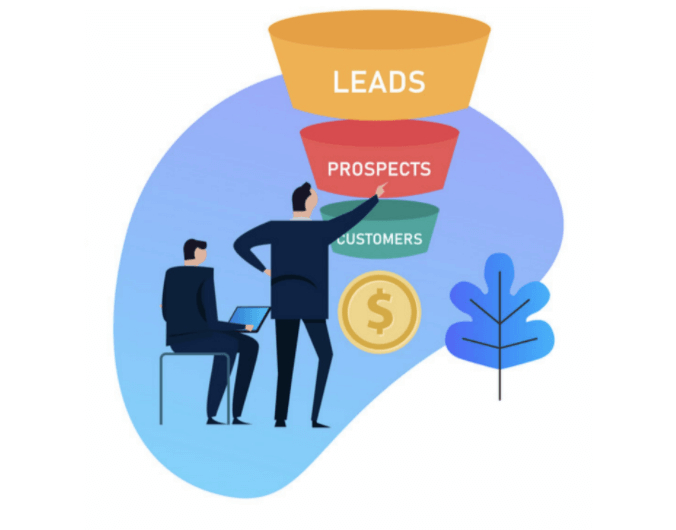
The New Standard for Sales Leads: What High-Quality Prospects Actually Look Like
For years, businesses judged the value of a lead by one simple metric: whether it had a name, an email address, and a phone number. That standard may have worked in the early days of digital marketing, but it no longer reflects how modern B2B buying decisions are made.
Today, a high-quality sales lead is defined by context, intent, and timing—not just contact information.
The best prospects are organizations already experiencing challenges that your product or service can solve. They may be expanding into new markets, hiring aggressively, investing in digital transformation, or actively researching solutions similar to yours. These signals indicate a much higher probability of purchase than a static company profile ever could.
Equally important is reaching the right people. Speaking with someone who lacks purchasing authority often leads to stalled conversations and prolonged sales cycles. High-quality leads include verified decision-makers, influencers, and budget holders who can move opportunities forward.
Another defining characteristic is data accuracy. Reliable prospect information saves sales teams countless hours by eliminating bounced emails, disconnected phone numbers, and outdated job titles. Every interaction becomes more productive because the information is current and actionable.
This is why businesses are increasingly investing in B2B Lead Generation for Singapore instead of purchasing generic lead lists. Modern lead generation combines verified contact data with behavioral insights, company intelligence, and buying signals to create a much clearer picture of each prospect.
Rather than asking, “Does this company exist?” successful organizations ask, “Is this company likely to buy from us?”
That subtle difference has a dramatic impact on sales performance.
Companies using intelligent B2B Lead Generation for Singapore consistently report shorter sales cycles, higher response rates, improved appointment-setting success, and stronger pipeline quality. Sales representatives spend less time chasing unqualified prospects and more time having meaningful conversations with businesses that genuinely need their solutions.
Ultimately, the quality of your sales pipeline reflects the quality of your prospecting strategy. If you consistently attract organizations that match your Ideal Customer Profile and demonstrate genuine buying intent, closing deals becomes less about persuasion and more about solving real business problems.

AI Isn’t Replacing Salespeople—It’s Eliminating Bad Sales Leads
Artificial intelligence has become one of the most misunderstood technologies in modern sales. Headlines often suggest that AI will replace sales professionals, automate every customer interaction, or remove the human element from business development. In reality, the most valuable role of AI is far less dramatic—and far more practical.
AI helps companies stop wasting time on prospects that were never likely to become customers.
Traditional lead generation relies heavily on manual research, outdated databases, and broad demographic filters. AI transforms this process by analyzing thousands of data points simultaneously, uncovering patterns that would be nearly impossible for humans to identify at scale. It evaluates company growth, hiring trends, technology adoption, digital engagement, funding activity, online behavior, and countless other indicators that reveal whether an organization is entering a buying cycle.
Instead of handing sales teams thousands of random contacts, AI prioritizes the businesses most likely to convert.
This intelligence empowers sales representatives rather than replacing them. Repetitive tasks such as prospect research, data enrichment, lead scoring, and qualification become automated, allowing sales professionals to focus on what they do best: building trust, understanding customer challenges, and closing complex deals.
That is precisely why B2B Lead Generation for Singapore has evolved into a strategic business function rather than a simple marketing activity. AI-powered prospecting ensures that outreach is directed toward organizations with genuine potential, significantly increasing efficiency across both sales and marketing teams.
Another major advantage is continuous optimization. Unlike static lead lists that begin losing value the moment they are purchased, AI systems continuously monitor data, refresh contact information, identify new opportunities, and adapt to changing market conditions. The result is a living pipeline that improves over time instead of becoming obsolete.
Businesses leveraging B2B Lead Generation for Singapore powered by AI consistently experience higher-quality conversations, stronger conversion rates, and more predictable revenue growth. Rather than relying on guesswork, they make data-driven decisions that maximize every sales effort.
The companies winning today’s B2B market are not necessarily those with the largest sales teams. They are the ones using intelligent technology to ensure every salesperson spends their time speaking with the right prospects at the right moment. In an increasingly competitive marketplace, that advantage can mean the difference between a pipeline filled with opportunities and one filled with expensive distractions.
Winning the Right Customers Starts with Building a Smarter Lead Generation Strategy
The companies consistently outperforming their competitors are not necessarily spending more on marketing or employing larger sales teams. They are simply following a smarter lead generation strategy. Instead of chasing every possible prospect, they focus on attracting, identifying, and engaging the businesses most likely to become profitable, long-term customers.
The first step is defining an Ideal Customer Profile (ICP) with precision. Too many companies rely on broad descriptions such as “manufacturing companies” or “SMEs in Singapore.” A truly effective ICP goes much deeper. It identifies industries, company size, annual revenue, geographic markets, decision-makers, business challenges, growth stage, technology adoption, and even buying behavior. The clearer your ICP, the easier it becomes to identify organizations that are genuinely worth pursuing.
Next comes data quality. Even the most sophisticated sales strategy will fail if it is built on inaccurate or outdated information. Contact records should be continuously verified, enriched, and updated to reflect organizational changes. This ensures that sales teams spend their time speaking with current decision-makers rather than chasing disconnected phone numbers or employees who left the company months ago.
Technology also plays a critical role. AI-powered prospecting platforms can analyze buying intent, monitor company activity, prioritize high-value accounts, and automatically enrich prospect profiles. Instead of replacing human expertise, these tools provide sales teams with the intelligence they need to engage prospects at the right time with the right message.
This is where B2B Lead Generation for Singapore becomes a competitive advantage rather than a marketing expense. By combining AI, verified data, and strategic targeting, businesses can consistently generate qualified opportunities that align with their growth objectives.
Equally important is measuring the right performance indicators. Many organizations still celebrate vanity metrics such as database size, email volume, or website traffic. While these figures may look impressive in reports, they reveal very little about business growth. High-performing companies instead monitor appointment rates, qualified pipeline value, sales conversion rates, customer acquisition costs, and revenue generated from each campaign.
Organizations that embrace B2B Lead Generation for Singapore understand that lead generation is not a one-time purchase but an ongoing optimization process. Every campaign provides new insights that improve targeting, messaging, and qualification. Over time, the sales pipeline becomes increasingly efficient, allowing businesses to scale sustainably without wasting resources on prospects who were never likely to buy.
The result is a sales engine built on intelligence rather than assumptions—one capable of delivering consistent growth regardless of changing market conditions.
Conclusion
For decades, companies believed that success in sales was a numbers game. Buy more leads, make more calls, send more emails, and eventually enough prospects would convert into customers. While that approach may have produced results in the past, today’s B2B marketplace demands a far more sophisticated strategy.
Decision-makers are overwhelmed with sales messages every day. They ignore irrelevant outreach, block unsolicited emails, and quickly recognize generic sales pitches. Simply owning a large contact database no longer creates a competitive advantage. What matters is identifying organizations that have genuine business needs, matching them with relevant solutions, and engaging them with timely, personalized conversations.
This shift explains why many businesses continue to struggle despite increasing their sales and marketing budgets. The issue is rarely effort—it is direction. Teams work harder but pursue the wrong prospects. Marketing generates thousands of names that sales cannot convert. Sales representatives become frustrated by low response rates, while leadership questions the return on investment.
The companies achieving consistent growth have abandoned the outdated mindset of buying leads in bulk. Instead, they invest in intelligence, automation, and data-driven prospecting strategies that prioritize quality over quantity.
That is the true value of B2B Lead Generation for Singapore. It helps businesses identify high-value prospects based on verified data, buying intent, and strategic alignment rather than relying on static databases that lose value over time. Every qualified opportunity becomes the result of informed decision-making instead of chance.
As artificial intelligence continues to reshape sales and marketing, organizations that embrace smarter prospecting methods will enjoy shorter sales cycles, stronger customer relationships, higher conversion rates, and significantly greater return on investment. Those that continue purchasing outdated lead lists will find themselves spending more while achieving less.
Ultimately, business growth is not determined by how many contacts you own. It is determined by how many meaningful conversations you create with the right decision-makers at the right time.
If your organization is serious about sustainable growth, it’s time to rethink how you generate opportunities. Investing in B2B Lead Generation for Singapore is no longer just a marketing decision—it is a strategic investment in the future of your sales pipeline, your customer relationships, and your long-term competitive advantage. The companies that thrive over the next decade will not be those with the biggest databases, but those with the smartest approach to finding and winning the right customers.
