

Can AI Create Original Brand Thinking? The Next Challenge for Content Marketers
September 18, 2026 at 6:26 pm
How AI Can Identify Entire B2B Buying Committees—Not Just Individual Leads
September 21, 2026 at 6:46 pm

For years, B2B marketing has operated around one dominant format: written content. Blog posts, whitepapers, reports, case studies, email campaigns, landing pages, and LinkedIn articles have formed the backbone of B2B communication. But the way buyers consume information has changed dramatically.
Today, a B2B decision-maker may read an article in the morning, watch a product demonstration during lunch, listen to a podcast while commuting, scan an infographic between meetings, and ask an AI assistant for recommendations before making a purchasing decision.
That shift is creating a new challenge for marketers. Producing one excellent article is no longer necessarily enough. Businesses need to communicate the same strategic idea across multiple formats without diluting the message.
This is where multimodal AI becomes increasingly important.
Multimodal AI refers to artificial intelligence that can work across different forms of information, including text, images, audio, and video. Instead of treating every content format as a separate production project, marketers can begin thinking about content as a connected ecosystem.
The implications for B2B marketing are significant.
A single research report could become a long-form article, a LinkedIn carousel, a short-form video, an executive presentation, an infographic, an email sequence, and an audio discussion. The underlying expertise remains the same, but the delivery changes according to the audience and channel.
This is where AI Content Generation Singapore becomes particularly relevant for businesses looking to scale content without simply producing more generic text. AI can support different stages of the content workflow, from written material and visuals to video and creative assets.
The real opportunity is not about replacing human creativity.
It is about making valuable ideas travel further.
The future of B2B content will belong to companies that can take one strong insight and turn it into multiple useful experiences for buyers.
And that is a very different content strategy from simply publishing more blog posts.

Multimodal AI Changes What a Marketing Team Can Create
There is an important difference between using AI to write an article and using AI as part of a multimodal content system.
Traditional generative AI may help a marketer draft a blog post, rewrite an email, or brainstorm headlines. Useful? Absolutely. But that is only one layer of the opportunity.
Multimodal AI allows marketing teams to think about the entire content production chain.
Imagine a B2B company has completed research into a major industry trend. Traditionally, the research might become a report. A designer would then create graphics. A video producer would develop a script. A social media manager would extract posts. Another team member might create an email campaign.
Each asset requires separate planning and production.
A multimodal approach starts from the opposite direction.
The central insight becomes the source material.
From that insight, marketers can develop written content, visual concepts, video scripts, presentation slides, social media assets, audio content, and campaign creative.
This is one reason AI Content Generation Singapore is becoming relevant to modern B2B content operations. AI-powered workflows can support text-to-text, text-to-image, and text-to-video production, while also assisting with creative development and campaign assets.
The important distinction is that AI should not determine the strategy by itself.
Human marketers still need to establish the positioning, audience, message, evidence, brand voice, and desired business outcome.
AI can then help transform that strategic foundation into multiple formats.
That changes the role of the content team.
Instead of spending most of their time manually producing variations of the same idea, marketers can spend more time deciding which ideas deserve attention in the first place.
That is the real productivity opportunity.
Multimodal AI is not simply another writing assistant.
It can become part of the infrastructure that turns business expertise into a scalable content engine.
B2B Buyers Don’t Consume Information in One Format Anymore
The traditional B2B buying journey was often described as a funnel.
A prospect discovers a company, visits the website, downloads an asset, speaks with sales, evaluates the offering, and eventually makes a decision.
Reality is considerably messier.
Modern buyers move between channels constantly. They may encounter a company through search, LinkedIn, video, an industry newsletter, a peer recommendation, an online community, or an AI-powered search experience.
They also consume information differently depending on the question they are trying to answer.
A technical buyer may want detailed documentation.
An executive may prefer a concise strategic explanation.
A marketing manager may respond to a visual framework.
A sales leader may want a short video demonstrating how a solution works.
The information can be identical. The preferred format is not.
This is where AI Content Generation Singapore can support a broader content strategy. Instead of assuming that every prospect wants to read another 2,000-word article, marketers can develop different experiences around the same core message.
For complex B2B products, this can be particularly powerful.
A complicated process can become a diagram.
A technical explanation can become a video.
A research finding can become an infographic.
A detailed report can become an executive summary.
A customer question can become a short educational post.
The objective is not to create content for the sake of creating content.
The objective is to remove unnecessary friction between the buyer and the information they need.
This distinction matters.
B2B buyers do not necessarily need more information. They need relevant information presented in a way that makes sense for their situation.
Multimodal content gives marketers more ways to deliver that information.
The companies that understand this shift will stop asking, “What should we publish this week?”
They will start asking, “What does our audience need to understand, and what is the clearest way to help them understand it?”
That is a much more strategic question.

One Big Idea Can Become an Entire Content Ecosystem
One of the biggest opportunities created by multimodal AI is content repurposing at scale.
But repurposing should not mean copying and pasting the same message into seven different platforms.
That approach creates repetitive content.
Strategic repurposing is different.
It starts with one valuable idea and adapts that idea to different audiences, contexts, and formats.
Consider a B2B company publishing research about how AI is changing procurement.
The original research could become a detailed report.
The strongest findings could become an executive article.
The key statistics could become an infographic.
The central argument could become a three-minute video.
The video could be broken into several short clips.
The report could become a LinkedIn carousel.
The main lessons could become an email sequence.
The sales team could receive a one-page summary for customer conversations.
Suddenly, one piece of intellectual property becomes an entire content ecosystem.
This is where AI Content Generation Singapore can play a practical role in modern marketing workflows. AI can help marketers adapt source material into different formats while reducing some of the repetitive work involved in production. iSmart Communications describes its AI content services across text, image, video, music, and creative applications.
But there is a critical rule.
The format should change.
The strategic idea should not.
Every adaptation should preserve the original meaning while being optimized for the audience consuming it.
That means a LinkedIn post should not simply be a shortened blog article. A video should not simply read the blog aloud. An infographic should not contain an entire paragraph-heavy article.
Each format needs its own creative treatment.
Multimodal AI makes this process easier to execute.
It gives marketing teams the ability to move from “one asset, one campaign” toward “one insight, many experiences.”
That can fundamentally change the economics and scalability of B2B content production.
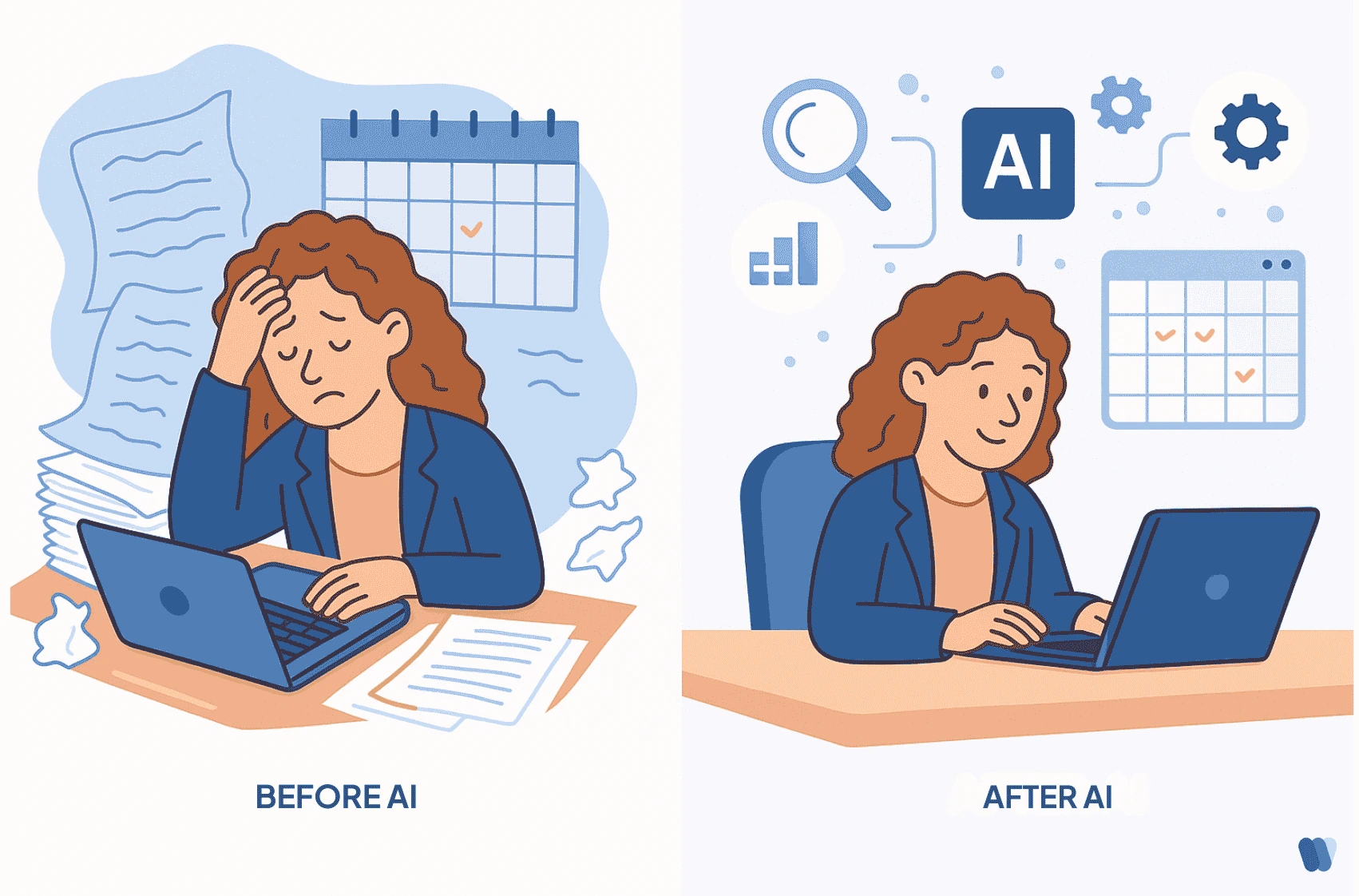
More AI Content Does Not Automatically Mean Better Content
Here is the uncomfortable truth about AI-powered marketing:
The ability to produce content faster does not mean companies will automatically produce better content.
In fact, the opposite can happen.
When content becomes easy to generate, the internet becomes even more crowded with average material.
Thousands of businesses can now produce blog posts, social captions, images, videos, and marketing copy with relatively little effort.
That creates a new competitive problem.
If everyone can produce more content, volume stops being a meaningful differentiator.
Quality, originality, credibility, and relevance become more important.
This is why AI Content Generation Singapore should be viewed as a capability rather than a complete marketing strategy.
AI can help accelerate production, improve scalability, and support different content formats. But it does not automatically know what a particular brand should stand for, what its customers genuinely care about, or which industry insight deserves to become the company’s next major campaign.
Those decisions require human judgment.
The strongest multimodal content will therefore combine machine efficiency with human expertise.
Marketers need to provide the strategic foundation: original research, customer insight, positioning, brand voice, subject-matter expertise, and editorial standards.
AI can then help turn that foundation into polished and varied content experiences.
This distinction will become increasingly important as AI-generated content becomes more common.
The question will no longer be whether a company uses AI.
Almost everyone eventually will.
The harder question will be whether the company’s AI-generated content actually has something meaningful to say.
The winners of the next phase of B2B marketing will not necessarily be the companies producing the most assets.
They will be the companies with the strongest ideas—and the systems to distribute those ideas intelligently.
Building a Multimodal AI Content Engine Starts With Strategy
Adopting multimodal AI does not require a company to automate everything overnight.
In fact, trying to automate everything at once can create unnecessary complexity.
A smarter approach is to build a structured content system around the company’s highest-value ideas.
Start with the audience.
Who are you trying to influence? What problems are they trying to solve? What questions are they asking before they engage with a sales team?
Then identify the topics where the business has genuine expertise.
These topics become the foundation of the content strategy.
From there, create authoritative source material. This could include research, expert interviews, customer insights, product knowledge, internal documentation, or original analysis.
Once the source material exists, marketers can determine which formats make the most sense.
A technical topic might require a detailed article and explanatory video.
A strategic insight might work better as an executive LinkedIn post and presentation.
A complicated process could become a visual explainer.
A product story could become a demonstration.
This is where AI Content Generation Singapore can fit into a broader workflow: helping transform strategic source material into different content formats while supporting the scalability of production.
The next layer is human review.
Every important asset should be checked for accuracy, tone, brand consistency, originality, and relevance.
Finally, measure what happens.
Do people engage?
Do they visit the website?
Do qualified prospects interact with the content?
Does content contribute to conversations with sales?
Are certain formats generating stronger signals than others?
This turns AI content generation into a measurable marketing system rather than a collection of disconnected experiments.
The technology matters.
But the workflow matters more.
Without strategy, AI simply helps companies produce more noise.
With strategy, it can help companies build a scalable information engine.
Conclusion
The next evolution of B2B marketing will not simply be about generating more content.
It will be about creating connected content systems that can continuously transform knowledge into useful experiences.
That is the real promise of multimodal AI.
A company’s research should not live inside one PDF.
Its expertise should not exist only in the minds of its executives.
Its best insights should not disappear after a single LinkedIn post receives a few hundred impressions.
Instead, valuable knowledge can become an interconnected library of articles, videos, graphics, presentations, social content, sales assets, and educational experiences.
This is where AI Content Generation Singapore becomes more than a production tool. Used strategically, AI-powered content generation can support businesses as they develop scalable ways to turn ideas into multiple formats and experiences.
But technology alone will not determine who succeeds.
The competitive advantage will come from combining three things: strong human thinking, intelligent AI workflows, and a deep understanding of the customer.
That combination changes the fundamental question marketers should be asking.
It is no longer simply:
“What should we publish next?”
The better question is:
“What valuable insight do we have, and how many useful ways can we deliver it?”
That shift sounds subtle.
It is not.
It moves B2B marketing away from isolated content production and toward a connected content ecosystem.
Multimodal AI gives businesses the tools to make that ecosystem faster, broader, and more adaptable.
But the brands that stand out will still be the ones with something worth saying.
AI can create the image.
It can help produce the video.
It can transform the article.
It can adapt the message.
But the strategic idea—the reason anyone should care in the first place—still has to come from somewhere.
That is where human expertise remains the most valuable part of the equation.
The future of B2B marketing is not AI replacing content teams.
It is content teams learning how to turn one great idea into an entire universe of useful experiences.
