

AI Content Generation Asia: How to Repurpose One Article into 10 Assets
May 29, 2026 at 7:03 pm
AI Content Generation Asia: Mistakes That Hurt SEO Performance
June 2, 2026 at 5:59 pm

In Singapore’s competitive B2B landscape, casting a wide net rarely works anymore. Budgets are tighter, buying committees are larger, and decision-makers are harder to reach than ever. The companies consistently winning enterprise deals in 2026 aren’t spraying content at everyone — they’re being deliberately selective. They’re doing Account-Based Marketing (ABM).
ABM flips the traditional lead generation funnel on its head. Instead of generating thousands of leads and hoping a few convert, you identify your highest-value target accounts first, then build highly personalised campaigns designed to engage every stakeholder in the buying committee. The result: shorter sales cycles, higher deal values, and significantly better ROI.
In this guide, we’ll break down exactly how ABM works in the Singapore and Asia B2B context, what it takes to execute it well in 2026, and how AI is transforming what’s possible.
What Is Account-Based Marketing (ABM)?
Account-Based Marketing is a B2B growth strategy in which marketing and sales teams align to treat individual target accounts as markets of one. Rather than running campaigns to broad audiences, ABM directs resources — content, ads, outreach, events — toward a curated list of high-fit, high-value companies.
ABM typically operates at three tiers:
- 1:1 ABM (Strategic ABM): Fully bespoke campaigns for a handful of named accounts, usually large enterprise deals. Each account gets its own personalised content, landing pages, and engagement plan.
- 1:Few ABM (ABM Lite): Tailored campaigns for small clusters of accounts that share similar characteristics — same industry, same pain point, same growth stage.
- 1:Many ABM (Programmatic ABM): Technology-driven personalisation at scale across hundreds of accounts, using intent data and AI to serve relevant content dynamically.
For most Singapore B2B companies, a combination of 1:Few and 1:Many approaches offers the best balance of personalisation and scale — particularly when paired with strong B2B lead generation infrastructure.
Why ABM Is the Right Strategy for Singapore’s B2B Market in 2026
Singapore’s B2B market has unique characteristics that make ABM particularly effective:
Small market, high stakes. The total addressable market for many B2B categories in Singapore is relatively compact. You likely already know the 100–300 companies that matter most to your revenue. ABM gives you a disciplined framework to pursue them systematically.
Relationship-driven buying culture. Across Singapore and broader Asia, enterprise purchasing is highly relationship-dependent. Buyers trust vendors they know. ABM’s emphasis on sustained, personalised engagement builds exactly that kind of familiarity and trust over time — well before a formal RFP is issued.
Long, multi-stakeholder sales cycles. Enterprise deals in Singapore routinely involve five to ten decision-makers across procurement, IT, finance, and the business unit. ABM is designed to engage all of them simultaneously, not just the single contact your sales rep knows.
Rising buyer self-education. By the time a Singapore buyer engages with your sales team, they’ve already done significant research — often using AI-powered search tools. This makes it critical that your brand is visible and credible at every stage. This is why combining ABM with Generative Engine Optimisation (GEO) is increasingly important: you need to show up in the AI-generated answers your prospects are consulting.
The Role of Intent Data in Modern ABM
The biggest shift in ABM over the past two years has been the widespread adoption of intent data — signals that reveal which companies are actively researching topics related to your solution right now.
Intent data platforms (such as Bombora, 6sense, and Demandbase) track anonymous buying signals across thousands of B2B websites and content platforms. When a cluster of employees at a target account suddenly starts consuming content about, say, “marketing automation platforms” or “CRM integration Singapore,” that’s a buying signal — and a trigger for your ABM outreach to activate.
When used effectively, intent data allows your team to:
- Prioritise accounts showing active buying intent rather than guessing who’s in-market
- Time outreach to coincide with peak interest — dramatically improving response rates
- Personalise messaging around the specific topics your prospect has been researching
At iSmart, we help Singapore B2B companies integrate intent data into their account-based marketing programmes so that every outreach is timely and relevant, not cold.
Building Your ABM Target Account List
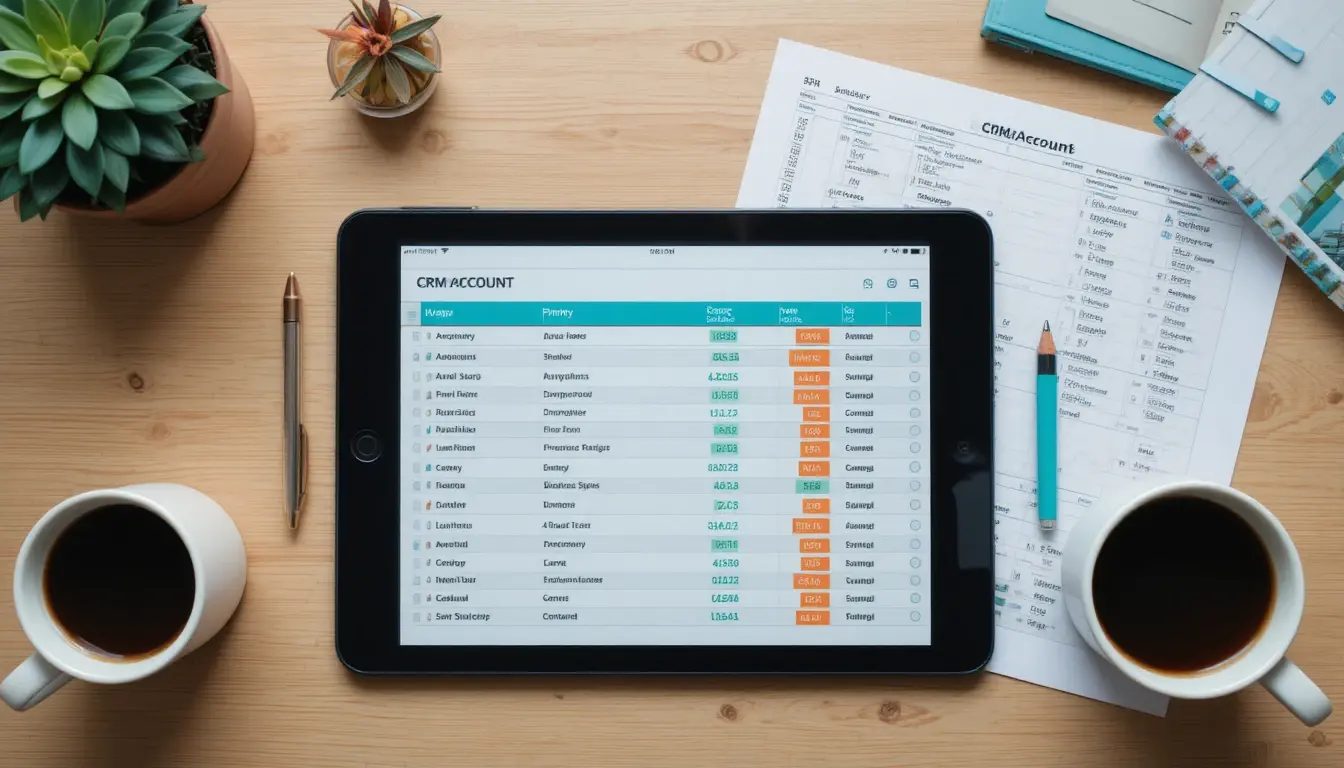
The foundation of any ABM programme is the Ideal Customer Profile (ICP) and the target account list built from it. Getting this right is the single most important step — a weak account list will undermine even the most sophisticated ABM execution.
To build your ICP and account list:
1. Analyse your best existing customers. Look at your top 20% of customers by revenue, retention, and satisfaction. What do they have in common? Industry, company size, tech stack, growth stage, geographic footprint, buying triggers? These patterns define your ICP.
2. Apply firmographic filters. Use your ICP criteria to build a target account list from databases like LinkedIn Sales Navigator, ZoomInfo, or Apollo. For Singapore and Asia markets, regional business directories and industry associations can also be valuable sources.
3. Layer in intent signals. Once you have a longlist of firmographically qualified accounts, prioritise by intent. Accounts showing active in-market signals should move to the top of your outreach queue.
4. Validate with sales. Share the list with your sales team for input. They’ll know which accounts have existing relationships, historical context, or competitive dynamics that should affect prioritisation.
A well-constructed target account list of 100–300 accounts is typically sufficient for a Singapore B2B company to run a focused and effective ABM programme.

How AI Is Transforming ABM in 2026
AI has dramatically expanded what’s possible in ABM — and what was once only achievable by large enterprise teams with big budgets is now accessible to mid-market Singapore companies.
Here’s how AI is being applied across the ABM workflow:
AI-powered account scoring. Machine learning models now analyse hundreds of firmographic, technographic, and behavioural signals to predict which accounts are most likely to convert — and when. This removes the guesswork from account prioritisation.
Personalised content generation at scale. With AI content generation, marketing teams can now produce account-specific landing pages, email sequences, and case studies tailored to each target account’s industry and pain points — at a fraction of the time and cost it once required.
Conversational AI for multi-touch engagement. AI chatbots and virtual assistants can engage target account contacts on your website, qualifying intent and routing conversations to the right sales rep in real time.
Predictive analytics for pipeline management. AI tools can now forecast deal progression, flag accounts at risk of going cold, and recommend the next best action for each account — helping sales and marketing stay coordinated throughout the buying journey.
Our AI marketing agency team works with Singapore B2B companies to embed these capabilities into their existing ABM programmes, often with measurable impact within the first quarter.
Multi-Channel ABM Execution: What Works in Singapore
Effective ABM is not a single-channel strategy. The most successful programmes in Singapore combine multiple touchpoints — digital and human — to build familiarity and engagement with target accounts over time.
LinkedIn: For Singapore B2B, LinkedIn remains the most effective paid and organic channel for ABM. LinkedIn’s account targeting capabilities allow you to serve ads directly to employees at named companies, by job function and seniority. Our social media marketing team regularly runs LinkedIn ABM campaigns for clients targeting C-suite and VP-level decision-makers at specific Singapore companies.
Personalised email sequences: Account-specific email outreach — referencing the prospect’s industry, recent company news, or known pain points — consistently outperforms generic nurture sequences. Automation platforms like ActiveCampaign allow you to scale this personalisation efficiently. As an ActiveCampaign partner, we help clients build ABM email workflows that feel human, not automated.
Content syndication and digital advertising: Serving targeted display and native ads to IP addresses associated with your target accounts keeps your brand top-of-mind throughout the buying cycle. This is especially valuable for longer sales cycles where staying visible between active outreach touchpoints matters.
Executive events and roundtables: In Singapore’s relationship-driven market, small-format executive events — private dinners, roundtables, thought leadership breakfasts — remain highly effective for advancing relationships with senior stakeholders at key accounts.
SEO and organic content: While ABM is primarily an outbound strategy, strong SEO ensures that when your target accounts are self-educating online, your content is what they find. This creates a powerful inbound pull that reinforces your outbound ABM push.
Measuring ABM Success: The Metrics That Matter
One of the most common ABM mistakes is measuring it with the same metrics used for traditional demand generation — raw lead volume, cost per lead, and MQL count. These metrics are largely irrelevant for ABM.
The right ABM metrics focus on account-level engagement and pipeline impact:
- Account coverage: What percentage of your target account list has been engaged by at least one marketing or sales touchpoint?
- Account engagement score: How deeply are your target accounts engaging with your content, ads, and outreach over time?
- Pipeline from target accounts: What proportion of your total sales pipeline is attributable to accounts on your ABM list?
- Win rate by account tier: Are you winning deals from your 1:1 and 1:Few accounts at higher rates than from non-ABM accounts?
- Average deal size: Is ABM driving larger deal values compared to your non-ABM pipeline?
- Sales cycle length: Are ABM-sourced deals closing faster due to higher engagement and trust built pre-sale?
Our performance marketing team helps clients build ABM dashboards that track these metrics in real time, giving marketing and sales leadership a clear view of programme ROI.
Is Your Business Ready for ABM?
ABM is not the right approach for every business at every stage. It delivers the greatest return when:
- Your average deal size is significant (typically S$50,000+ annually)
- Your sales cycle is three months or longer
- You can clearly define your ideal customer profile
- Your marketing and sales teams are aligned and willing to collaborate closely
- You have or can build a content capability to support personalised outreach
If you’re a Singapore B2B company selling to enterprise or mid-market accounts and you’re relying primarily on inbound leads or generic outbound prospecting, ABM is very likely the strategic upgrade your growth plan needs.
Getting Started with ABM in Singapore
A practical ABM programme doesn’t require a massive budget or a six-month build. Many Singapore companies get meaningful results within 90 days by starting with a focused 1:Few approach — identifying 20–30 high-priority accounts and running a targeted multi-channel campaign to engage them.
The key is to start with the right foundation: a clearly defined ICP, a validated target account list, aligned sales and marketing teams, and the right technology stack to enable personalisation and measurement.
At iSmart, we’ve helped B2B companies across Singapore and Asia design, launch, and optimise ABM programmes from the ground up — integrating digital marketing, AI, and sales enablement into a cohesive account-based growth engine.

Conclusion: ABM Is How Singapore B2B Companies Win in 2026
The days of volume-based B2B marketing are numbered. In a market where attention is scarce and decision-makers are overwhelmed, the companies that win are those that show up with relevance, precision, and persistence — targeting the right accounts with the right message at exactly the right moment.
Account-Based Marketing is not a tactic. It’s a strategic shift in how you go to market — one that aligns your entire revenue team around the accounts that matter most, and gives you the tools to engage them in ways that generic marketing never can.
If you’re ready to explore what ABM could look like for your business, we’d love to help you map it out.
