

The AI Content Saturation Problem: How Brands Can Stand Out When Everyone Uses AI
September 3, 2026 at 6:04 pm
The Rise of AI Lead Agents: How Autonomous AI Will Transform B2B Prospecting
September 4, 2026 at 12:44 pm

For years, B2B marketing teams were trained to chase one number: leads.
More leads meant more forms. More forms meant more names entering the CRM. More names meant marketing could report bigger campaign numbers to management. On paper, it looked like growth.
But there is a problem with this model.
A database filled with people who have no intention of buying is not a pipeline. It is a storage problem.
In 2026, B2B companies are facing a harder reality. AI has made it easier than ever to find prospects, enrich databases, generate outreach and launch campaigns at scale. That sounds like an advantage, but it has also created an enormous amount of noise. When everyone can generate hundreds of prospects and thousands of personalised messages, volume itself stops being a competitive advantage.
The smarter question is no longer, “How many leads can we generate?”
It is, “Which prospects are most likely to become customers, and why should we contact them now?”
That shift is particularly important for companies investing in B2B Lead Generation for Singapore, where sales teams often operate in competitive B2B markets with relatively limited prospect pools. Sending more irrelevant messages does not create more opportunities. It can damage sender reputation, waste sales capacity and make prospects increasingly resistant to outreach.
AI can help solve this problem—but only when it is used as an intelligence layer rather than simply an automation engine.
Modern B2B Lead Generation for Singapore should focus on three things: quality, intent and timing.
Quality determines whether an account is actually worth pursuing.
Intent indicates whether the account may be actively considering a solution.
Timing determines whether your sales team reaches that prospect while the problem is still a priority.
The future belongs to businesses that combine all three.
The goal is not to fill the CRM.
The goal is to create a pipeline where every serious prospect has a reason to be there.
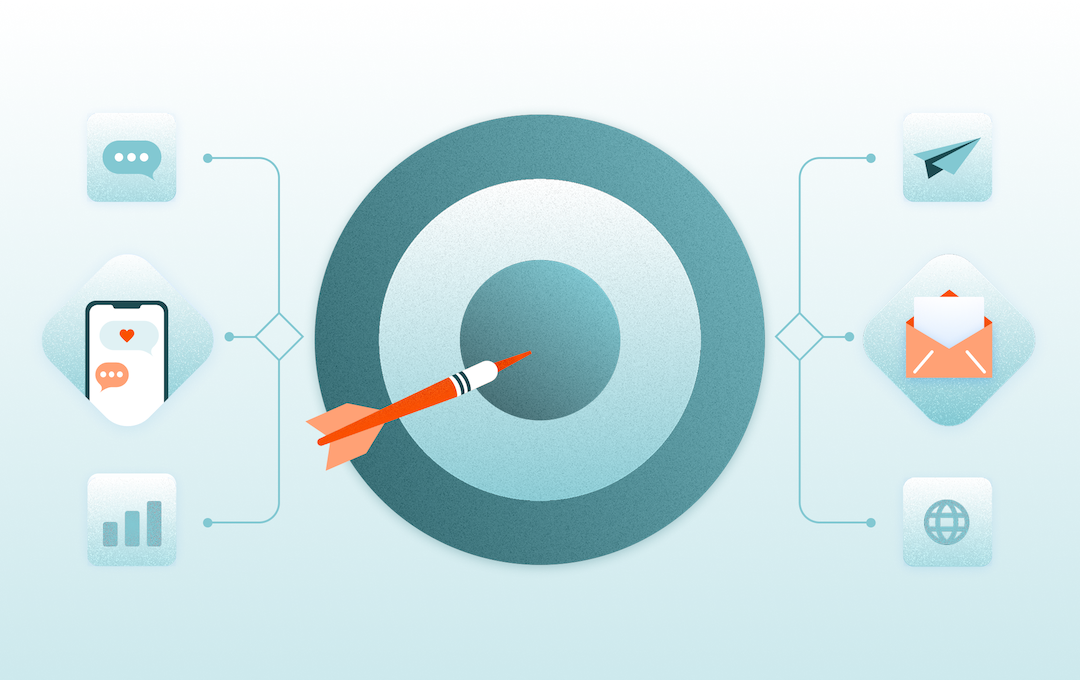
Better Leads Start With Better Targeting
The first mistake many companies make is assuming that a lead is valuable simply because the company appears to fit their target market.
It does not.
A company may have the right industry, revenue, employee count and geographic location and still be a terrible prospect. It may already have a long-term supplier. It may not have the budget. It may not have the problem you solve. It may simply have no reason to change.
This is where AI-powered qualification becomes valuable.
Instead of relying exclusively on basic firmographic information, modern B2B Lead Generation for Singapore strategies can combine multiple layers of intelligence. AI can analyse company characteristics, technology usage, business growth, organisational changes, website behaviour and other available signals to determine whether an account resembles the profile of existing high-value customers.
This creates a much more sophisticated Ideal Customer Profile.
The question becomes more than “Does this company look like our customer?”
It becomes “Does this company look like the companies that actually buy from us, stay with us and generate strong commercial value?”
That distinction matters.
AI can also help sales teams prioritise accounts instead of treating every prospect equally. A list of 500 companies may initially appear impressive. But if only 50 are strong fits, those 50 should receive significantly more attention than the remaining 450.
This is one of the biggest opportunities for B2B Lead Generation for Singapore: turning prospecting from a broad search exercise into a precision operation.
Quality should be measured by more than contact validity.
A high-quality lead should have a strong business fit, a relevant decision-maker, a realistic commercial opportunity and some evidence that the company’s circumstances align with the problem you solve.
AI does not magically create quality.
It helps businesses identify it faster.
And that is a much more valuable use of technology than simply producing a larger spreadsheet.
Intent Is the Signal That Changes the Game
Fit tells you whether a prospect could buy.
Intent tells you whether they might be thinking about buying now.
That difference is enormous.
Imagine two companies. Both match your ideal customer profile. Both have the right revenue, industry and employee count. Both have decision-makers who fit your target persona.
Company A has never interacted with your brand and has shown no obvious signs of researching your category.
Company B has visited several solution pages, returned to your website multiple times, consumed a case study and started researching the problem your service solves.
Treating both companies exactly the same would be a mistake.
This is why buyer intent has become increasingly important in B2B Lead Generation for Singapore.
Intent data can include first-party signals such as website visits, pricing-page activity, demo requests, downloads and repeated engagement. It can also include contextual signals such as hiring activity, leadership changes, technology adoption, expansion and other business developments. The important point is that intent should be treated as a signal—not proof that someone is ready to buy.
That distinction is critical.
A single content download does not necessarily mean someone is shopping for a solution. A person could simply be researching a topic. Multiple signals occurring close together can provide much stronger evidence.
AI can help connect those signals.
Instead of asking sales representatives to manually inspect hundreds of accounts, an AI-driven system can identify behavioural patterns, assign scores and move higher-intent prospects toward the top of the sales queue.
This changes the role of AI.
It is no longer simply generating a list.
It is helping determine which names deserve attention.
For businesses investing in B2B Lead Generation for Singapore, this can mean fewer unnecessary sales conversations and more focused engagement with accounts that demonstrate meaningful buying signals.
The objective is not to predict the future perfectly.
It is to make better decisions with the information available now.
The Right Prospect at the Wrong Time Is Still the Wrong Opportunity
There is another uncomfortable truth about B2B sales:
Being the right company does not mean the prospect is ready.
A prospect can have a genuine business problem and still reject your offer because the timing is wrong.
Perhaps their budget has already been allocated. Perhaps they just signed a contract with another provider. Perhaps leadership has postponed the project. Perhaps the internal decision-maker has changed. Or perhaps the problem has simply not become urgent enough to justify action.
This is why timing is becoming a critical component of B2B Lead Generation for Singapore.
AI can help businesses monitor changes that may indicate a buying window is opening.
Leadership changes can matter. New executives often reassess existing systems and suppliers. Hiring activity can signal expansion. Funding can create new budgets. New market launches can introduce operational pressure. Technology changes can create new requirements.
Website behaviour can be even more immediate.
A prospect who repeatedly visits a service page or moves from educational content toward pricing, implementation or comparison material may be demonstrating stronger evaluation behaviour than someone who simply read one blog article.
The challenge is that these signals can become outdated quickly.
Intent is not a permanent label.
A company that was highly active three weeks ago may no longer be evaluating solutions today. This is why modern B2B Lead Generation for Singapore should consider recency alongside relevance.
Timing should influence sales prioritisation.
When the signal is fresh, the sales team should have a clear reason to engage. When the signal becomes stale, the account may move into a nurture sequence rather than receiving aggressive outreach.
This creates a more intelligent sales rhythm.
Instead of contacting prospects simply because they exist on a database, companies can contact them because something has changed.
That is a far stronger reason to start a conversation.
The winning question is no longer simply, “Who should we target?”
It is:
“Who should we target, what changed, and why does that make today a better time to talk?”

Build an AI Lead Generation Engine, Not Another Automated List
AI becomes genuinely powerful when it connects the entire lead-generation process.
Too many companies use AI in isolated pieces.
One tool finds contacts. Another enriches them. Another writes emails. Another scores leads. Another manages the CRM.
The technology exists, but the workflow remains fragmented.
A stronger B2B Lead Generation for Singapore strategy connects these activities into one intelligence-driven system.
The process starts with a clearly defined Ideal Customer Profile.
AI can then help identify companies that match that profile and enrich the available information. The next layer evaluates intent and behavioural signals. Prospects can then be scored according to fit, intent and recency.
From there, the system can determine what should happen next.
High-fit, high-intent prospects may be routed immediately to sales.
High-fit prospects with weaker intent may enter a nurture program.
Accounts showing early buying signals may receive relevant educational content.
Poor-fit accounts can be removed before sales representatives waste time researching them.
The final layer is personalisation.
AI can help sales and marketing teams understand the context behind an account and develop messaging around the prospect’s industry, role, business situation and likely challenges. But personalisation should not become an excuse for producing thousands of generic AI-written messages with different company names inserted into the first paragraph.
That is not personalisation.
It is automation wearing a costume.
The best B2B Lead Generation for Singapore systems use AI to make the research and prioritisation process faster while keeping human judgement involved where it matters.
AI should identify the opportunity.
People should understand it.
AI should surface the signal.
People should decide how to approach it.
AI should reduce repetitive work.
People should build the relationship.
That combination is far more difficult for competitors to copy than simply buying another automation platform.
Stop Measuring AI by Leads Generated—Measure What Reaches Revenue
One of the biggest problems with traditional lead generation is that marketing and sales can end up optimising for completely different outcomes.
Marketing wants more leads.
Sales wants better leads.
Finance wants revenue.
The CRM ends up sitting in the middle, filled with records that look impressive but tell very little about actual commercial potential.
AI gives companies an opportunity to change the measurement model.
Instead of celebrating how many contacts were generated, businesses investing in B2B Lead Generation for Singapore should track what happens after those contacts enter the system.
How many leads match the ICP?
How many demonstrate meaningful intent?
How many are accepted by sales?
How many become qualified opportunities?
How many create pipeline?
How many eventually become customers?
These metrics tell a very different story.
A campaign generating 2,000 leads may look impressive. But if only 30 are genuinely relevant, the campaign may be significantly weaker than another campaign that generated 250 leads and produced 40 qualified opportunities.
This is why lead volume can become a dangerous vanity metric.
AI-powered lead generation should ultimately be judged by its ability to improve commercial efficiency.
AI can assist with data validation, ICP matching, intent scoring and personalisation, but the quality of the underlying data remains critical. Automating poor data simply allows businesses to produce poor decisions faster.
The measurement framework therefore needs to move further down the funnel.
Marketing should care about pipeline contribution.
Sales should care about conversion quality.
Leadership should care about revenue efficiency.
That creates alignment.
It also changes how teams think about scale.
Scaling does not necessarily mean contacting more people.
Sometimes scaling means allowing the sales team to spend more time with the right 100 accounts instead of wasting energy on 10,000 irrelevant ones.
That is the real promise of AI.
Not more activity.
Better decisions.
Conclusion
The B2B lead-generation landscape is becoming increasingly crowded.
AI has lowered the cost of finding prospects, researching accounts and producing outreach. That creates an obvious advantage for businesses willing to adopt the technology—but it also creates a new problem.
When everyone can generate more, more stops being impressive.
The competitive advantage moves toward precision.
The companies that win with B2B Lead Generation for Singapore in 2026 and beyond will not necessarily be the companies with the largest databases or the highest number of automated messages.
They will be the companies that understand their ideal customers deeply, recognise meaningful buying signals and engage prospects when those signals are still relevant.
Quality determines whether an account belongs in your target market.
Intent helps determine whether the account is actively exploring a solution.
Timing determines whether your message arrives while the opportunity is still alive.
AI can bring these three elements together at a scale that traditional prospecting cannot easily match.
But technology is not the strategy.
A sophisticated AI platform cannot compensate for a poorly defined ICP. Intent data cannot rescue inaccurate contact information. Automated outreach cannot fix an irrelevant offer. And thousands of personalised messages will not create demand where there is no genuine business need.
The smarter approach is to build a system around commercial intelligence.
Find the right accounts.
Understand what is happening inside them.
Identify meaningful signals.
Prioritise based on fit and intent.
Engage at the right moment.
Then measure what happens all the way to revenue.
That is where B2B Lead Generation for Singapore is heading.
The age of “more leads at any cost” is fading.
The next generation of B2B growth will be built around something much harder—and much more valuable:
Fewer prospects. Better prospects. Stronger intent. Better timing. More revenue.
