
AI B2B Lead Generation in 2026: Why Quality, Intent and Timing Beat Lead Volume
September 3, 2026 at 6:15 pm
AI SEO in 2026: Why Ranking on Google Is No Longer the Whole Game
September 4, 2026 at 12:56 pm

B2B prospecting has always demanded persistence. Sales teams spend hours researching companies, finding decision-makers, checking company news, writing outreach messages, updating CRM records, and following up with prospects who may or may not be interested. The problem is not that these activities are unimportant. The problem is that too much valuable selling time gets buried underneath them.
That is where AI lead agents are beginning to change the equation.
Unlike traditional automation, which follows predefined rules, autonomous AI agents can perform multiple steps toward a defined objective. In sales, this can include researching accounts, identifying relevant contacts, analyzing buying signals, preparing personalized outreach, qualifying leads, and recommending the next action.
This shift is particularly important for companies investing in B2B Lead Generation for Singapore, where reaching the right decision-makers can be more valuable than simply generating enormous contact lists.
The old approach says: find more leads.
The emerging approach says: find the right accounts, understand what they need, recognize when they might be ready, and act quickly.
That is a much more intelligent proposition.
AI lead agents can potentially work continuously in the background, monitoring information and helping sales teams identify opportunities without requiring someone to manually restart the prospecting process every morning. Modern prospecting agents already combine account research, contact discovery, buying-signal monitoring, and personalized outreach preparation.
For businesses, this represents a fundamental change. Prospecting is moving from a repetitive human task toward an intelligent, continuously running system.
The companies that understand this shift early will have an opportunity to build faster, leaner, and more responsive sales operations.

Meet the New Digital Sales Worker: What an AI Lead Agent Actually Does
The term “AI agent” is being thrown around everywhere, but there is an important distinction between an AI tool and a genuinely agentic workflow.
A conventional AI tool generally waits for an instruction. A salesperson asks it to research an account, write an email, or summarize a prospect. The human remains responsible for initiating each individual task.
An AI lead agent works differently.
Give the system an objective—such as identifying suitable companies within a specific industry—and it can potentially break that objective into multiple actions. It may research companies, identify relevant stakeholders, enrich contact information, analyze business signals, rank prospects, and prepare outreach. The agent is effectively moving through a workflow rather than answering isolated prompts.
This is where B2B Lead Generation for Singapore can become significantly more sophisticated.
Imagine targeting 500 companies. Instead of asking a salesperson to manually research every account, an AI agent could help evaluate which companies fit the ideal customer profile, determine which decision-makers matter, identify relevant business developments, and prioritize the accounts most worthy of human attention.
The process could look like this:
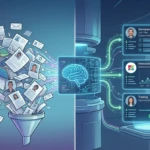
Identify the ideal customer → discover potential accounts → enrich account information → identify decision-makers → analyze intent signals → score prospects → prepare personalized outreach → monitor responses → escalate qualified opportunities.
That is considerably different from simply asking AI to “write 100 cold emails.”
And that distinction matters.
The real power of autonomous AI is not producing more text. It is connecting research, reasoning, prioritization, and action into a single prospecting workflow.
The goal is not more automation for automation’s sake.
The goal is a smarter sales pipeline.
Goodbye, Generic Outreach: AI Agents Will Make Relevance the New Currency
B2B buyers are drowning in generic outreach.
“We help companies improve efficiency.”
“We are a leading provider of innovative solutions.”
“Can we schedule a quick call?”
These messages may be grammatically perfect, but they rarely demonstrate that the sender understands the prospect’s business. As inboxes become increasingly saturated, generic personalization will become easier to recognize—and easier to ignore.
This is where AI lead agents could make a serious difference.
Modern AI prospecting systems can analyze company information and buying signals before preparing outreach. Some prospecting agents are already designed to monitor signals, identify relevant contacts, and create messaging grounded in account-specific information.
For businesses investing in B2B Lead Generation for Singapore, this creates an opportunity to move beyond surface-level personalization.
Instead of saying, “I noticed you’re growing,” an AI-assisted workflow could potentially identify a specific expansion, hiring pattern, technology change, market entry, or leadership development and use that context to determine whether an outreach opportunity exists.
That changes the conversation.
Personalization stops being about inserting someone’s first name into an email.
It becomes about understanding why that person might care.
This is also where AI marketing becomes more closely connected to sales. The same intelligence used to understand customer behavior can increasingly inform prospecting, messaging, account selection, and timing.
The strongest AI systems will not simply generate more messages. They will help determine whether a message should be sent in the first place.
That is an important distinction.
More outreach creates more noise.
Better intelligence creates more relevance.
As AI agents become more capable, B2B companies will increasingly compete on their ability to understand prospects before contacting them. In that environment, relevance becomes a competitive advantage—and eventually, a basic expectation.
The Intent Revolution: Stop Chasing Every Lead and Start Finding the Right Moment
One of the biggest weaknesses in traditional lead generation is timing.
A company may fit your ideal customer profile perfectly, yet still have zero interest in buying today. Another company may look less obvious on paper but suddenly be experiencing exactly the problem your product solves.
Both can appear in the same database.
The difference is intent.
AI lead agents can potentially combine firmographic information, engagement behavior, company developments, website activity, hiring patterns, technology changes, and other signals to identify accounts that deserve attention. Modern sales prospecting tools increasingly position buying-signal monitoring as a core part of agentic prospecting.
For B2B Lead Generation for Singapore, this can be especially valuable because a smaller pool of highly relevant prospects may be more commercially useful than thousands of poorly qualified contacts.
Consider a technology company looking for new marketing support.
A static database might tell you that the company fits your industry, revenue, and employee criteria.
An intelligent system could potentially tell you something more useful: the company has recently entered a new market, is hiring marketing personnel, has increased digital activity, and appears to be investing in growth.
That combination creates a stronger reason to investigate.
This is the emerging “right account, right person, right message, right time” model.
It does not mean AI can perfectly predict buying behavior. It cannot.
Signals can be incomplete. Data can be outdated. Algorithms can misinterpret intent.
But AI can process enormous quantities of information far faster than a human salesperson can manually inspect them.
That creates leverage.
The future of prospecting will increasingly be about separating “could buy” from “might buy now.”
That difference can dramatically change where sales teams spend their time.

Don’t Fire the Sales Team Yet: Where Humans Still Beat Autonomous AI
The excitement surrounding AI agents sometimes creates an unrealistic expectation: that autonomous AI will completely replace salespeople.
That is unlikely to be the smartest way to think about the technology.
AI is excellent at processing information, repeating workflows, identifying patterns, drafting communication, and handling large amounts of structured work. But B2B sales often depends on judgment, trust, negotiation, empathy, political awareness, and relationship-building.
Those are messy human activities.
Research into autonomous AI in sales distinguishes these systems from traditional assistants because agents can perceive, reason, and act across multiple steps. But that does not eliminate the need for human involvement.
This is why the strongest model for B2B Lead Generation for Singapore may be human-plus-agent rather than human-versus-agent.
Let AI handle the grunt work.
Let people handle the moments that matter.
An AI agent could research 1,000 accounts while a sales professional focuses on the 50 with the strongest potential. It could prepare account briefs while the salesperson prepares for the actual conversation. It could flag unanswered opportunities while the sales representative decides how to approach a sensitive relationship.
That division of labor makes sense.
The danger comes when businesses give autonomous systems too much freedom without proper controls. Incorrect data, inappropriate messaging, hallucinated information, poor targeting, or excessive outreach can damage a brand faster than a human salesperson ever could.
The answer is not to reject AI.
It is to govern it.
Human approval, clear operating boundaries, reliable data, monitoring, and escalation rules should remain part of the system—particularly for high-value accounts and sensitive communications.
The future salesperson may not be replaced by AI.
They may simply become responsible for managing a much more powerful digital sales workforce.
Build the Engine Before You Step on the Accelerator: Preparing for AI-Led Prospecting
Buying an AI agent does not automatically create a high-performing sales operation.
If the underlying strategy is weak, AI can simply make bad prospecting happen faster.
That is why businesses should start with the fundamentals.
First, define the ideal customer profile. Which industries matter? What company size is appropriate? Which markets are priorities? Who are the decision-makers? What business problems does the company actually solve?
Next, examine the data.
AI agents are only as useful as the information they can access and interpret. If CRM records are outdated, contact information is unreliable, or customer segments are poorly defined, autonomous workflows can produce misleading results.
Then identify the workflows that consume the most sales-team time.
For some companies, it might be account research. For others, it could be lead qualification, follow-up, CRM updates, or outbound personalization.
Start there.
A focused deployment of B2B Lead Generation for Singapore can be more valuable than attempting to automate the entire sales department overnight.
The next step is integration. AI agents become significantly more useful when they can work with the systems where sales data already exists, including CRM platforms, prospecting databases, analytics systems, and communication tools.
Then establish boundaries.
Determine which actions AI can perform independently and which require human approval.
Finally, measure outcomes.
Do not judge the system simply by how many emails it generates or how many contacts it processes. Measure qualified opportunities, response quality, meetings, conversion rates, sales-cycle velocity, pipeline contribution, and ultimately revenue.
This is where disciplined AI marketing strategy matters.
The objective is not to create an impressive AI demonstration.
The objective is to build a sales machine that produces measurable commercial results.
Start small. Prove value. Improve the data. Refine the workflow. Then increase autonomy.
That is how businesses turn AI from a novelty into infrastructure.
Conclusion
The rise of AI lead agents represents a deeper change than another new category of sales software.
For decades, B2B prospecting has been constrained by human bandwidth. Salespeople could only research so many accounts, send so many messages, conduct so many follow-ups, and monitor so many opportunities.
Autonomous AI changes that equation.
It introduces the possibility of digital agents continuously researching, prioritizing, preparing, and supporting prospecting workflows. Current sales platforms are already moving in this direction, with AI agents handling tasks such as account research, contact identification, buying-signal monitoring, personalized outreach, qualification, and follow-up.
But there is a bigger lesson here.
The future will not belong to the company that simply generates the most leads.
It will belong to the company that understands its market better.
For businesses investing in B2B Lead Generation for Singapore, that means moving away from the old obsession with raw lead volume and toward quality, intent, timing, relevance, and conversion.
AI can help uncover patterns humans might miss.
It can monitor more accounts.
It can process more information.
It can support more personalized interactions.
But strategy still matters. Positioning still matters. Trust still matters. And the human ability to understand a complicated business problem remains difficult to automate completely.
That is why the real opportunity is not replacing the sales organization.
It is augmenting it with autonomous intelligence.
The companies that embrace this model early can build leaner sales teams without necessarily sacrificing prospecting capacity. They can spend less time searching and more time selling. They can react to buying signals faster and focus human attention where it has the greatest commercial impact.
The prospecting battlefield is changing.
The question is no longer whether AI will participate in B2B sales.
It already is.
The real question is whether businesses will use AI merely to automate yesterday’s prospecting process—or redesign the process entirely.
The winners will likely choose the second path.
