
The Rise of AI Lead Agents: How Autonomous AI Will Transform B2B Prospecting
September 4, 2026 at 12:44 pmGEO vs SEO vs AEO: What Should Businesses Actually Optimize for in 2026?
September 7, 2026 at 5:36 pm

For years, SEO operated on a relatively simple premise: get your website to rank near the top of Google, earn clicks, generate traffic, and convert that traffic into customers. The formula was never quite that simple, but the objective was clear. Businesses obsessed over rankings, keywords, backlinks, organic traffic and the coveted number-one position.
In 2026, that mindset is becoming dangerously incomplete.
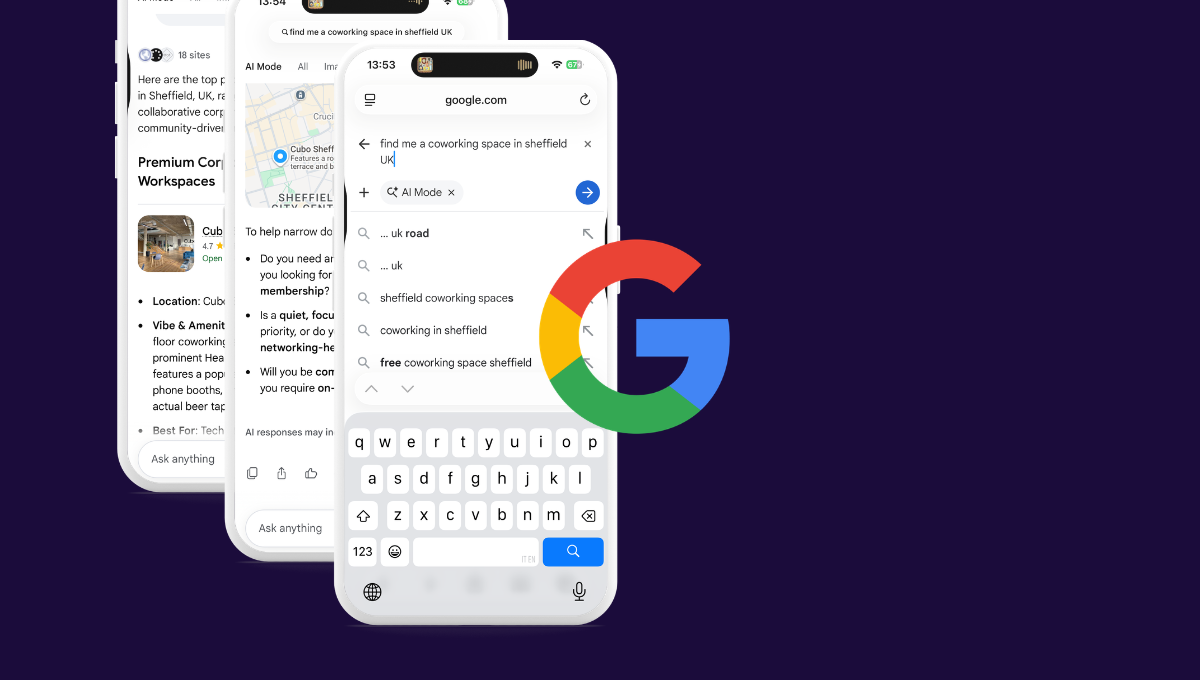
Google is no longer simply presenting users with ten blue links and asking them to decide what deserves attention. AI Overviews and AI Mode are changing how people discover, compare and evaluate information. Google describes AI Mode as a more conversational search experience capable of handling complex questions and follow-up exploration, while AI Overviews provide generated summaries alongside links to supporting websites.
That means a business can technically rank well and still miss part of the modern search journey.
The question is no longer simply, “What position does my website hold for this keyword?”
The better question is, “Does my brand appear when a potential customer asks an AI-powered search engine about the problem I solve?”
This is where an experienced AI Marketing Agency Singapore can help businesses rethink their digital visibility strategy. SEO must now connect search rankings with content authority, brand recognition, customer intent and AI-driven discovery.
Traditional rankings remain valuable. Google has explicitly stated that foundational SEO best practices continue to apply to its generative AI search experiences.
But rankings are increasingly becoming one part of a much larger game.
The winners will not abandon SEO. They will expand it.
They will build websites that rank, content that gets cited, brands that get mentioned, and expertise that becomes difficult for search and AI systems to ignore.
In 2026, ranking is still the goal.
It is simply no longer the entire scoreboard.
Google Still Matters—But Search Behaviour Has Changed
There is a temptation to declare traditional Google Search dead. That would be just as shortsighted as pretending nothing has changed.
Google remains one of the world’s most important discovery platforms. What has changed is the way users interact with it.
People increasingly ask longer, more complicated questions. Instead of searching for several individual keywords, they can describe a problem in natural language and expect an answer that synthesizes information from multiple sources.
Google’s AI search experiences are designed around exactly this shift. Its documentation explains that AI features can use techniques such as query fan-out, where related searches are generated to explore different aspects of a user’s question before producing a response.
That has major implications for businesses.
A customer might not search for “B2B marketing agency Singapore.” They might ask which agency can help a technology company generate qualified leads in Singapore, improve its content strategy and use AI to shorten the sales cycle.
That is a very different search problem.
A modern AI Marketing Agency Singapore strategy therefore has to understand topics, relationships and intent—not simply individual keywords.
The search journey is becoming more conversational and fragmented. A buyer may discover a company through Google, investigate it through an AI assistant, read third-party reviews, watch videos, examine LinkedIn content and finally visit the company’s website.
Visibility is distributed across that entire journey.
This is why businesses should stop treating SEO as an isolated traffic-generation activity. Search is increasingly becoming part of a broader digital reputation system.
Your website needs to be discoverable.
Your content needs to be useful.
Your brand needs to be credible.
And your expertise needs to be recognizable across multiple digital environments.
The companies that understand this shift early will have an advantage over businesses still measuring success exclusively through keyword positions.
Google is not disappearing.
Search is evolving.
And businesses need to evolve with it.
The New Battlefield: Getting Your Brand Into AI Answers
Here is where AI SEO gets particularly interesting.
Traditional SEO asks whether your webpage can rank for a query. AI-driven search introduces another layer: whether your information can become part of an answer generated for that query.
Google’s current documentation makes an important point: there is no special “AI schema” or secret technical markup required to appear in AI Overviews or AI Mode. Instead, Google’s existing search and quality systems remain foundational. Pages still need to be indexable, technically accessible and useful to people.
That distinction matters.
There is no magic button labelled “Optimize for AI.”
Instead, businesses need to become genuinely useful sources of information.
This is where the work of an AI Marketing Agency Singapore increasingly intersects with SEO, content strategy and brand authority.
Imagine someone asks an AI search engine, “What should a Singapore B2B company look for when choosing an AI marketing partner?”
If your website has a generic 800-word article filled with recycled industry statements, there may be little reason for an AI system—or a human—to consider it authoritative.
But if your website contains original research, practical frameworks, case studies, expert commentary, detailed comparisons and genuinely useful explanations, you create substantially more informational value.
This is the critical shift from keyword targeting to authority building.
Your objective is not merely to place a keyword on a page.
Your objective is to build a body of information that establishes your company as a credible source within a particular subject.
That means answering difficult questions.
Explaining complicated concepts.
Providing evidence.
Showing experience.
Publishing original insights.
And making your expertise easy for both people and search systems to understand.
AI search does not eliminate the need for SEO.
It raises the standard for what worthwhile SEO should look like.

Stop Publishing Content Just to Fill a Calendar
AI has created an uncomfortable paradox for marketers.
Producing content is easier than ever.
Producing content worth reading is not.
With generative AI, a business can create dozens of articles in a fraction of the time it once required. That sounds like an enormous competitive advantage—until every competitor starts doing exactly the same thing.
Suddenly, the internet becomes flooded with articles that sound polished but say very little.
Google has addressed this issue directly, warning that using generative AI to produce many pages without adding value can fall under its policies concerning scaled content abuse.
This is why the future of SEO will reward substance over sheer volume.
A sophisticated AI Marketing Agency Singapore should not simply help a company publish more content. It should help the company create content that deserves attention.
That means bringing human expertise into the process.
Use AI to research.
Use AI to organize.
Use AI to identify patterns.
Use AI to accelerate production.
But then add something machines cannot automatically manufacture on demand: your actual experience.
Add customer stories.
Add proprietary data.
Add lessons learned from campaigns.
Add strong opinions.
Add original frameworks.
Add examples from your market.
Add evidence that demonstrates you actually understand the problem.
This is particularly important for B2B businesses, where buyers are rarely convinced by generic educational content alone. They want to know whether a company understands their industry, challenges and commercial reality.
The content race is becoming a quality race.
The brands that win will not necessarily be those publishing five articles every day.
They will be the brands publishing information that customers remember, reference and trust.
In a world where AI can generate infinite average content, genuine expertise becomes scarce.
And scarcity has value.

Keywords Are Still Useful—But Intent Is Where the Money Lives
Keyword research is not dead.
The mistake is thinking keywords are the complete strategy.
Search engines have become significantly better at understanding relationships between words, concepts, entities and user intent. Google’s generative search guidance describes AI search as building on core ranking and quality systems while using techniques that retrieve information across related searches.
That means businesses need to think beyond individual search terms.
Consider a company targeting “AI marketing Singapore.”
A traditional SEO strategy might create a page around that exact phrase and repeatedly optimize titles, headings, body copy and metadata.
A stronger strategy asks a deeper series of questions.
What is the customer actually trying to accomplish?
Are they looking for an AI marketing agency?
Are they comparing providers?
Are they researching AI automation?
Are they trying to generate leads?
Are they trying to reduce marketing costs?
Are they looking for implementation support?
Are they trying to understand whether AI will actually produce business results?
This is where an AI Marketing Agency Singapore can bring a broader strategic perspective to SEO.
The content strategy should map the entire buyer journey.
Top-of-funnel content should educate.
Middle-of-funnel content should compare and demonstrate expertise.
Bottom-of-funnel content should reduce risk and help buyers make decisions.
Supporting content should answer the questions that appear throughout the journey.
The keyword is simply the doorway.
Intent is the room behind it.
And commercial value lives inside that room.
Businesses that continue chasing isolated keywords may generate traffic.
Businesses that understand intent have a much better chance of generating qualified demand.
That is the difference between optimizing for visibility and optimizing for growth.
The SEO Scoreboard Needs a Serious Upgrade
For years, SEO reports have revolved around familiar numbers: rankings, impressions, clicks, sessions and backlinks.
Those metrics still matter.
But they do not tell the entire story anymore.
If a potential customer discovers your company through an AI-generated answer, reads your content, remembers your brand and later searches for your company directly, traditional attribution can struggle to capture the full journey.
This creates a challenge for marketers.
How do you measure visibility when the customer may encounter your brand before they ever click your website?
An advanced AI Marketing Agency Singapore should help businesses build a broader measurement framework.
Track traditional SEO performance, but also pay attention to brand visibility, branded search growth, qualified organic leads, assisted conversions, content engagement, conversion rates and pipeline contribution.
Where possible, businesses should also monitor how their brand and expertise are represented across AI search experiences.
The goal is not to obsess over one new vanity metric.
The goal is to connect search visibility to commercial impact.
A page ranking number three and producing no meaningful business outcome may be less valuable than a page ranking number eight that attracts highly qualified decision-makers.
Likewise, an article that receives modest traffic but influences high-value B2B prospects can be commercially more important than a viral article attracting thousands of irrelevant visitors.
SEO needs to become more accountable.
The question should no longer be:
“How many keywords did we move up?”
It should be:
“Did our visibility help the right people discover, trust and choose us?”
That is a harder question.
It is also a much better one.
Search is no longer just a traffic channel.
It is becoming an influence channel.
And the companies measuring influence will understand their SEO performance far better than those measuring rankings alone.
Conclusion
The biggest mistake businesses can make in 2026 is treating AI SEO as a replacement for traditional SEO.
It is not.
Google’s own guidance is remarkably clear on this point: foundational SEO remains relevant because generative AI features in Search are built on Google’s existing search and quality systems.
The real opportunity is to expand the definition of SEO.
Technical SEO still matters.
Crawlability still matters.
Indexing still matters.
Internal linking still matters.
Structured information still matters.
Content quality still matters.
But now businesses also need to think about authority, brand visibility, topical depth, digital reputation and how their expertise is represented across AI-driven discovery.
That is the bigger role an AI Marketing Agency Singapore can play: not simply helping a company chase rankings, but building an integrated system where SEO, content, AI, brand strategy and demand generation work together.
The brands that thrive will build useful websites.
They will publish original ideas.
They will demonstrate expertise instead of merely claiming it.
They will create content around customer problems rather than keyword lists.
They will make their information easy to discover, understand and trust.
And they will pay attention to where customers encounter their brand—not just where their website ranks.
Google rankings are not going away.
They remain an important part of digital visibility.
But the game has become bigger.
The battlefield now includes AI answers, conversational search, brand mentions, content authority, customer intent and the credibility your company builds across the web.
The winners will not ask only, “How do we rank first?”
They will ask a harder question:
“When our ideal customer asks a difficult question, will our brand be one of the names worth mentioning?”
That is the real challenge of AI SEO in 2026.
Ranking gets you into the game.
Authority keeps you in it.
And being the brand customers—and intelligent search systems—trust enough to recommend is how you win.
