

AI Content Operations: Building a Repeatable Workflow From Brief to Publication
November 17, 2026 at 6:22 pm
Why Video-First Content Strategy Is Changing B2B Brand Communication
November 18, 2026 at 7:07 pm
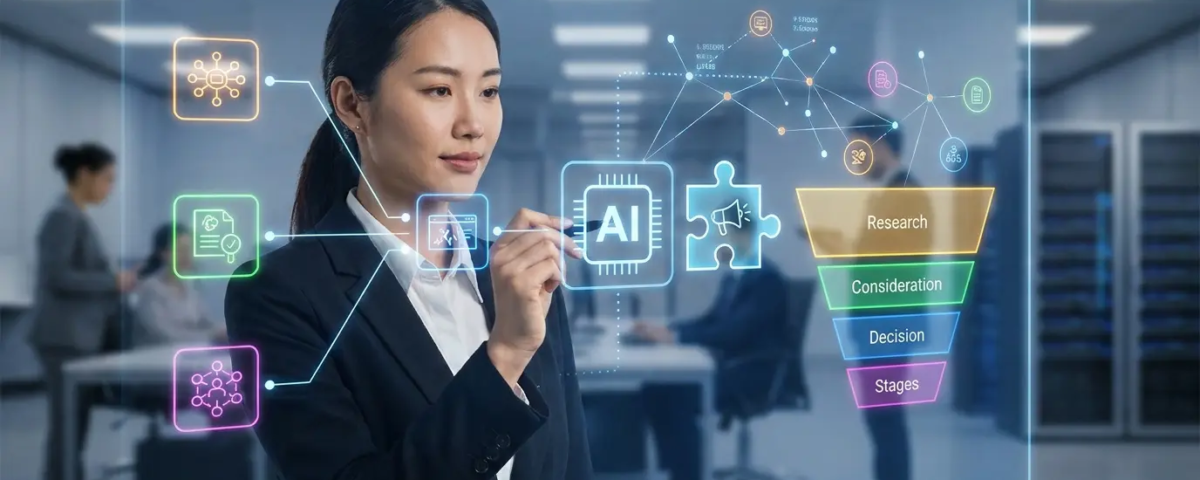
B2B marketing has never been short of campaigns. Businesses invest in email marketing, social media advertising, content production, webinars, and lead generation activities to attract potential customers. Yet, despite all these efforts, many marketing campaigns still fail to reach prospects at the right moment. The problem is not always the quality of the marketing content or the size of the advertising budget. More often, it comes down to a fundamental misunderstanding of where buyers actually are in their purchasing journey.
A prospect who downloads an industry report is not necessarily ready to speak with a sales representative. Someone who visits a product page several times may be comparing suppliers rather than preparing to make a purchase. However, traditional marketing approaches often treat these interactions as identical indicators of interest. This creates a disconnect between what marketers communicate and what potential customers actually need.
B2B purchasing decisions are rarely straightforward. They involve multiple stakeholders, internal discussions, budget approvals, technical evaluations, and long consideration periods. A campaign designed to generate immediate enquiries may be ineffective when the audience is still trying to understand a business problem. Likewise, educational content may not be persuasive enough for prospects already comparing vendors.
This is where artificial intelligence can make a meaningful difference. An experienced AI Marketing Agency Singapore can help businesses move beyond generic campaign execution by using behavioural insights, predictive analytics, and automation to understand buyer readiness more accurately.
Instead of pushing the same message to every prospect, marketers can develop campaigns that respond to actual engagement patterns and changing interests. The objective is not simply to generate more leads. It is to attract the right prospects, deliver relevant information, and create meaningful opportunities when buyers are ready to move forward.
Ultimately, successful B2B marketing is not about being everywhere. It is about showing up with the right message at the right stage of the buying journey.
Understanding the Real B2B Buying Journey Through Data
The modern B2B buying journey is rarely a straight line. Prospects may discover a company through LinkedIn, read several industry articles, visit its website, attend a webinar, and disappear for weeks before returning with renewed interest. Some buyers move quickly, while others spend months researching potential solutions. This unpredictable behaviour makes it difficult for marketers to understand purchasing readiness through traditional campaign metrics alone.
To address this challenge, businesses need a more complete picture of how prospects interact with their brand. Every meaningful digital interaction can provide information about buyer interests, concerns, and potential purchasing intentions. Website visits, content downloads, email clicks, webinar attendance, repeated product-page views, and engagement with specific service offerings can collectively reveal how a prospect’s interests are developing.
However, collecting data is only the beginning. The real challenge is connecting these signals and understanding what they mean.
AI can help marketers consolidate information from multiple channels and identify behavioural patterns that would otherwise be difficult to recognise manually. For example, a prospect who repeatedly reads articles about marketing automation, downloads a guide about lead management, and visits a relevant service page may be demonstrating a stronger interest in solving a specific business problem.
An AI Marketing Agency Singapore can help organisations turn disconnected marketing interactions into more meaningful audience intelligence. By combining behavioural, demographic, and firmographic information, marketers can develop more accurate customer segments and identify which content is relevant to different buying situations.
This approach also helps businesses understand that engagement does not always equal purchasing intent. A prospect may consume large amounts of educational content without having the authority or budget to purchase. Another prospect may engage less frequently but demonstrate clear commercial interest.
The goal is to move beyond counting clicks and start understanding behaviour. When marketers understand what prospects are researching, what problems they are trying to solve, and how their interests change over time, campaigns become more relevant and considerably more strategic.
How AI Recognizes Buyer Intent Before Prospects Make an Enquiry
One of the biggest challenges in B2B marketing is identifying which prospects are genuinely moving towards a purchasing decision. Traditional lead scoring often relies on predefined rules, such as assigning points for opening emails, downloading resources, or visiting specific website pages. While these indicators provide useful information, they do not always reveal the full picture of buyer readiness.
AI introduces a more sophisticated approach by analysing multiple behavioural signals simultaneously. Rather than evaluating individual interactions in isolation, machine learning models can identify patterns across a prospect’s engagement history and compare them with patterns associated with previous successful conversions.
For example, a prospect who visits a company’s website once may represent casual interest. However, when that same prospect repeatedly explores service pages, reads solution-related articles, attends a product webinar, and interacts with relevant email campaigns, the combined behaviour may indicate a stronger commercial interest.
AI-powered predictive analytics can help marketers recognise these developing patterns and estimate which prospects are more likely to progress towards a purchasing decision. This allows marketing teams to prioritise their attention and adjust campaigns based on changing engagement signals.
An AI Marketing Agency Singapore can help businesses implement intelligent lead-scoring approaches that combine behavioural insights with business information, including company size, industry, job role, and potential fit with the organisation’s offerings.
However, there is an important distinction between engagement and genuine buying intent. A highly engaged student researching an industry topic should not automatically receive the same priority as a decision-maker evaluating solutions for an immediate business requirement. AI systems need relevant data and properly defined business criteria to make useful predictions.
Human judgement remains essential. Marketing and sales teams should review AI-generated insights, validate important signals, and consider the wider business context before deciding how to approach a prospect.
AI does not eliminate uncertainty from the buying process. What it does is give marketers better information to work with. Instead of waiting for prospects to submit an enquiry, businesses can recognise meaningful changes in behaviour and respond with greater timing, relevance, and confidence.
Match Every Campaign Message to the Buyer’s Current Decision Stage
Knowing that a prospect is interested is only half the battle. The next challenge is delivering information that matches what the prospect actually needs. A buyer researching an unfamiliar business problem requires a different conversation from someone comparing suppliers or preparing a purchasing proposal. Sending the same marketing message to both audiences is an inefficient way to build relationships.
AI can help marketers adapt their campaigns according to the different stages of the B2B buying journey.
During the awareness stage, prospects are usually trying to understand a problem or identify opportunities for improvement. Educational articles, industry reports, short-form videos, and thought leadership content can help businesses establish credibility without immediately pushing for a sale.
During the consideration stage, buyers begin exploring possible solutions. They may compare different approaches, investigate service providers, and evaluate the benefits of available technologies. This is where comparison guides, webinars, case studies, and practical educational resources become more valuable.
The evaluation stage requires a more focused approach. Prospects may already understand their requirements and want to determine which provider can deliver the best outcome. Product demonstrations, technical information, ROI assessments, and consultations can help address specific purchasing concerns.
Finally, during the decision stage, buyers need confidence. Tailored proposals, pricing information, implementation details, and direct sales discussions become more relevant.
An AI Marketing Agency Singapore can help businesses develop campaigns that respond to these changing requirements through audience segmentation, content recommendations, and behavioural personalisation.
AI can also help identify when prospects demonstrate new interests that suggest they are moving between stages. For example, someone who previously consumed general educational content may begin exploring pricing, implementation, and service comparisons.
The important principle is that personalisation should reflect genuine buyer needs rather than simply inserting someone’s name into an email.
When campaigns evolve alongside the purchasing journey, marketing becomes more useful to prospects. Instead of repeatedly asking buyers to take the next step, businesses provide the information that helps them make that decision themselves.
Use AI Marketing Automation to Reach Buyers at the Right Moment
Even when marketers understand buyer behaviour, delivering the right message consistently can become difficult. B2B audiences interact with brands across multiple channels, and their interests can change without warning. Manually monitoring every prospect, updating audience segments, and adjusting campaign sequences is not a sustainable approach for growing marketing teams.
This is where AI-powered marketing automation becomes valuable.
Traditional automation typically follows predefined instructions. For example, when someone downloads an e-book, the system sends a welcome email, followed by several scheduled messages. Although this creates consistency, it does not necessarily consider whether the prospect is still interested, has already moved towards a purchasing decision, or needs a completely different type of information.
AI can make these workflows more responsive by analysing engagement patterns and helping marketers determine what action should happen next. A prospect who repeatedly interacts with educational content may continue receiving relevant resources, while someone demonstrating stronger commercial interest may be prioritised for a more direct sales conversation.
An AI Marketing Agency Singapore can help businesses connect AI capabilities with CRM platforms, email marketing systems, website analytics, and campaign automation tools to create a more coordinated marketing environment.
For example, when a prospect engages with several resources related to a specific business solution, the system can update their engagement profile, recommend relevant follow-up content, and notify the appropriate sales representative when predefined qualification criteria are met.
However, automation needs boundaries. Not every behavioural signal should trigger an immediate sales call or another promotional email. Excessive communication can damage trust, particularly when prospects are still researching their options.
Businesses should establish clear rules around communication frequency, consent, data quality, and sales handover processes. AI-generated recommendations should also be monitored to ensure they remain relevant and appropriate.
The objective is not to automate every possible interaction. It is to remove unnecessary manual work while making important customer interactions more timely and meaningful.
When AI automation is connected to a clear buying-stage strategy, marketing teams can nurture prospects more intelligently, improve sales coordination, and spend more time developing campaigns that contribute to actual business growth.
Measure Campaign Performance Based on Buyer Progress, Not Just Engagement
A marketing campaign can generate thousands of impressions, hundreds of clicks, and dozens of content downloads without producing meaningful sales opportunities. This is one of the most common problems in B2B marketing: teams celebrate engagement figures without understanding whether those interactions are moving prospects closer to a purchasing decision.
Clicks and impressions are useful indicators, but they do not tell the complete story. Businesses need to evaluate whether their campaigns are attracting suitable prospects, building purchasing confidence, and contributing to measurable pipeline growth.
AI-powered analytics can help marketers develop a clearer understanding of campaign performance across different buying stages. Instead of reviewing every campaign independently, businesses can connect engagement data with lead progression, sales activity, and conversion outcomes.
For example, an awareness campaign may generate significant traffic but very few qualified enquiries. This does not automatically mean the campaign has failed. It may be successfully introducing the brand to new audiences, while the next stage of the marketing strategy needs improvement.
Similarly, a consideration campaign may attract fewer interactions but generate prospects who eventually become qualified sales opportunities. Looking only at engagement volume would overlook its commercial contribution.
An AI Marketing Agency Singapore can help organisations use predictive analytics and integrated reporting to identify these differences and understand where campaign improvements are needed.
Important performance indicators should include lead quality, marketing-qualified leads, sales-qualified leads, lead progression between buying stages, conversion rates, sales acceptance rates, pipeline contribution, and the time required to move from initial engagement to purchase.
AI can also help identify patterns in underperforming campaigns. For instance, marketers may discover that certain content attracts significant attention but rarely generates qualified opportunities. Other content formats may produce fewer interactions but consistently attract decision-makers.
These insights can guide future content development, audience targeting, and campaign budget allocation.
Marketing and sales teams should also establish shared definitions of lead qualification and purchasing readiness. Without this alignment, marketing may consider a lead successful while sales considers it premature.
Ultimately, the purpose of measurement is not to produce more impressive dashboards. It is to understand what drives business outcomes and continuously improve the marketing activities that contribute to revenue.
Conclusion
B2B marketing is entering an environment where simply producing more content, sending more emails, or increasing advertising budgets is no longer enough. Buyers have become more selective about the information they consume, the companies they engage with, and the solutions they consider. Businesses that continue relying on generic campaigns risk wasting resources on audiences that are not ready, messages that are irrelevant, and opportunities that are poorly timed.
The real advantage of AI lies in helping marketers understand the difference between attention and intention.
By analysing behavioural data, identifying purchasing signals, improving lead scoring, and personalising campaign experiences, AI allows businesses to develop a more accurate understanding of their prospects. Marketing teams can then align their messages with actual buying stages instead of forcing every prospect through the same predefined campaign sequence.
However, technology alone will not solve the problem. Effective implementation requires accurate data, clearly defined customer profiles, relevant content, properly integrated systems, and close collaboration between marketing and sales teams. AI should strengthen the marketing strategy, not replace the strategic thinking behind it.
Businesses also need to recognise that buying journeys are not always linear. Prospects may return to earlier research stages, involve additional decision-makers, or reconsider their requirements before making a final choice. Marketing systems must therefore remain flexible enough to respond to changing behaviour.
Working with an experienced AI Marketing Agency Singapore can help organisations build a more connected marketing approach that combines AI-driven insights, intelligent automation, content personalisation, and B2B lead generation strategies.
For businesses operating in Singapore and across Asia, this creates an opportunity to improve how they identify, engage, and nurture potential customers in increasingly competitive markets.
The future of B2B marketing will not belong to companies that simply automate the most activities. It will belong to those that understand their buyers more deeply and use technology to respond more intelligently.
The question is no longer how many campaigns a business can launch. It is whether those campaigns reach the right people, address the right problems, and arrive at the right moment.
Because better B2B marketing does not begin with more activity. It begins with a better understanding of why buyers are ready to act.
