

How AI Can Help B2B Marketers Align Campaigns With Real Buying Stages
November 18, 2026 at 6:56 pm
The AI Marketing Control Tower: How to Manage Campaigns, Data and Decisions in One System
November 20, 2026 at 6:29 pm
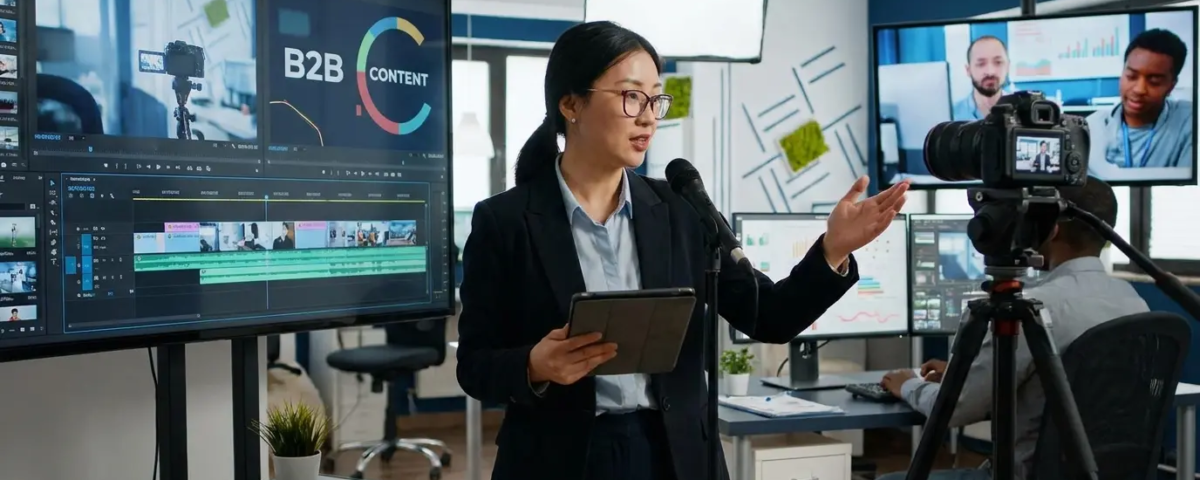
B2B marketing is undergoing a fundamental shift. For years, businesses relied heavily on written articles, corporate brochures, static advertisements, and lengthy presentations to communicate their value. These formats still serve an important purpose, but the way professional audiences consume information has changed. Buyers are becoming more selective about what they read, watch, and engage with. They want information that is accessible, relevant, and easy to understand without spending unnecessary time navigating complicated messages. Video is increasingly answering that demand.
A video-first content strategy places video at the centre of a company’s communication approach. Instead of treating video as an occasional promotional asset, businesses use it as a primary format for educating audiences, demonstrating expertise, communicating solutions, and building brand recognition. Platforms such as LinkedIn, YouTube, and TikTok have accelerated this shift by making professional and educational video content easier to discover and consume.
For B2B companies, this represents more than a change in content format. It represents a change in how businesses establish relationships with potential customers. A well-produced video can communicate a company’s personality, explain its services, and demonstrate its understanding of industry challenges within a short period. It can also make complex business information more approachable.
This shift creates new opportunities for companies investing in AI Content Generation Singapore to develop consistent and engaging marketing materials across different digital channels. With AI-assisted content workflows, businesses can transform industry insights, marketing messages, and service information into multiple content formats, including videos.
The reality is straightforward: businesses are competing for attention in an increasingly crowded digital environment. Brands that communicate clearly, visually, and consistently have a stronger opportunity to remain memorable. Video-first communication is becoming an essential part of that competitive landscape.

Why Traditional B2B Brand Communication Is No Longer Enough
Traditional B2B communication was built around information delivery. Companies published detailed service descriptions, distributed corporate brochures, prepared sales presentations, and sent marketing emails explaining their products and capabilities. These approaches helped businesses establish credibility and communicate important details. However, information delivery alone is no longer enough to capture attention or influence modern buying decisions.
Today’s professional audiences face an overwhelming amount of digital information. Decision-makers receive promotional emails, attend webinars, browse industry publications, and encounter countless advertisements throughout their working day. When every company claims to offer innovative solutions, superior service, and exceptional results, generic messaging becomes difficult to distinguish. Even a well-written marketing message can disappear into the noise if it fails to communicate something meaningful.
The problem is not that traditional content has become irrelevant. The problem is that businesses often depend on the same communication methods without considering how their audiences prefer to consume information. A lengthy corporate presentation may contain valuable insights, but a concise explainer video could communicate the same concept more effectively. A static advertisement might describe a service, while a short demonstration can show how that service works in practice.
Video also introduces a human dimension that traditional formats sometimes struggle to deliver. Through voice, movement, visuals, and storytelling, brands can communicate their personality and values more naturally. This helps transform businesses from unfamiliar corporate names into recognisable organisations with a clearer identity.
Companies exploring AI Content Generation Singapore can also rethink how existing marketing materials are presented. Written content can become video scripts, presentations can become visual explainers, and industry reports can be repurposed into educational video series.
The objective is not to abandon traditional communication. It is to stop relying on formats simply because they have always been used. Effective B2B communication requires businesses to deliver the right message through formats that make people want to pay attention.
How Video Builds Trust, Authority, and Brand Recognition
Trust remains one of the most important foundations of B2B relationships. Business buyers are rarely making impulsive decisions. They evaluate potential suppliers, compare capabilities, assess credibility, and consider the risks associated with choosing the wrong partner. Before committing to a business relationship, they want evidence that a company understands their challenges and can communicate its value convincingly.
Video provides businesses with another powerful way to establish that confidence. Instead of relying exclusively on written claims, companies can demonstrate their knowledge through expert commentary, educational content, product demonstrations, executive interviews, and industry discussions. These formats allow brands to show what they understand rather than simply telling audiences what they want them to believe.
Consider a company offering complex marketing technology. A conventional service page may describe its capabilities in several paragraphs. A short educational video, however, can demonstrate the business problem, explain the proposed solution, and illustrate how the technology fits into an organisation’s operations. This creates a more tangible understanding of the service.
Video also helps strengthen brand recognition through consistency. When companies maintain recognisable visual styles, messaging, presentation formats, and communication themes, audiences become more familiar with their identity. Over time, repeated exposure to useful and relevant content can help position a business as a credible source of industry knowledge.
For companies developing AI Content Generation Singapore strategies, consistency is particularly important. AI can support the production of scripts, visual concepts, educational content, and campaign variations. However, technology should support the brand’s identity rather than replace its personality. Every video still needs a clear point of view, accurate information, and a message that reflects the company’s actual expertise.
Authenticity matters more than excessive production effects. B2B audiences do not necessarily need every video to look like a major commercial production. They need content that respects their time, addresses real challenges, and delivers useful insights.
Ultimately, video builds familiarity through repeated meaningful interactions. When audiences consistently encounter valuable content from a business, the brand has more opportunities to earn attention, credibility, and consideration.
Making Complex B2B Solutions Easier to Understand Through Video
One of the biggest communication challenges in B2B marketing is explaining complex solutions without overwhelming potential customers. Many businesses operate in specialised industries where their products and services involve technical processes, multiple features, integrated systems, and sophisticated workflows. While these details may be important, presenting everything through lengthy written explanations can make it difficult for audiences to understand the actual business value.
Video offers a practical way to simplify these conversations. Through visual demonstrations, animations, storytelling, and structured explanations, companies can break complicated ideas into smaller and more understandable concepts. Instead of forcing potential customers to interpret technical descriptions, businesses can show how a solution works and why it matters.
For example, a company providing AI-powered marketing automation could produce an explainer video showing how customer data moves through a marketing workflow. The video could illustrate how audience segmentation works, how automated communication is triggered, and how marketing teams identify potential sales opportunities. This makes an abstract process easier to visualise.
Different video formats can also support different communication objectives. Educational videos help audiences understand industry problems. Product demonstrations show how solutions work. Explainer animations simplify technical concepts. Customer testimonials communicate real experiences, while short promotional videos introduce services and encourage further engagement.
A video-first approach also creates opportunities to connect content with different stages of the B2B buyer journey. At the awareness stage, businesses can publish educational videos addressing common industry challenges. During consideration, they can introduce solution comparisons, demonstrations, and expert insights. At the decision stage, detailed product walkthroughs and relevant customer evidence can help potential buyers evaluate their options.
This is where AI Content Generation Singapore becomes valuable as part of a broader marketing workflow. AI-assisted content creation can help transform technical information into scripts, storyboards, visual explanations, and supporting promotional materials.
However, simplification must never come at the expense of accuracy. Businesses should avoid exaggerated claims or oversimplified explanations that misrepresent their capabilities.
The strongest B2B videos make complicated solutions easier to understand while preserving the substance behind the message. Clarity is not about removing important information. It is about presenting that information in a way that makes sense to the people who need it.

Building a Scalable Video-First Content Strategy With AI and Automation
A successful video-first strategy requires more than producing a few attractive videos and uploading them to social media. Businesses need a repeatable content operation that connects planning, production, distribution, and performance measurement. Without a structured approach, video production can become expensive, inconsistent, and difficult to maintain over time.
This is where artificial intelligence is changing the economics of content production. AI-powered tools can assist with research, scripting, visual generation, voiceovers, editing, and content repurposing. These capabilities allow marketing teams to explore different creative approaches without relying entirely on traditional production processes for every campaign.
For example, a single B2B marketing topic could become a complete content package. An industry insight article could be transformed into a short educational video, a LinkedIn video post, a series of social media clips, and a longer explainer. Each format communicates the same central idea while adapting the presentation to the audience and platform.
Businesses investing in AI Content Generation Singapore can use this approach to establish more consistent content production. Instead of starting from zero every time a new video is required, marketing teams can work from approved brand messaging, content pillars, audience profiles, and reusable creative frameworks.
AI video production also creates opportunities for smaller businesses that previously found professional video advertising difficult to afford. AI-generated visuals, voiceovers, and creative assets can support the production of polished promotional videos without requiring a full physical filming setup for every project. This can make professional-looking video communication more accessible while allowing teams to focus on strategy and messaging.
Nevertheless, automation should not become an excuse for producing generic content. Businesses still need human oversight to verify information, maintain brand voice, refine creative direction, and ensure that every asset serves a meaningful purpose.
Marketing automation can further strengthen the strategy by connecting video distribution with email campaigns, audience segmentation, CRM platforms, and lead nurturing workflows. Video engagement can become one of several signals that help marketers understand audience interests and determine appropriate follow-up communication.
A scalable video-first strategy therefore combines three essential elements: a clear content direction, efficient AI-supported production, and a distribution system designed around business objectives.
The competitive advantage does not come from publishing the most videos. It comes from consistently producing useful content that reaches the right people and supports the wider marketing operation.
Measuring the Business Impact of Video-First B2B Marketing
Video marketing can generate impressive view counts, but visibility alone does not guarantee business growth. A video that receives thousands of views may produce little commercial value if the audience is irrelevant or the content fails to encourage meaningful action. For B2B companies, measuring performance requires looking beyond surface-level engagement and understanding how video contributes to the overall customer journey.
The first step is identifying the objective behind each video. An awareness campaign may focus on reach, impressions, and audience retention. An educational video may prioritise watch time, completion rates, and meaningful engagement. A service demonstration may focus on website visits, enquiries, and conversions. Different objectives require different performance indicators.
Audience retention is particularly useful because it reveals whether viewers remain interested throughout the video. If a significant percentage of viewers leave within the first few seconds, the opening message may not be compelling enough. If viewers consistently watch until the end but rarely take action, the content may need a stronger connection between the information provided and the next step.
Businesses should also connect video analytics with broader marketing data. Integrating website analytics, CRM platforms, and marketing automation systems can help teams understand whether video engagement contributes to website activity, lead enquiries, and sales conversations.
For organisations using AI Content Generation Singapore as part of their marketing operations, performance data can also inform future content production. Teams can identify which topics generate stronger engagement, which formats attract relevant audiences, and which messaging approaches encourage further interaction.
Testing should be a continuous process. Businesses can experiment with different opening hooks, video lengths, visual styles, calls to action, and distribution channels. Small improvements can create meaningful differences when applied consistently across campaigns.
It is also important to recognise that B2B buying cycles are often lengthy. A potential customer may watch an educational video today, revisit the company’s website weeks later, and only submit an enquiry after several additional interactions. Not every video produces an immediate conversion.
The real objective is to understand how video contributes to awareness, trust, consideration, and commercial opportunities over time.
When businesses measure video against meaningful marketing and sales outcomes, content production becomes a more strategic investment rather than another activity designed simply to keep social media accounts active.
Conclusion
B2B brand communication is evolving because the expectations of professional audiences are changing. Businesses can no longer assume that publishing more information automatically creates greater awareness, stronger credibility, or better customer relationships. In an environment where decision-makers are constantly exposed to competing messages, the ability to communicate clearly and meaningfully has become a valuable competitive advantage.
Video-first content strategy addresses this challenge by making business communication more visual, accessible, and engaging. It gives companies opportunities to demonstrate expertise, explain complex solutions, communicate brand personality, and build familiarity with potential customers. More importantly, it allows businesses to turn information into experiences that audiences can understand and remember.
However, adopting a video-first approach does not mean abandoning blogs, articles, email marketing, or traditional corporate materials. Each format has its place within a well-designed marketing ecosystem. Written content provides depth and search visibility. Email supports direct communication and lead nurturing. Video brings ideas to life through visual storytelling and demonstration. When these formats work together, they create a more connected brand experience.
Artificial intelligence is making this transition increasingly practical. Through AI Content Generation Singapore, businesses can explore more efficient ways to develop scripts, generate creative concepts, repurpose existing content, and support consistent marketing production. AI video production can also help companies create professional-looking promotional materials without making traditional filming the starting point for every project.
Still, technology alone will not build a strong brand. Businesses need a clear understanding of their audiences, a distinctive message, and the discipline to produce content that delivers genuine value. The best video strategies are not built around chasing trends or publishing content for the sake of activity. They are built around solving communication problems and supporting measurable business objectives.
For B2B marketers, the question is no longer simply whether video should be part of the marketing strategy. It is how effectively video can be integrated into the entire customer journey.
Companies that approach video with strategic intent, creative consistency, and measurable objectives will be better positioned to strengthen brand recognition, earn audience trust, and create meaningful business opportunities.
The future of B2B communication will not belong to the businesses that produce the most content. It will belong to those that communicate their value most effectively.
