

Why Video-First Content Strategy Is Changing B2B Brand Communication
November 18, 2026 at 7:07 pm
The B2B Buying Signal Framework: How AI Can Separate Research From Real Purchase Intent
November 20, 2026 at 6:43 pm
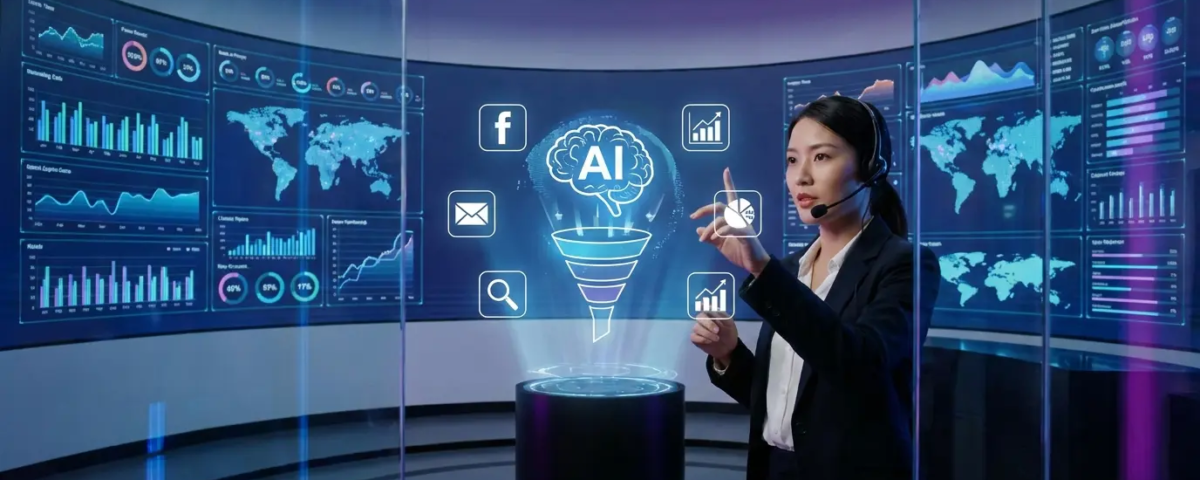
Marketing has become more complicated than ever. Businesses are no longer competing through a single advertising channel or relying on one marketing campaign to attract customers. They are managing websites, search engines, social media platforms, email campaigns, paid advertisements, customer relationship management systems and marketing automation tools simultaneously. Each platform generates valuable information, but the challenge is making all these moving parts work together.
The problem is not necessarily a lack of marketing data. It is the inability to connect that data into a clear picture of what is happening across the entire marketing operation. One dashboard might show increasing website traffic, while another reports declining lead conversions. Social media engagement may be improving, but sales opportunities remain unchanged. When information is scattered across disconnected platforms, marketing teams struggle to understand what is actually driving business performance.
This is where the concept of an AI Marketing Control Tower becomes increasingly important. Instead of treating every marketing platform as an independent system, businesses can establish a centralized intelligence environment that connects campaign activities, customer information, performance metrics and decision-making processes. It gives marketing leaders a broader view of their operations without requiring them to constantly switch between different platforms.
An experienced AI Marketing Agency Singapore understands that marketing effectiveness is not simply about increasing the number of campaigns or adopting more sophisticated tools. It is about creating a connected system where every activity contributes towards measurable business objectives.
The real advantage of a centralized control system is visibility. Marketing leaders can identify problems earlier, recognize opportunities faster and understand how different channels influence one another. More importantly, they can move away from reactive marketing management towards proactive decision-making.
In an environment where customer expectations change quickly and competition becomes increasingly aggressive, businesses cannot afford to manage marketing through disconnected information. They need a system that allows them to see the whole battlefield, understand what is happening and make decisions with greater confidence.
What Is an AI Marketing Control Tower and How Does It Work?
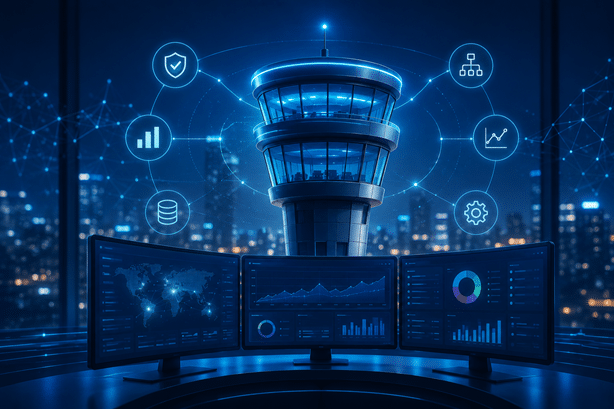
An AI Marketing Control Tower is a centralized intelligence and management framework that brings together marketing campaigns, customer data, performance analytics and operational workflows. Its purpose is to help businesses monitor their marketing activities, interpret information and coordinate decisions through a more connected environment.
Think of it as the command centre of a marketing operation. Instead of checking advertising performance on one platform, customer engagement on another and lead conversions somewhere else, marketing teams can access a more unified view of their activities. AI technologies then help transform this information into insights that support better planning and execution.
However, an AI Marketing Control Tower is more than a conventional dashboard. Traditional dashboards primarily display information. They show impressions, clicks, conversions, engagement rates and other performance indicators. While useful, these numbers do not automatically explain why performance is changing or what a marketing team should do next.
An intelligent control system introduces another layer of capability. It can analyse historical performance, identify unusual patterns, detect potential campaign inefficiencies and generate recommendations based on available information. Depending on its integrations and configuration, it can also trigger automated workflows or support campaign adjustments.
For example, imagine a company running campaigns across Google Ads, LinkedIn, email marketing and its website. The control tower could bring together campaign costs, website behaviour, lead submissions and CRM information. AI could then help identify which channels are attracting higher-quality prospects, which audience segments are showing stronger buying signals and where marketing resources may be underperforming.
This is the kind of integrated approach that an AI Marketing Agency Singapore can help businesses develop through strategic technology integration and intelligent marketing operations.
The underlying technologies may include machine learning, predictive analytics, natural language processing and marketing automation. However, technology alone does not create an effective control tower. The system needs reliable data, clearly defined business objectives and meaningful performance indicators.
Ultimately, the goal is not to automate every marketing decision. It is to give people better information, stronger visibility and more intelligent support so they can make decisions that move the business forward.
Connecting Campaigns, Channels and Marketing Activities in One System
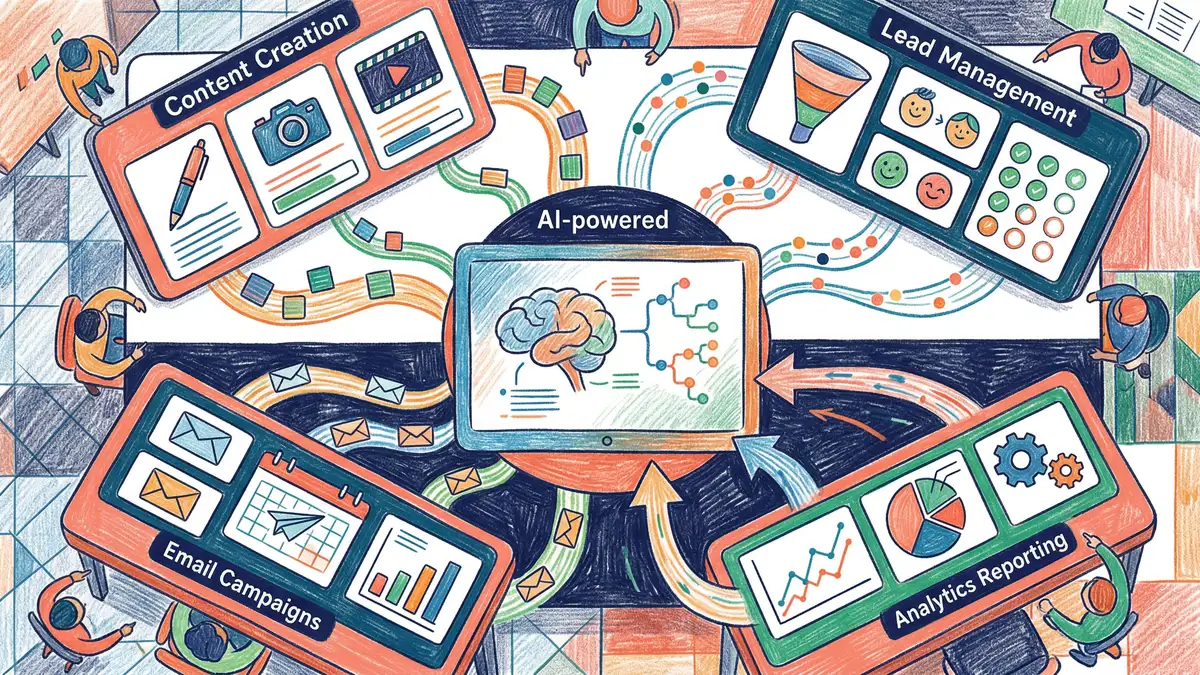
One of the biggest weaknesses in modern marketing is the tendency to manage each channel independently. Social media teams focus on engagement, advertising teams concentrate on clicks and impressions, SEO specialists monitor search visibility, while email marketers measure open rates and conversions. Each team may be performing well according to its individual metrics, but the business could still struggle to generate consistent commercial results.
The problem is that customers do not experience brands through isolated marketing channels. They move between search engines, websites, social platforms, email communications and other touchpoints before making purchasing decisions. A potential B2B customer might discover a company through LinkedIn, visit its website several times, download a resource and eventually respond to an email campaign. Every interaction contributes to the overall customer journey.
An AI Marketing Control Tower helps connect these activities into a more coordinated marketing operation. By integrating campaign information across different platforms, businesses can better understand how individual channels contribute to broader marketing objectives.
For example, AI can help identify relationships between advertising exposure, website visits, content engagement and lead submissions. Marketing teams can use these insights to understand which campaigns are attracting attention, which channels are supporting conversion and where customer journeys are experiencing friction.
An AI Marketing Agency Singapore can help businesses establish this connected approach by aligning campaign strategies, platform integrations and marketing automation around shared objectives.
Centralized campaign management also makes it easier to identify duplicated efforts. Two teams might unknowingly target similar audience segments with different messages, resulting in unnecessary advertising costs and inconsistent communication. A unified view helps expose these overlaps and creates opportunities for better coordination.
Another advantage is messaging consistency. Businesses can monitor whether their campaigns communicate the same positioning, value proposition and brand identity across different channels.
However, centralization does not mean forcing every channel into an identical strategy. LinkedIn, email marketing, search advertising and social media serve different purposes. The objective is to coordinate their contributions while allowing each channel to operate according to its strengths.
When campaigns become connected, marketing teams stop thinking in terms of individual activities and start managing the complete customer experience. That is where more meaningful marketing performance begins.
Turning Fragmented Marketing Data into Actionable Intelligence
Marketing data is only valuable when businesses can interpret it and use it to make better decisions. Unfortunately, many organizations collect enormous amounts of information without developing a clear process for turning that information into meaningful action.
Customer records sit inside CRM platforms. Website analytics provide behavioural information. Advertising platforms report campaign performance. Email marketing systems track engagement, while sales teams maintain their own records of conversations and opportunities. Although every system contains useful information, the lack of integration makes it difficult to understand the complete picture.
An AI Marketing Control Tower addresses this challenge by connecting relevant data sources into a more unified intelligence environment. Rather than examining each dataset independently, businesses can analyse relationships between customer interactions, marketing activities and commercial outcomes.
For example, a marketing team might discover that a particular campaign generates a high volume of website enquiries but produces very few qualified sales opportunities. Looking only at lead volume would suggest that the campaign is successful. However, connecting marketing data with CRM information may reveal that the audience is poorly aligned with the company’s ideal customer profile.
AI can help identify these patterns by analysing behavioural trends, historical performance and customer characteristics. It may also recognize changes in engagement that suggest increasing or decreasing interest among specific audience segments.
An AI Marketing Agency Singapore can support businesses in building data-driven marketing environments that connect customer information with campaign performance and lead generation activities.
Predictive analytics adds another layer of intelligence. Instead of relying exclusively on historical reports, businesses can use available data to estimate future outcomes, identify potential conversion opportunities and recognize campaign risks. These predictions are not guarantees, but they can help marketers make more informed decisions.
However, the quality of AI insights depends heavily on the quality of the underlying information. Inaccurate CRM records, duplicate customer profiles, inconsistent tracking and missing conversion data can produce misleading recommendations.
Data governance must therefore remain a priority. Businesses need clear standards for data collection, integration, access and maintenance. Privacy requirements must also be respected when combining customer information across different systems.
The objective is not to collect more data for the sake of having bigger dashboards. It is to eliminate information silos and turn disconnected signals into intelligence that helps businesses understand their customers, improve campaigns and generate better commercial outcomes.

Using AI to Improve Marketing Decisions and Resource Allocation
Marketing decisions have traditionally relied on a combination of historical reports, experience, intuition and periodic performance reviews. While human judgment remains important, the growing complexity of digital marketing makes it increasingly difficult for teams to identify every opportunity and problem manually.
An AI Marketing Control Tower introduces a more intelligent approach to decision-making by analysing information across multiple campaigns and identifying patterns that may otherwise go unnoticed.
Consider a business managing several advertising campaigns across different platforms. One campaign may generate inexpensive leads, while another attracts fewer enquiries but produces more qualified prospects. Without connecting advertising information to CRM and sales outcomes, marketers might allocate more budget towards the campaign generating the highest volume of leads.
AI can help reveal a different picture by examining lead quality, customer behaviour, conversion history and other available indicators. This allows marketing teams to evaluate campaigns according to their actual contribution to business objectives rather than relying exclusively on surface-level performance metrics.
Budget allocation is another important application. AI-powered analytics can help identify channels that consistently generate stronger results, highlight campaigns experiencing declining performance and recommend areas where resources may be better deployed. Marketing leaders can then evaluate these recommendations against their budgets, growth priorities and business constraints.
An AI Marketing Agency Singapore can help organizations establish decision frameworks that combine AI-driven insights with practical marketing strategy.
AI can also support audience prioritization. By examining engagement patterns, website interactions and historical conversion information, businesses can identify prospects who demonstrate stronger indications of buying interest. Sales and marketing teams can use these signals to prioritize follow-ups and develop more relevant communication strategies.
Another valuable capability is anomaly detection. If campaign costs suddenly increase, conversion rates decline or website engagement changes unexpectedly, an intelligent monitoring system can flag these developments for investigation.
Nevertheless, AI recommendations should never become unquestionable instructions. Algorithms operate according to available information, assumptions and configured objectives. They may overlook market developments, competitive changes or strategic considerations that require human understanding.
The strongest approach combines machine intelligence with human accountability. AI processes information at scale, highlights patterns and supports recommendations. Marketing leaders evaluate the context, challenge assumptions and determine the appropriate response.
Ultimately, better marketing decisions are not about removing people from the process. They are about removing unnecessary guesswork, improving visibility and giving decision-makers the intelligence required to use their resources more effectively.
Building an AI Marketing Control Tower That Delivers Business Value
Building an AI Marketing Control Tower requires more than purchasing software and connecting a few marketing platforms. Businesses must first understand what they want the system to accomplish and which operational problems it needs to solve.
The starting point should always be business objectives. Some organizations may want to improve lead generation efficiency, while others may prioritize customer retention, advertising performance, marketing productivity or revenue attribution. These objectives will influence the platforms, integrations and intelligence capabilities required.
Once the priorities are established, businesses can identify the systems that need to communicate with one another. These may include CRM platforms, marketing automation software, website analytics, advertising accounts, email marketing systems and customer databases. Integration should be designed around the information required for meaningful analysis rather than connecting every available platform without a clear purpose.
The next step is defining the right performance indicators. An effective control tower should monitor metrics that reflect business outcomes, including qualified leads, customer acquisition costs, conversion rates, pipeline contribution and marketing ROI. Impressions and engagement remain useful, but they should not become the primary measures of success.
Businesses should also establish clear operational workflows. Who reviews campaign alerts? Who approves budget adjustments? When should AI recommendations trigger further investigation? Which activities can be automated, and which require human approval? These decisions help prevent automation from creating additional complexity.
An AI Marketing Agency Singapore can help businesses assess their existing marketing infrastructure, identify integration opportunities and develop an implementation strategy aligned with their commercial goals.
Importantly, implementation should happen progressively. Businesses can begin with a focused use case, such as centralizing advertising performance and CRM lead quality. Once the integration is reliable, they can expand into predictive analytics, automated reporting and more advanced campaign intelligence.
Data privacy, cybersecurity and governance must also be built into the system. Access permissions, data handling practices and human oversight should be clearly established, especially when customer information is shared across platforms.
Finally, success must be measured continuously. A control tower should demonstrate improvements in decision-making speed, operational efficiency, lead quality and campaign performance. If the system produces impressive dashboards but fails to improve business outcomes, its strategic value remains limited.
A successful AI Marketing Control Tower is not defined by how much technology it contains. It is defined by how effectively it connects information, improves execution and helps the organization achieve measurable results.
Conclusion
The future of marketing will not simply belong to businesses with the largest advertising budgets or the greatest number of marketing tools. It will increasingly favour organizations that understand how to connect their information, coordinate their activities and make better decisions using available intelligence.
For years, marketing teams have been dealing with fragmented systems, disconnected reporting and repetitive administrative work. They have collected data from multiple platforms, manually compared performance and attempted to understand how individual campaigns contribute to broader business objectives. While these processes may have worked when marketing operations were relatively simple, they become increasingly difficult to sustain as customer journeys and digital channels grow more complex.
The AI Marketing Control Tower represents a shift in how businesses approach marketing management. Instead of treating campaigns, customer data, analytics and automation as separate responsibilities, it brings these elements into a more coordinated operating environment.
The real value comes from the connections. Campaign performance becomes more meaningful when it can be evaluated against lead quality. Customer engagement becomes more useful when it can be connected to buying behaviour. Marketing automation becomes more effective when it operates according to reliable customer information and clearly defined business objectives.
For businesses exploring this direction, working with an AI Marketing Agency Singapore can help bridge the gap between AI technology and practical marketing execution. The objective should be to build an intelligent marketing ecosystem that supports the organization’s actual growth priorities rather than introducing technology simply because it is available.
However, centralization must not be confused with complete automation. Human expertise, strategic thinking, creativity and accountability remain essential. AI can identify patterns, process information and recommend actions, but businesses still need people who understand their markets, customers and long-term objectives.
The organizations that benefit most will be those that approach AI with discipline. They will prioritize data quality, establish meaningful KPIs, integrate systems carefully and continuously evaluate whether their technology investments are delivering measurable value.
Ultimately, an AI Marketing Control Tower is about gaining control over complexity. It gives businesses a clearer understanding of what is happening, why it matters and where they should focus their attention.
The next stage of marketing transformation is not about adding more tools to an already crowded technology stack. It is about making everything work together. When campaigns, data and decisions operate as part of one intelligent system, marketing becomes more coordinated, accountable and capable of driving sustainable business growth.
