

AI Lead Generation vs Traditional Digital Marketing: Which Delivers Better ROI?
July 24, 2026 at 2:42 pm
How AI Can Find High-Value B2B Prospects in Singapore in Minutes
July 27, 2026 at 5:09 pm

For decades, marketing success was largely determined by one factor: budget. Large corporations dominated the landscape because they could afford bigger teams, expensive advertising campaigns, premium software, and extensive market research. Small businesses and lean marketing teams often found themselves fighting an uphill battle, relying on creativity and determination while competing against organizations with seemingly unlimited resources.
Today, that reality is changing rapidly.
Artificial intelligence has fundamentally shifted the rules of competition. Instead of relying solely on manpower and large investments, businesses can now leverage AI to automate repetitive work, uncover valuable customer insights, personalize campaigns at scale, and make smarter marketing decisions faster than ever before. The result is a level playing field where agility often beats size.
This transformation is especially significant for startups, SMEs, and growing companies. A marketing team of three or four people can now accomplish tasks that once required an entire department. From generating high-quality content to optimizing SEO, analyzing customer behavior, and nurturing leads automatically, AI empowers smaller organizations to operate with enterprise-level efficiency.
One of the biggest drivers behind this transformation is AI Content Generation Singapore. Businesses are increasingly adopting AI Content Generation Singapore to produce compelling website content, blog articles, email campaigns, landing pages, and social media posts without sacrificing quality or consistency. Instead of spending days creating marketing assets, teams can focus on refining strategy, improving customer relationships, and driving measurable business outcomes.
The companies winning today are not necessarily the ones with the largest marketing budgets—they are the ones making faster, data-driven decisions and embracing intelligent automation. AI has become more than a productivity tool; it has become a competitive advantage that allows small marketing teams to challenge industry giants with confidence.
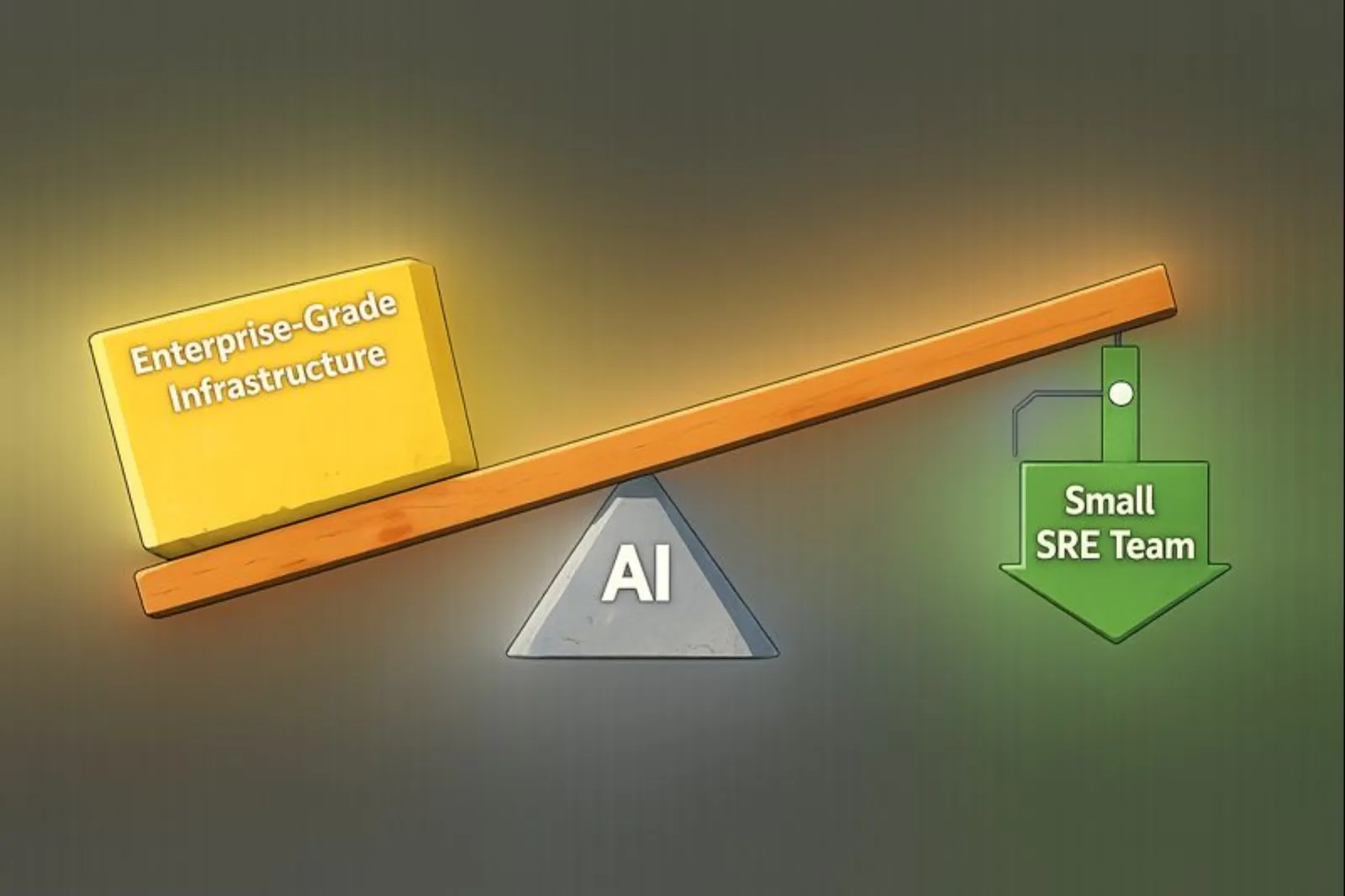
Small Team, Enterprise Power: AI Is the Ultimate Force Multiplier
The greatest challenge facing small marketing teams has never been talent—it has always been capacity. Marketing professionals wear multiple hats every day. They write content, manage social media, optimize SEO, analyze campaign data, design emails, coordinate advertising, and report results to management. The workload is relentless, and limited resources often force teams to prioritize urgent tasks over strategic growth initiatives.
Artificial intelligence changes that equation completely.
Rather than replacing marketers, AI removes repetitive, time-consuming work that slows productivity. Content drafting, keyword research, campaign scheduling, customer segmentation, performance reporting, and data analysis can all be completed in a fraction of the time previously required. This allows marketers to focus on creativity, innovation, and business strategy—the areas where human expertise delivers the greatest value.
Solutions built around AI Content Generation Singapore are particularly valuable because they help businesses maintain a consistent publishing schedule without overwhelming internal teams. Whether producing educational blog articles, email newsletters, product descriptions, or social media content, AI Content Generation Singapore enables organizations to create more high-quality content while reducing production costs.
AI also accelerates campaign execution. Marketing teams no longer need to spend hours manually analyzing spreadsheets or compiling reports. Intelligent platforms automatically identify trends, recommend optimizations, and surface actionable insights that improve campaign performance.
This speed creates an important competitive advantage. While larger organizations often struggle with lengthy approval processes and multiple management layers, smaller teams equipped with AI can launch campaigns quickly, respond to market changes in real time, and continuously refine their messaging based on live performance data.
The result is simple but powerful: AI enables small teams to accomplish more work, produce better outcomes, and compete far beyond the limits of their headcount.
Finding the Right Customers Before Your Competitors Do
Generating leads has always been one of marketing’s most expensive and unpredictable activities. Traditional prospecting often relies on assumptions, broad targeting, and significant trial and error. Marketing budgets are spent reaching audiences who may never become customers, while valuable opportunities are overlooked because they remain hidden within massive amounts of customer data.
Artificial intelligence changes this process by making lead generation intelligent instead of speculative.
Modern AI systems analyze customer behavior, website interactions, historical sales performance, buying intent, and demographic patterns to identify prospects most likely to convert. Instead of chasing every potential lead, marketing teams can prioritize high-value opportunities based on predictive analytics.
This is where AI Content Generation Singapore plays a strategic role beyond simply producing content. Effective AI Content Generation Singapore creates highly relevant articles, landing pages, and educational resources that attract qualified prospects through search engines and nurture them throughout the buying journey. Combined with AI-powered lead scoring and marketing automation, businesses can deliver personalized messaging at exactly the right moment.
AI also enables marketers to understand what motivates different customer segments. Rather than sending identical campaigns to thousands of contacts, businesses can tailor content according to industry, company size, purchasing stage, and behavioral signals. This level of personalization significantly improves engagement, builds trust, and increases conversion rates.
Perhaps most importantly, AI continuously learns from campaign performance. Every customer interaction generates new insights that refine future targeting and messaging. Over time, lead generation becomes increasingly efficient, lowering acquisition costs while improving sales quality.
For small marketing teams, this creates an enormous competitive advantage. Instead of competing with larger organizations on advertising spend alone, they compete on intelligence, precision, and speed. In today’s digital economy, the businesses that understand their customers best are often the businesses that grow the fastest—and AI makes that understanding accessible to organizations of every size.
Every Customer Wants to Feel Like Your Only Customer—AI Makes That Possible
Consumers today expect more than generic marketing messages. They want brands to understand their needs, anticipate their questions, and deliver relevant experiences at every stage of their buying journey. Unfortunately, creating this level of personalization has traditionally required significant resources, sophisticated technology, and dedicated marketing teams—luxuries that many small businesses simply do not have.
Artificial intelligence has changed that reality.
AI enables small marketing teams to deliver personalized experiences that rival those of multinational corporations. By analyzing customer behavior, browsing history, previous purchases, engagement patterns, and demographic information, AI can automatically tailor communications to each individual. Whether it’s recommending the right product, sending a timely follow-up email, or displaying personalized website content, AI ensures every interaction feels relevant and valuable.
One of the strongest enablers of this capability is AI Content Generation Singapore. Businesses leveraging AI Content Generation Singapore can rapidly create audience-specific blog articles, email campaigns, social media posts, landing pages, and marketing materials that resonate with different customer segments. Instead of writing dozens of variations manually, AI helps marketers produce personalized content efficiently while maintaining a consistent brand voice.
AI-powered chatbots further enhance customer engagement by providing instant support around the clock. Prospects no longer have to wait for office hours to receive answers. Intelligent virtual assistants can recommend products, qualify leads, schedule appointments, and guide visitors through the buying process—all without human intervention. This creates a smoother customer experience while allowing small marketing teams to focus on strategic initiatives.
Personalization also extends to email marketing. AI identifies the optimal time to send emails, recommends compelling subject lines, and customizes messaging based on customer behavior. These optimizations lead to higher open rates, stronger engagement, and increased conversions.
Ultimately, personalization is no longer reserved for enterprises with massive marketing budgets. AI empowers even the smallest teams to build meaningful customer relationships, strengthen brand loyalty, and deliver experiences that inspire trust. In an increasingly competitive marketplace, businesses that make every customer feel understood will consistently outperform those relying on one-size-fits-all marketing.
Data Beats Guesswork: AI Turns Marketing Decisions into Competitive Advantages
Great marketing has always relied on good decision-making. Yet many small businesses still make critical marketing choices based on assumptions, intuition, or incomplete data. They launch campaigns hoping they will work, invest in channels without fully understanding their performance, and struggle to identify why some initiatives succeed while others fail.
Artificial intelligence removes much of this uncertainty.
Modern AI platforms continuously analyze campaign performance across multiple channels, uncovering trends and opportunities that would otherwise remain hidden. Instead of manually reviewing endless spreadsheets and reports, marketers receive real-time insights that help them optimize budgets, improve targeting, and maximize return on investment.
Solutions powered by AI Content Generation Singapore contribute to this intelligence by connecting content performance with measurable business outcomes. Businesses using AI Content Generation Singapore can quickly identify which blog topics generate qualified traffic, which landing pages convert the most visitors, and which content assets influence purchasing decisions. Rather than producing content based on assumptions, marketers can create future campaigns backed by real-world performance data.
AI also excels at predictive analytics. By evaluating historical performance, customer behavior, and market trends, AI forecasts future opportunities and potential risks. Marketing leaders can anticipate seasonal demand, identify emerging customer interests, and adjust campaigns before competitors even recognize market shifts.
Competitor monitoring is another area where AI delivers exceptional value. Intelligent tools can track industry trends, analyze competitor content strategies, monitor keyword movements, and identify gaps that present new opportunities for growth. This allows small marketing teams to remain proactive rather than reactive.
Perhaps the greatest benefit is confidence. When marketing decisions are supported by data instead of guesswork, businesses reduce wasted spending, improve campaign performance, and achieve more predictable growth. Every optimization compounds over time, creating a sustainable competitive advantage.
For small marketing teams, AI is far more than an automation tool—it is an intelligent decision-making partner. Organizations that embrace data-driven marketing today will be better equipped to adapt, innovate, and outperform larger competitors tomorrow.

Proof That Size No Longer Determines Success: How Small Teams Are Winning with AI
The most compelling evidence of AI’s impact is not found in technology demonstrations or industry forecasts—it is found in the businesses quietly outperforming competitors that once seemed impossible to challenge. Across industries, small marketing teams are proving that intelligence, speed, and strategic execution can outweigh large budgets and extensive headcounts.
Consider a growing B2B technology company with only a handful of marketers. Instead of hiring multiple writers, SEO specialists, and campaign managers, the team embraced AI Content Generation Singapore to accelerate content production while maintaining quality. They consistently published valuable educational resources, optimized every article for search intent, and nurtured prospects with personalized email sequences. Within months, organic traffic increased significantly, qualified leads became more consistent, and the sales pipeline expanded without dramatically increasing marketing expenses.
Another example is a local professional services firm competing against well-established industry leaders. Rather than spending heavily on traditional advertising, the business combined AI Content Generation Singapore with AI-powered SEO, marketing automation, and intelligent lead nurturing. Visitors received highly relevant content based on their interests, automated follow-up emails kept prospects engaged, and AI-driven analytics continuously optimized campaign performance. The result was a measurable increase in inquiries, stronger conversion rates, and improved customer acquisition efficiency.
E-commerce businesses are experiencing similar success. AI recommends products based on browsing behavior, predicts customer preferences, automates abandoned cart recovery, and personalizes promotional campaigns at scale. Small online retailers can now deliver shopping experiences that rival global brands without maintaining large digital marketing departments.
Marketing agencies have also transformed the way they serve clients. By incorporating AI into research, content creation, campaign management, reporting, and performance analysis, agencies can execute enterprise-quality campaigns faster and more efficiently. Teams that once struggled to handle growing client demands can now scale operations while maintaining high service standards.
These examples reinforce an important truth: AI does not simply make businesses more productive—it fundamentally changes what small teams are capable of achieving. Companies willing to embrace intelligent automation are discovering that competitive advantage is no longer defined by organizational size but by the ability to adapt, innovate, and execute with precision.
Conclusion
Marketing has entered a new era where agility consistently outperforms bureaucracy, and intelligent execution delivers better results than sheer spending power. The assumption that only large organizations can dominate their markets has become increasingly outdated. Artificial intelligence has democratized access to capabilities that were once available only to enterprises with substantial budgets and extensive marketing departments.
Today’s small marketing teams have unprecedented opportunities to compete at the highest level. They can create high-quality content at scale, automate repetitive workflows, personalize customer experiences, uncover actionable insights from data, and identify promising opportunities before competitors react. AI has shifted the competitive advantage away from size and toward speed, adaptability, and informed decision-making.
One of the most impactful investments businesses can make is adopting AI Content Generation Singapore as part of a broader AI-driven marketing strategy. By integrating AI Content Generation Singapore into everyday marketing operations, organizations can consistently produce valuable content that attracts qualified audiences, strengthens search visibility, supports lead generation, and builds long-term customer trust. More importantly, it frees marketing professionals to focus on innovation, relationship building, and strategic growth instead of repetitive production tasks.
The businesses that will lead tomorrow are not necessarily those with the largest teams or the highest advertising budgets. They are the organizations willing to embrace technology, continuously optimize their marketing efforts, and make decisions based on data rather than assumptions. Every campaign becomes smarter. Every customer interaction becomes more relevant. Every marketing dollar works harder.
The gap between small businesses and industry giants has never been narrower. AI has transformed marketing from a game of resources into a game of intelligence.
The question is no longer whether artificial intelligence will shape the future of marketing—it already has. The real question is whether your business will leverage that transformation before your competitors do. Those who act today will position themselves to grow faster, serve customers better, and compete with confidence in an increasingly AI-powered marketplace.
