

Can AI Really Write Better Marketing Content Than Humans?
July 23, 2026 at 9:36 pm
How AI Is Helping Small Marketing Teams Beat Large Competitors
July 24, 2026 at 2:58 pm

Marketing has never been short on promises. Every new platform, advertising channel, or technology claims to be the next breakthrough capable of transforming businesses overnight. Yet, for decision-makers, one question rises above every marketing trend: What is the return on investment (ROI)?
In today’s competitive business landscape, marketing budgets are under greater scrutiny than ever before. CEOs and marketing directors are expected to justify every dollar spent, proving not only that campaigns generate traffic but that they produce measurable revenue. This shift has sparked a growing debate between traditional digital marketing strategies and AI-powered lead generation. While both aim to attract customers, their methods, efficiency, and outcomes differ significantly.
Traditional digital marketing has long relied on tactics such as search engine optimization (SEO), pay-per-click advertising, email campaigns, content marketing, and social media engagement. These methods remain valuable, but they often require significant manual effort, continuous optimization, and lengthy testing before delivering consistent results.
AI Lead Generation, on the other hand, introduces intelligence into every stage of the customer acquisition journey. Rather than casting a wide net and hoping the right prospects respond, artificial intelligence identifies high-intent buyers, predicts purchasing behavior, automates personalized outreach, and continuously optimizes campaigns based on real-time data. The result is a smarter, faster, and more efficient approach to generating qualified leads.
Businesses seeking B2B Lead Generation for Singapore are increasingly embracing AI because it enables marketing teams to focus on prospects most likely to convert instead of spending resources on broad, untargeted campaigns. This shift not only improves productivity but also dramatically enhances marketing ROI.
However, declaring AI the winner without understanding both approaches would be shortsighted. Traditional digital marketing still plays a vital role in building brand awareness, establishing authority, and nurturing customer relationships. The real question is not whether one strategy replaces the other, but which delivers stronger financial returns under different business conditions.
In this article, we’ll compare AI Lead Generation with traditional digital marketing across cost, scalability, efficiency, conversion rates, and long-term profitability. By the end, you’ll have a clearer understanding of which approach delivers the best ROI—and why the future belongs to businesses that embrace intelligent marketing.

Traditional Digital Marketing: Proven Strategies Facing Modern Challenges
Traditional digital marketing has been the backbone of online business growth for more than two decades. From Google search rankings to Facebook advertising and email campaigns, these strategies have helped companies reach millions of potential customers across the globe.
At its core, traditional digital marketing focuses on increasing visibility through multiple online channels. Businesses invest in SEO to improve search rankings, create valuable content to educate audiences, run paid advertisements to drive traffic, manage social media communities, and launch email campaigns to nurture prospects. Each channel contributes to brand awareness and customer engagement, creating multiple touchpoints before a purchase decision is made.
Despite these strengths, traditional marketing often relies heavily on assumptions about customer behavior. Marketers typically define audience segments based on demographics, interests, or previous campaign performance, then test different creatives and messaging in hopes of identifying what resonates best. While data informs many decisions, much of the process still involves experimentation, manual optimization, and continuous monitoring.
This approach creates several challenges. Customer acquisition costs continue to rise as competition intensifies across digital advertising platforms. Marketing teams spend significant time analyzing reports, adjusting bids, refining audiences, and producing fresh content to maintain campaign performance. Even successful campaigns may require weeks or months before generating meaningful ROI.
Businesses pursuing B2B Lead Generation for Singapore often discover that traditional digital marketing generates substantial website traffic but struggles to consistently deliver sales-qualified leads. High traffic numbers can create an illusion of success, yet if visitors fail to convert into customers, the overall return on investment remains disappointing.
Another limitation is attribution. Today’s buyers interact with multiple channels before making purchasing decisions, making it increasingly difficult to determine which marketing efforts deserve credit for a conversion. Without accurate attribution, businesses risk investing more heavily in channels that appear effective while overlooking those that genuinely drive revenue.
Traditional digital marketing is far from obsolete. It remains an essential component of every successful marketing strategy. However, its limitations have become increasingly apparent as customer expectations evolve and competition becomes more data-driven. Companies looking for sustainable growth are now seeking technologies capable of improving precision, efficiency, and measurable business outcomes.

AI Lead Generation: Turning Data Into Revenue Instead of Guesswork
Artificial intelligence is transforming marketing from a reactive discipline into a predictive science. Rather than waiting for prospects to discover your business, AI proactively identifies who is most likely to buy, when they are ready to engage, and how they prefer to communicate.
Unlike traditional digital marketing, AI Lead Generation continuously analyzes enormous volumes of behavioral data, purchasing signals, online interactions, and market trends. Machine learning algorithms identify patterns impossible for humans to detect manually, allowing businesses to prioritize prospects with the highest probability of becoming customers.
This intelligence fundamentally changes how companies approach lead generation. Instead of sending identical marketing messages to thousands of contacts, AI enables highly personalized communication tailored to each prospect’s interests, behavior, industry, and stage within the buying journey. Personalized outreach significantly improves engagement rates while reducing wasted marketing spend.
Businesses investing in B2B Lead Generation for Singapore are increasingly leveraging AI-powered tools to automate prospect research, enrich customer data, score leads based on purchase intent, schedule personalized email campaigns, power intelligent chatbots, and provide sales teams with prioritized opportunities. This automation allows marketers to spend less time on repetitive administrative tasks and more time developing growth strategies.
Another major advantage lies in continuous optimization. Traditional campaigns often require marketers to manually review reports before making adjustments. AI systems monitor campaign performance in real time, automatically refining targeting, messaging, bidding strategies, and audience segmentation based on live performance data. This constant learning enables campaigns to improve without lengthy testing cycles.
Perhaps the greatest benefit of AI Lead Generation is its ability to align marketing directly with revenue objectives. Every interaction generates new data that enhances future decision-making, creating a cycle of continuous improvement. Instead of relying on historical assumptions, AI adapts as customer behavior changes, helping businesses remain competitive in rapidly evolving markets.
For organizations seeking B2B Lead Generation for Singapore, AI offers something traditional marketing has always struggled to provide: predictable, scalable, and measurable lead generation that grows more intelligent over time. It transforms marketing from a cost center into a strategic revenue engine, enabling businesses to acquire better leads faster while maximizing every marketing dollar spent.
The ROI Showdown: Why AI Lead Generation Is Redefining Marketing Performance
Every marketing strategy ultimately faces the same test: does it generate profitable business growth? Impressions, clicks, followers, and website visits may look impressive on a dashboard, but they mean little if they fail to produce qualified customers and sustainable revenue. This is where the comparison between AI Lead Generation and traditional digital marketing becomes impossible to ignore.
Traditional digital marketing excels at creating awareness. SEO helps businesses gain long-term visibility, paid advertising drives immediate traffic, content marketing builds authority, and email campaigns nurture prospects over time. These channels remain valuable, but they often require marketers to manually optimize campaigns, interpret analytics, and continuously test new audiences and creatives. While effective, the process is labor-intensive and frequently produces inconsistent results.
AI Lead Generation approaches the problem differently. Instead of focusing primarily on attracting large volumes of traffic, AI prioritizes identifying individuals and organizations with genuine buying intent. Predictive analytics evaluate countless behavioral signals, allowing businesses to engage the right prospects before competitors even recognize the opportunity. This precision dramatically reduces wasted advertising spend while improving conversion rates.
Organizations investing in B2B Lead Generation for Singapore consistently discover that higher-quality leads outperform higher quantities of leads. A thousand website visitors have little value if only a handful become customers. Conversely, a smaller pool of highly qualified prospects often generates substantially more revenue with significantly lower acquisition costs.
Consider how both approaches compare across the metrics that truly matter:
Cost Per Lead (CPL): Traditional campaigns often experience rising costs as competition for advertising space intensifies. AI reduces CPL by identifying audiences most likely to convert before marketing budgets are spent.
Customer Acquisition Cost (CAC): Manual campaign management frequently results in higher acquisition costs due to broader targeting. AI continuously optimizes targeting, lowering CAC over time.
Conversion Rate: Generic campaigns inevitably speak to broad audiences. AI personalizes messaging based on customer behavior, resulting in higher engagement and stronger conversion performance.
Sales Cycle: Traditional marketing may require multiple touchpoints over several months before prospects become sales-ready. AI accelerates qualification by identifying prospects already demonstrating purchase intent.
Marketing Productivity: Instead of spending countless hours analyzing spreadsheets and adjusting campaigns manually, marketing teams can focus on strategy while AI automates repetitive optimization tasks.
Perhaps the most important distinction lies in adaptability. Traditional campaigns are typically adjusted after performance reports reveal problems. AI systems learn continuously, making real-time improvements that compound over weeks and months. Every customer interaction strengthens future targeting, making campaigns increasingly effective as more data becomes available.
Businesses seeking B2B Lead Generation for Singapore are no longer measuring success solely by campaign activity. They are measuring pipeline growth, revenue generation, customer lifetime value, and overall marketing efficiency. These are precisely the areas where AI consistently demonstrates superior ROI.
The conclusion isn’t that traditional digital marketing has become ineffective. Rather, AI transforms those existing channels into far more intelligent systems, allowing every marketing dollar to work harder and deliver measurable business outcomes.

The AI Investment Surge: Why Forward-Thinking Businesses Are Shifting Their Marketing Budgets
A noticeable shift is taking place across industries. Marketing budgets are no longer growing simply by increasing advertising spend—they are growing by investing in intelligence. Companies are realizing that spending more money on the same traditional tactics rarely guarantees better results. Instead, smarter technology is becoming the competitive advantage.
One of the biggest drivers behind this transformation is the rising cost of digital advertising. Whether on Google, LinkedIn, Facebook, or other platforms, competition has intensified dramatically. Businesses are paying more for every click, impression, and conversion than they did just a few years ago. Simply increasing ad spend is becoming an increasingly unsustainable growth strategy.
Artificial intelligence changes this equation by improving efficiency instead of merely increasing expenditure. Rather than targeting everyone within a broad demographic, AI identifies the specific individuals and businesses most likely to purchase. Marketing budgets become more focused, producing higher-quality leads while reducing wasted investment.
For organizations pursuing B2B Lead Generation for Singapore, this precision represents a significant competitive advantage. AI continuously evaluates customer behavior, firmographic data, buying signals, online intent, and historical conversion patterns to determine where marketing resources will produce the greatest financial return.
Another reason businesses are embracing AI is the growing complexity of customer journeys. Today’s buyers rarely follow a predictable path. They research online, compare competitors, consume educational content, attend webinars, read reviews, interact with social media, and often delay purchasing decisions until the timing is right. Traditional marketing struggles to interpret these fragmented behaviors effectively.
AI excels because it connects these signals into a unified understanding of customer intent. Instead of reacting after prospects take action, AI predicts future behavior and recommends the optimal time, channel, and messaging for engagement. This predictive capability enables sales teams to approach prospects before competitors recognize the opportunity.
Automation is another compelling advantage. Marketing professionals spend countless hours managing repetitive tasks such as list segmentation, email scheduling, CRM updates, lead scoring, reporting, and campaign adjustments. AI automates these workflows, allowing teams to focus on strategy, creativity, customer relationships, and business growth rather than administrative work.
Businesses investing in B2B Lead Generation for Singapore also benefit from stronger alignment between marketing and sales. AI ensures that sales representatives receive highly qualified prospects rather than raw inquiries, improving close rates while shortening the overall sales cycle. This collaboration creates a healthier revenue pipeline and significantly improves forecasting accuracy.
Perhaps the strongest argument for AI lies in its ability to continuously learn. Traditional marketing often depends on periodic reviews and manual optimization. AI systems become more effective with every campaign, every interaction, and every conversion. As customer behavior evolves, AI evolves alongside it, ensuring marketing strategies remain relevant without constant manual intervention.
Businesses that continue relying solely on traditional digital marketing may still achieve respectable results, but they risk falling behind competitors that leverage automation, predictive analytics, and intelligent personalization. The future of marketing will not belong to the companies spending the most—it will belong to those making the smartest decisions with their data.
For organizations committed to B2B Lead Generation for Singapore, AI is no longer an experimental technology. It is rapidly becoming the foundation of sustainable, scalable, and profitable growth.
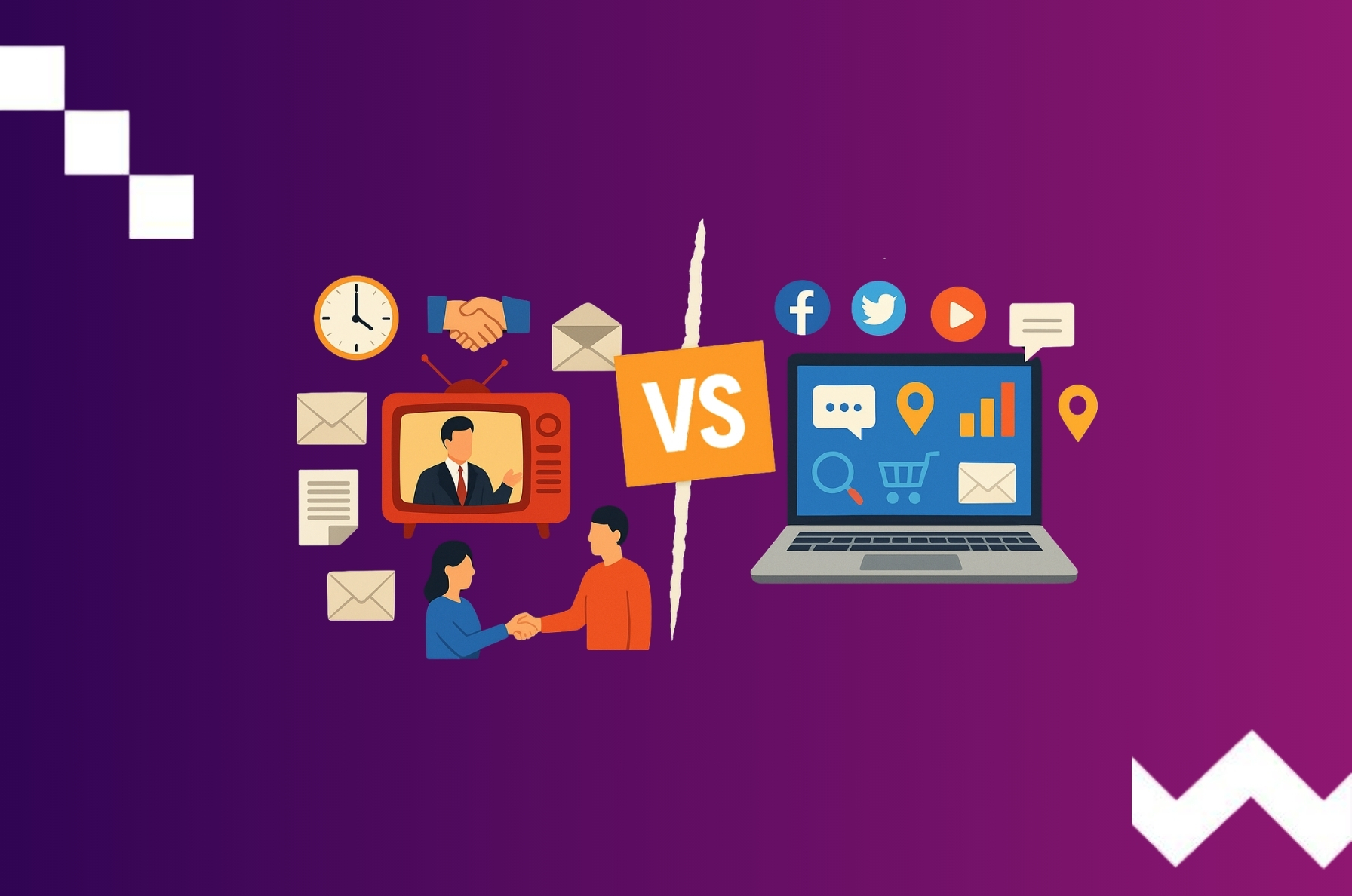
The Smartest Strategy Isn’t AI or Traditional Marketing—It’s Knowing When to Combine Both
The debate between AI Lead Generation and traditional digital marketing often assumes businesses must choose one over the other. In reality, the companies achieving the strongest ROI are not abandoning traditional marketing—they are transforming it with artificial intelligence.
Traditional digital marketing remains indispensable for building brand awareness, establishing thought leadership, and nurturing long-term customer relationships. SEO helps businesses dominate search results over time. Content marketing educates potential buyers and builds credibility. Social media creates engagement, while email marketing keeps brands top of mind. These activities lay the foundation for trust.
However, trust alone rarely drives revenue. Businesses also need speed, precision, and the ability to identify prospects who are actively searching for solutions. This is where AI Lead Generation fills the gap.
Instead of replacing traditional marketing, AI enhances every stage of the customer journey. Imagine publishing a high-value blog that attracts thousands of visitors through SEO. Rather than treating every visitor equally, AI analyzes their behavior, identifies buying intent, scores each lead, and automatically personalizes follow-up communications. Sales representatives no longer spend time chasing cold prospects—they focus on conversations with organizations most likely to convert.
This integrated approach is why businesses investing in B2B Lead Generation for Singapore are seeing stronger pipeline growth than those relying solely on conventional digital marketing. AI doesn’t eliminate human creativity; it amplifies it by ensuring marketing efforts reach the right audience at the right moment.
The ideal strategy also depends on business size and objectives.
For startups, AI provides an opportunity to compete with larger organizations despite having smaller marketing teams. Automation allows founders to scale outreach without dramatically increasing headcount or advertising budgets.
Small and medium-sized enterprises benefit from AI’s ability to maximize limited resources. Every marketing dollar works harder because campaigns target higher-quality prospects instead of broad audiences. This efficiency is particularly valuable for companies operating in competitive markets where advertising costs continue to rise.
Enterprise organizations gain even greater advantages. AI enables the analysis of massive customer datasets, coordinates campaigns across multiple regions, predicts future buying behavior, and integrates seamlessly with CRM and sales platforms. The result is consistent lead quality and improved forecasting across complex sales operations.
Businesses pursuing B2B Lead Generation for Singapore should also recognize that customer expectations are evolving rapidly. Buyers now expect personalized experiences, immediate responses, and relevant recommendations. AI makes this level of personalization scalable without placing additional pressure on marketing teams.
Perhaps the smartest marketing strategy for the coming decade is neither AI nor traditional marketing in isolation. It is a hybrid model where traditional channels create visibility and trust while AI identifies, qualifies, nurtures, and converts the most valuable opportunities. This combination delivers both sustainable brand growth and measurable revenue performance.
Conclusion
Marketing has entered a new era where success is no longer determined by who spends the largest budget or launches the most campaigns. Instead, the winners are organizations capable of making better decisions with better data.
Traditional digital marketing has served businesses exceptionally well over the past two decades. SEO, content marketing, paid advertising, email campaigns, and social media remain essential pillars of any comprehensive marketing strategy. They generate visibility, establish authority, and create meaningful customer relationships that contribute to long-term business growth.
Yet the marketplace has changed. Buyers leave behind countless digital signals before making purchasing decisions. They expect personalized experiences, relevant content, and timely engagement. Managing this complexity manually has become increasingly difficult, making traditional marketing alone less efficient than it once was.
Artificial intelligence addresses this challenge by transforming data into actionable insight. Instead of relying on assumptions or broad audience segments, AI identifies buying intent, predicts customer behavior, automates repetitive tasks, and continuously optimizes campaigns in real time. These capabilities reduce customer acquisition costs, improve conversion rates, shorten sales cycles, and maximize marketing efficiency.
This is why more organizations are prioritizing B2B Lead Generation for Singapore as a strategic investment rather than simply another marketing tactic. They understand that sustainable growth depends on attracting qualified prospects, nurturing them intelligently, and converting them into long-term customers. AI enables this process to happen faster, more accurately, and at greater scale.
The most successful companies will not be those that abandon traditional marketing altogether. They will be the ones that intelligently combine proven digital marketing strategies with AI-driven automation, predictive analytics, and personalization. Together, these approaches create a marketing engine capable of generating consistent, measurable, and scalable ROI.
For businesses seeking B2B Lead Generation for Singapore, the opportunity has never been greater. AI allows organizations to focus resources on the prospects most likely to buy, empowering marketing and sales teams to work more efficiently while delivering stronger business outcomes.
The question, therefore, is no longer whether AI will influence the future of marketing. That future is already unfolding. The more important question is whether your business will lead the transformation or struggle to keep pace as competitors embrace smarter, data-driven growth strategies.
Every marketing investment should contribute to measurable business value. Every campaign should produce insights that improve the next. Every lead should represent genuine revenue potential rather than a hopeful guess.
The organizations that understand this shift today will build stronger pipelines, achieve higher profitability, and establish lasting competitive advantages tomorrow. In an increasingly data-driven world, ROI belongs to businesses that combine human expertise with artificial intelligence—and those that act now will be best positioned to define the future of marketing rather than react to it.
