

Why AI Marketing Needs a Clear Decision Framework Before Automation
November 2, 2026 at 6:08 pm
AI Content Localization for Asia: Adapting Meaning, Not Just Translating Words
November 10, 2026 at 4:45 pm

The modern customer journey is no longer a straight line. A potential customer might discover a brand through a social media advertisement, visit its website several days later, read an article through a search engine, subscribe to an email newsletter, and eventually make a purchasing decision after speaking with a sales representative. Each interaction influences the next, but many businesses still manage these activities as separate marketing functions.
This creates a fundamental problem. Marketing teams may generate website traffic without understanding what happens after visitors leave. Sales teams may receive leads without knowing which content influenced their decisions. Customer service teams may interact with existing customers without having access to their previous experiences with the brand. The result is a fragmented customer experience that creates unnecessary friction and missed commercial opportunities.
Traditional customer journey mapping provides a useful starting point, but it often struggles to account for changing customer behaviour across multiple channels. Businesses need more than a static diagram showing awareness, consideration, and conversion. They need a system capable of interpreting customer interactions, identifying patterns, and responding intelligently as buying behaviour evolves.
This is where artificial intelligence changes the equation. An experienced AI Marketing Agency Singapore understands that successful marketing is not simply about generating more traffic or publishing more content. It is about connecting the entire customer experience to meaningful business objectives.
AI enables businesses to analyse customer interactions across different channels, identify behavioural signals, and make more informed decisions about what should happen next. Instead of treating every marketing campaign as an isolated activity, businesses can begin understanding how individual touchpoints contribute to customer acquisition, conversion, and retention.
The challenge is no longer simply getting customers to notice a brand. It is creating a connected experience that gives them the right information, support, and motivation at every stage of their decision-making process.
Businesses that continue to optimise individual channels without connecting them will struggle to understand their actual marketing performance. The future belongs to organisations that see the customer journey as one continuous experience rather than a collection of disconnected campaigns.
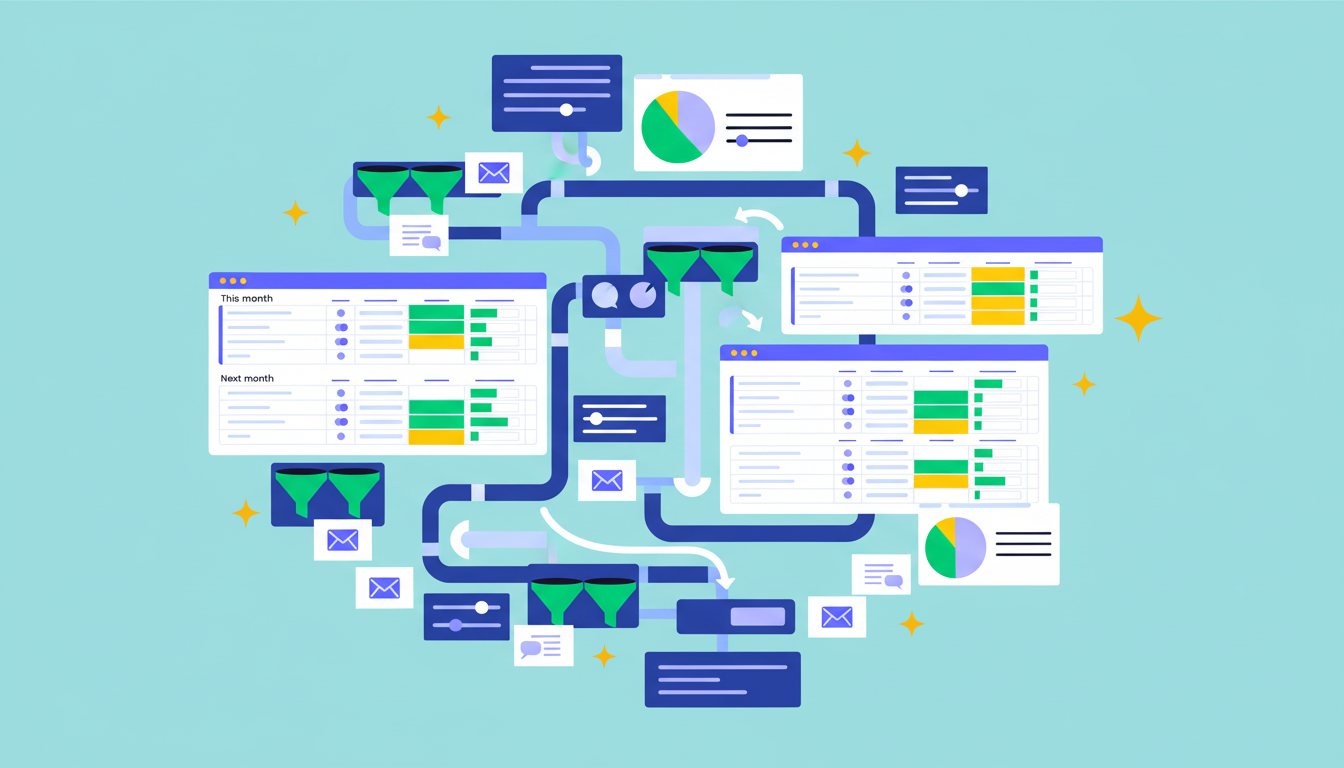
From Static Journey Maps to Intelligent Customer Experiences
Understanding the customer journey is one thing. Knowing how to respond to it intelligently is another. Traditional journey mapping helps businesses identify where customers interact with their brand, but AI takes this understanding further by analysing behavioural information and identifying opportunities to improve the experience.
An AI-powered customer journey uses artificial intelligence, customer data, predictive analytics, and marketing automation to create more relevant interactions throughout the buying lifecycle. It allows businesses to move beyond predetermined marketing sequences and develop experiences that respond to actual customer behaviour.
Consider a potential customer visiting a company’s website. They read an article about a particular business challenge, explore a service page, and return several days later to review pricing information. Individually, these interactions might appear insignificant. Together, however, they can reveal a stronger indication of purchasing interest.
AI can help identify these patterns by analysing engagement history, content preferences, browsing behaviour, and other available signals. Based on the information collected and the permissions available, businesses can determine whether the visitor should receive educational content, a relevant offer, or an invitation to speak with a sales representative.
This creates opportunities for more intelligent marketing decisions. An AI Marketing Agency Singapore can help businesses identify where AI can support customer segmentation, personalised communication, lead qualification, and campaign optimisation.
However, intelligent customer experiences require more than installing an AI chatbot or automating email campaigns. Businesses need to establish how different technologies and data sources work together. CRM platforms, website analytics, advertising systems, email marketing tools, and customer support channels must contribute to a consistent understanding of the customer.
AI should also complement human judgement rather than replace it entirely. Algorithms can identify patterns and recommend actions, but businesses still need people to evaluate context, understand complex customer concerns, and maintain meaningful relationships.
The real advantage comes from combining machine intelligence with human understanding. When customer information is connected and marketing decisions become more responsive, businesses can deliver experiences that feel less repetitive and more relevant.
The objective is not to make every customer interaction automated. It is to make every interaction more purposeful.
Connect Every Touchpoint – From First Impression to Long-Term Loyalty
A customer journey is made up of numerous interactions, and each one influences how people perceive a business. The problem is that customers do not necessarily move through these interactions in a predictable order. They may revisit previous stages, switch between channels, or delay their decisions while comparing different providers.
AI helps businesses manage this complexity by connecting the five major stages of the customer lifecycle.
Awareness: Get in Front of the Right Audience
The journey begins when potential customers recognise a problem, discover a brand, or start looking for solutions. AI can support audience segmentation, identify relevant search trends, analyse content performance, and improve advertising targeting. Generative AI can also help marketers develop content variations for different audience interests while maintaining consistent brand messaging.
The objective is not simply to reach more people. It is to attract audiences whose needs align with the business’s offerings.
Consideration: Turn Attention into Confidence
Once prospects become aware of a business, they need reasons to trust its capabilities. AI-powered content recommendations, personalised website experiences, automated email nurturing, and intelligent chatbots can help answer questions and provide relevant information.
An AI Marketing Agency Singapore can help coordinate these activities so prospects receive useful information based on their interests rather than repetitive promotional messages.
Conversion: Remove the Obstacles to Buying
At this stage, customer intent becomes increasingly important. AI-powered lead scoring can help identify prospects showing stronger purchasing signals. Automated follow-ups can ensure enquiries receive timely responses, while personalised communication can address specific customer requirements.
The goal is to reduce friction between expressed interest and an actual purchasing decision.
Retention: Build Relationships Beyond the First Sale
Acquiring a customer is only the beginning. AI can analyse engagement patterns, identify potential dissatisfaction, predict churn risks, and support personalised customer communication. Businesses can use these insights to strengthen relationships and encourage repeat purchases.
Advocacy: Turn Positive Experiences into Growth
Satisfied customers can become powerful sources of referrals and recommendations. AI can help analyse feedback, identify highly engaged customers, and support loyalty initiatives. However, authentic advocacy must come from genuine customer satisfaction, not automated requests alone.
These five stages should not operate independently. Awareness should create relevant consideration, consideration should support conversion, and conversion should lead to stronger customer relationships.
When every touchpoint contributes to the next, marketing becomes a connected growth system rather than a series of unrelated activities.
Break Down Data Silos – Build One Clear Picture of Your Customer
Even the most sophisticated AI marketing strategy will struggle if customer information remains scattered across disconnected systems. Many businesses collect enormous amounts of data through websites, advertising platforms, CRM databases, email campaigns, social media, and customer service interactions. Yet having more data does not automatically create better customer understanding.
The real problem is fragmentation.
A prospect might have visited a website several times, downloaded a business resource, clicked an email campaign, and submitted an enquiry. However, if these interactions are stored in separate platforms, marketing and sales teams may struggle to understand the complete history. They might send irrelevant messages, repeat questions the prospect has already answered, or overlook important buying signals.
AI can help address this challenge by analysing information from connected data sources and identifying relationships between different customer interactions. When supported by reliable integration, businesses can develop more comprehensive customer profiles and understand how behaviour changes over time.
For example, website engagement can be combined with CRM information to identify which services attract the strongest interest. Email interactions can help reveal which topics generate engagement. Sales records can provide insight into which customer characteristics are associated with successful conversions.
An AI Marketing Agency Singapore can help businesses assess their existing marketing infrastructure and identify opportunities to connect these systems into a more coordinated environment.
However, data integration should not become an excuse to collect everything. Businesses must establish clear data governance practices, maintain accurate records, respect consent requirements, and protect customer information. Poor-quality data can produce misleading insights, while excessive or intrusive personalisation can weaken customer trust.
A unified customer view should give businesses a better understanding of customer needs without compromising privacy or transparency.
This also requires collaboration between marketing, sales, and customer service teams. Each department interacts with customers from a different perspective, but their information should contribute to a shared understanding of the relationship.
When customer data becomes accessible, relevant, and reliable, AI can provide more useful insights. Businesses can identify gaps in the customer experience, improve communication, and make better decisions about where to invest their marketing resources.
The competitive advantage does not come from owning the most data. It comes from knowing how to turn available data into better customer experiences and stronger commercial decisions.
Measure What Matters – Connect Customer Interactions to Revenue
One of the biggest mistakes businesses make when adopting AI marketing is focusing too heavily on operational improvements while overlooking commercial performance.
Generating more content, automating repetitive tasks, increasing email activity, and improving advertising efficiency can all be valuable. However, these activities do not automatically translate into business growth.
The real question is whether AI is helping the business attract better customers, improve conversion rates, increase revenue, and strengthen long-term relationships.
To answer this question, businesses need to connect customer journey insights with measurable business outcomes.
Customer acquisition cost (CAC) is one important indicator. It measures how much a business spends to acquire a new customer. By analysing campaign performance, audience quality, and conversion patterns, AI can help marketers identify opportunities to allocate resources more effectively.
Lead-to-customer conversion rate is another critical measurement. A campaign that generates hundreds of enquiries may appear successful, but the real value depends on how many of those enquiries become paying customers. AI-powered lead scoring and behavioural analysis can help sales teams prioritise prospects who demonstrate stronger buying intent.
Customer lifetime value (CLV) provides a longer-term perspective. Instead of measuring success through the first transaction alone, businesses can evaluate the total value generated throughout the customer relationship.
Other important indicators include customer retention, repeat purchase rates, sales cycle duration, qualified pipeline value, and marketing return on investment.
An AI Marketing Agency Singapore should approach performance measurement with these business objectives in mind. The focus should be on understanding how marketing activities influence customer decisions and contribute to revenue, not simply reporting engagement figures.
Attribution also deserves attention. Customers often interact with multiple channels before converting, making it difficult to determine which activities contributed to the final decision. Businesses should combine available attribution models with journey analytics, CRM records, and sales feedback rather than assuming that one last click explains the entire purchasing process.
AI can help uncover relationships between touchpoints, but correlation should not automatically be mistaken for causation.
Ultimately, successful measurement requires a clear connection between marketing activity and business strategy. If a metric does not help explain customer behaviour, improve decision-making, or evaluate commercial performance, its importance should be questioned.
Marketing performance should be measured by the business value it creates, not the amount of activity it produces.
Build an AI Customer Journey Strategy That Actually Works
Implementing AI across the customer journey does not require businesses to replace every existing platform or automate every interaction. In fact, attempting to introduce too many technologies at once can create more complexity than value.
A successful strategy begins with understanding the customer journey, identifying existing weaknesses, and prioritising improvements that support measurable business objectives.
Step 1: Map the Actual Customer Experience
Start by identifying how customers discover, evaluate, purchase, and engage with the business. Examine the channels they use, the information they need, and the decisions they make at each stage. Do not assume customers follow the journey exactly as the marketing team designed it.
Step 2: Identify the Biggest Friction Points
Look for delays in enquiry responses, inconsistent communication, abandoned forms, irrelevant follow-ups, and gaps between marketing and sales. These problems often reveal where AI can create immediate value.
Step 3: Audit Your Customer Data
Review the information available across CRM platforms, websites, advertising accounts, email systems, and customer databases. Determine whether the data is accurate, accessible, properly managed, and suitable for the intended applications.
Step 4: Prioritise High-Impact AI Applications
Avoid adopting AI simply because a particular technology is trending. Start with practical applications such as automated lead qualification, behavioural segmentation, personalised content recommendations, predictive analytics, and intelligent email nurturing.
An AI Marketing Agency Singapore can help businesses evaluate these opportunities and develop an implementation strategy aligned with their marketing objectives and available resources.
Step 5: Connect Your Marketing Technology
Integrate relevant platforms so customer information can support coordinated marketing and sales activities. Establish clear workflows that define when automation should happen and when human intervention is necessary.
Step 6: Establish Clear Performance Targets
Define measurable objectives before launching AI initiatives. These might include improving qualified lead volume, increasing conversion rates, reducing customer acquisition costs, shortening response times, or strengthening retention.
Step 7: Test, Learn, and Continuously Improve
Monitor results, evaluate customer feedback, and identify areas that require adjustment. AI systems should be reviewed regularly to ensure their recommendations remain relevant, accurate, and aligned with business objectives.
The most important principle is to start with business problems rather than technology. AI should make existing processes more intelligent, not simply make inefficient processes run faster.
A disciplined implementation strategy allows businesses to build a connected customer journey gradually, demonstrate value, and expand their AI capabilities as measurable results emerge.
Conclusion
The customer journey is becoming more complex, but that does not mean businesses need increasingly complicated marketing strategies. What they need is a better way to understand how customers interact with their brands and how those interactions influence business performance.
AI provides an opportunity to connect customer information, marketing channels, and business processes into a more intelligent operating environment. It helps businesses recognise behavioural patterns, anticipate customer needs, personalise communication, and identify opportunities that might otherwise remain hidden within disconnected systems.
However, technology alone will not create a successful customer journey. Businesses still need a clear strategy, reliable data, consistent messaging, and a genuine understanding of what customers expect. Without these foundations, automation can simply multiply existing problems.
This is why working with an experienced AI Marketing Agency Singapore can be valuable. The objective should not be to introduce AI into every possible marketing activity. It should be to identify where intelligent technology can improve the customer experience, strengthen marketing performance, and create measurable commercial value.
For business leaders, the next step is to reconsider how marketing success is defined. Website traffic, social media engagement, email open rates, and advertising impressions still provide useful information, but they are only part of the picture. The bigger question is how effectively these activities contribute to qualified opportunities, customer relationships, and sustainable revenue growth.
The strongest marketing strategies will be those that connect awareness with consideration, consideration with conversion, and conversion with long-term customer loyalty. Every interaction should contribute to a broader business objective.
Ultimately, the future of AI marketing will not be determined by the number of tools a company adopts or the amount of content it produces. It will be determined by how intelligently its systems work together to understand customers and respond to their needs.
Businesses that connect every touchpoint will gain a clearer understanding of their customers, make better marketing decisions, and build stronger relationships over time.
Because the real power of AI is not simply making marketing faster. It is making every customer interaction count.
