

Localizing AI Content for Singapore’s Multicultural Market: A Practical Guide
April 13, 2026 at 6:00 pm
Asia’s Digital Future: Why AI Marketing Isn’t Just a Trend, It’s the New Baseline
April 15, 2026 at 4:27 pm

Singapore isn’t waiting for the future of content—it’s engineering it. Across industries, from fintech to real estate, brands are rapidly abandoning slow, manual content workflows in favor of scalable, intelligent systems. The rise of AI Content Generation Singapore is not a trend on the horizon—it’s already embedded in how high-performing companies operate today.
What’s driving this shift isn’t just efficiency—it’s survival. Attention spans are shrinking, competition is intensifying, and the demand for always-on content has exploded. Traditional teams simply can’t keep up. AI fills that gap, enabling businesses to produce, optimize, and distribute content at a velocity that was previously impossible.
Singapore’s government-backed digital transformation initiatives further accelerate this adoption. Businesses are incentivized to integrate AI into their workflows, making AI Content Generation Singapore a strategic priority rather than an experimental tool.
But the real shift is philosophical. Content is no longer treated as a creative afterthought—it’s now a system, a machine, a pipeline. The brands that understand this are building scalable engines powered by AI Content Generation Singapore, while others are still stuck crafting one post at a time.
The gap between these two groups is widening fast. And in a market as competitive as Singapore, that gap quickly turns into dominance versus irrelevance.

Key Trends Shaping AI Content in Singapore
The future of content in Singapore is being shaped by a handful of undeniable forces—and they all revolve around intelligence, speed, and personalization. At the center of it all is AI Content Generation Singapore, redefining how brands communicate at scale.
Hyper-personalization is no longer optional. AI allows businesses to tailor messaging based on behavior, intent, and demographics, creating content that feels individually crafted—even when it’s produced in bulk. This is especially critical in Singapore’s diverse, multilingual market.
Another dominant trend is the rise of AI-driven SEO. Search engines are evolving beyond keywords into intent and context. Brands leveraging AI Content Generation Singapore are building topical authority faster by producing interconnected content clusters instead of isolated blog posts.
Video is also taking center stage. Short-form, AI-assisted video content is outperforming static formats, especially on platforms like TikTok and LinkedIn. AI tools now enable rapid scripting, editing, and repurposing, making video production accessible at scale.
At the same time, ethical concerns are surfacing. Authenticity, originality, and trust are becoming critical differentiators. Businesses that rely blindly on automation risk producing generic, low-impact content.
The winners will be those who use AI Content Generation Singapore not just to scale—but to sharpen relevance, depth, and strategic intent.

The AI Content Tech Stack: Tools Dominating Singapore
Behind every high-performing content machine is a carefully selected stack of tools. In Singapore, the adoption of AI Content Generation Singapore is powered by a combination of writing engines, visual generators, automation platforms, and analytics systems.
At the foundation are AI writing tools that generate blogs, ads, emails, and scripts in seconds. These tools reduce production time dramatically, but their real value lies in iteration—testing multiple angles quickly and refining what works.
Next are visual AI tools—image generators and video creators that allow brands to produce high-quality visuals without traditional production costs. In a digital landscape where attention is visual-first, this is a massive advantage.
Automation platforms tie everything together. They distribute content, trigger workflows, and ensure consistency across channels. Without automation, even the best AI-generated content becomes fragmented and inefficient.
Then comes the intelligence layer—SEO and analytics tools that guide strategy. These platforms identify opportunities, track performance, and refine outputs, making AI Content Generation Singapore not just fast, but precise.
The mistake many businesses make is overcomplicating their stack. The goal isn’t to have more tools—it’s to have the right ones working together seamlessly. A lean, integrated system will always outperform a bloated one.
In the end, tools don’t create dominance—systems do. And systems built around AI Content Generation Singapore are redefining what’s possible.

Winning Tactics for AI Content Generation in Singapore
Tools alone won’t win the game. Execution does. The most effective companies in Singapore are not just using AI—they’re deploying it with ruthless precision. Their approach to AI Content Generation Singapore is structured, repeatable, and optimized for scale.
The first tactic is the hybrid model: human strategy, AI execution. AI handles production, but humans guide direction, tone, and positioning. This balance ensures content remains both scalable and meaningful.
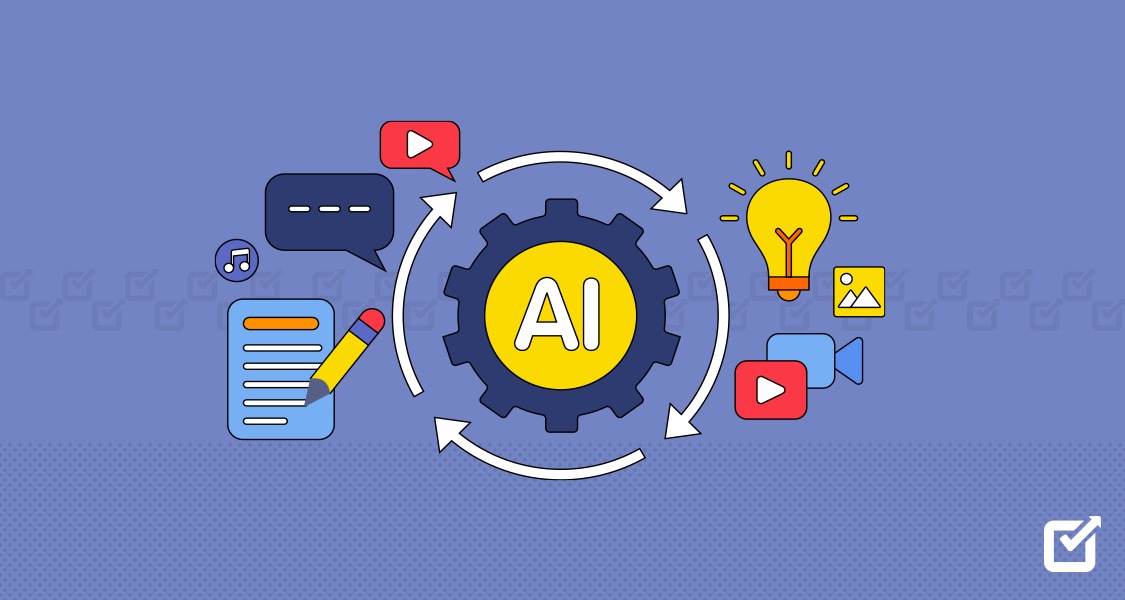
Next is building content pipelines instead of one-off pieces. High-performing brands create systems that continuously generate blogs, videos, social posts, and emails—each feeding into the next. This creates momentum, not just output.
Topic clustering is another critical tactic. Instead of targeting isolated keywords, businesses create networks of content that establish authority in a niche. AI accelerates this process, allowing brands to dominate search landscapes faster.
Repurposing is where real leverage happens. A single idea can become a blog, a LinkedIn post, a TikTok script, and an email sequence. With AI Content Generation Singapore, this transformation happens in minutes, not days.
Finally, consistency beats intensity. Publishing sporadically won’t move the needle. But a steady stream of optimized content builds visibility, trust, and authority over time.
Execution separates those who experiment with AI from those who dominate with it.
AI Content for Different Singapore Business Types
Not all businesses in Singapore play the same game—and their AI content strategies shouldn’t either. The application of AI Content Generation Singapore varies significantly depending on size, industry, and target audience.
SMEs often use AI to level the playing field. With limited resources, they rely on automation to produce consistent, high-quality content without large teams. For them, AI is a force multiplier.
Enterprises, on the other hand, focus on scale and integration. Their challenge isn’t producing content—it’s managing complexity across multiple markets and channels. AI helps unify these efforts while maintaining consistency.
B2B companies lean heavily on thought leadership, whitepapers, and SEO-driven content. AI accelerates research and production, allowing them to establish authority faster. B2C brands prioritize engagement—social media, video, and short-form content where speed and creativity matter most.
Industry also plays a role. In finance and real estate, credibility and compliance are critical. In eCommerce, volume and conversion optimization take priority. Each requires a different application of AI Content Generation Singapore.
The key is alignment. AI should not dictate strategy—it should amplify it. Businesses that tailor their approach will extract far more value than those applying a one-size-fits-all model.

Challenges, Risks, and Compliance in AI Content
For all its power, AI content isn’t without risk. In Singapore, where regulation and trust matter deeply, misuse of AI Content Generation Singapore can backfire quickly.
One of the biggest challenges is quality control. AI can produce content at scale—but not all of it is good. Without oversight, businesses risk flooding their channels with generic, low-value material that damages credibility.
Data privacy is another concern. Singapore has strict regulations, and companies must ensure their AI systems comply with data protection laws. Mishandling data can lead to serious consequences.
There’s also the issue of originality. As AI-generated content becomes more common, differentiation becomes harder. Brands must go beyond surface-level outputs and inject unique insights, perspectives, and experiences.
Trust is fragile. Audiences are becoming more aware of AI-generated content, and poorly executed material can feel inauthentic. This is why human oversight remains critical in any AI Content Generation Singapore strategy.
The solution isn’t to avoid AI—it’s to use it responsibly. The businesses that master this balance will not only scale faster but also build stronger, more resilient brands.
Conclusion
The next phase of AI content in Singapore won’t just be about creation—it will be about prediction, automation, and intelligence. AI Content Generation Singapore is evolving into something far more powerful than a production tool.
Predictive content is on the rise. AI will anticipate what audiences want before they search for it, allowing brands to stay ahead of demand rather than react to it.
AI agents will handle entire workflows—from research to publishing—reducing the need for manual intervention. This shifts the role of marketers from creators to strategists, overseeing systems rather than executing tasks.
Integration will also deepen. Content will no longer exist in isolation—it will be connected to CRM systems, ad platforms, and customer journeys. Every piece of content will serve a purpose within a larger ecosystem.
Voice and conversational interfaces will further reshape how content is consumed. Businesses that adapt early will gain a significant advantage.
The future belongs to those who move decisively. AI Content Generation Singapore is not a tool to experiment with—it’s a system to build around.
Those who understand this won’t just keep up. They’ll lead.
