

How AI Helps Small Companies Compete Against Industry Giants
August 7, 2026 at 6:38 pm
Why Ranking #1 on Google May No Longer Be Enough
August 11, 2026 at 4:27 pm

Marketing agencies have always evolved alongside technology. The rise of television created new advertising specialists. The internet gave birth to digital agencies. Social media created an entirely new marketing ecosystem.
Now, artificial intelligence is forcing another transformation.
The emergence of the AI Marketing Agency Singapore model is not simply about adding ChatGPT to an existing workflow or using AI to generate a few social media captions. It represents a deeper shift in how marketing strategy, execution, optimisation, and measurement are performed.
In 2026, AI has moved much closer to becoming marketing infrastructure rather than an experimental add-on. Singapore’s Ministry of Manpower reported in April 2026 that 28.5% of firms had begun adopting AI, although deep integration remained limited. At the same time, Singapore’s economy is benefiting significantly from global AI investment.
That creates an interesting tension.
Businesses are becoming more comfortable with AI, but many marketing agencies are still operating according to models designed for a different era.
The question is no longer whether AI will influence the agency industry.
It already is.
The bigger question is whether traditional agencies can adapt quickly enough.
The Old Agency Model Is Running Into a New Reality
For decades, the traditional marketing agency model was relatively straightforward.
A client hired an agency. The agency assembled a team of strategists, account managers, copywriters, designers, SEO specialists, media buyers, developers, and other specialists. Those people spent hours researching, planning, creating, reviewing, revising, launching, and reporting on campaigns.
There is nothing inherently wrong with that model.
In fact, human expertise remains incredibly valuable.
The problem is that the economics of marketing have changed.
Businesses now expect campaigns to move faster. They want more content, more creative variations, greater personalisation, faster reporting, better targeting, and stronger evidence of return on investment.
AI is accelerating those expectations.
A task that once required several hours of research can increasingly be assisted by AI within minutes. A campaign concept can generate dozens of variations. Customer segments can be analysed at scale. Content can be adapted for different audiences and channels. Performance data can be processed continuously rather than waiting for a monthly report.
This is where an AI Marketing Agency Singapore begins to look fundamentally different.
The competitive advantage isn’t simply having access to artificial intelligence.
Everyone can access AI tools.
The advantage comes from knowing how to integrate those tools into a repeatable marketing system.
Traditional agencies that still depend heavily on manual production face a difficult question: if technology can reduce the time required for repetitive work, why should clients continue paying primarily for hours?
That doesn’t mean traditional agencies are dead.
It means the definition of agency value is changing.
The agencies that survive will increasingly need to sell intelligence, strategy, creativity, technology, and measurable outcomes—not simply manpower.
AI Marketing Agencies Are Built Around a Different Operating System
Calling an agency “AI-powered” doesn’t automatically make it innovative.
An agency can use AI to write a blog post and still operate exactly like a traditional agency.
The real difference is the operating model.
An AI Marketing Agency Singapore typically aims to integrate AI throughout the marketing workflow—from research and audience analysis to content development, campaign optimisation, lead generation, automation, and reporting.
Think of it as an operating system rather than a single application.
Instead of asking, “Where can we use AI?”, the better question becomes, “How should marketing work differently because AI exists?”
That distinction matters.
AI can help marketers analyse customer behaviour, identify patterns, develop campaign concepts, generate content variations, personalise communications, automate repetitive workflows, and process large amounts of information.
But AI should not be mistaken for strategy.
A machine can generate ten advertising concepts. It cannot automatically determine which one best fits a company’s positioning, competitive environment, customer psychology, and commercial objectives.
That’s where human judgement remains critical.
The strongest AI-enabled agencies therefore combine technology with experienced marketing thinking.
The human provides context, judgement, brand understanding, creativity, and accountability.
AI provides speed, scale, pattern recognition, automation, and processing capacity.
This combination is becoming particularly important in Singapore, where businesses operate in a highly competitive and digitally mature environment. Current industry analysis describes AI as moving from experimentation toward deeper integration across marketing operations.
The goal isn’t to remove humans from marketing.
It is to remove unnecessary friction from marketing.
That means fewer hours spent on repetitive production and more time spent on decisions that actually move the business forward.
That is the real promise of the AI marketing agency model.

Traditional Agencies Are Feeling the Pressure—and It Isn’t Just About AI
The pressure on traditional agencies isn’t coming from technology alone.
It is coming from changing client expectations.
Businesses have become accustomed to speed.
They expect rapid responses, continuous content, real-time campaign adjustments, personalised communication, and measurable performance. The old rhythm of planning a campaign for weeks, launching it, waiting, reporting, and repeating may no longer be enough for many markets.
AI has made that gap more visible.
An AI Marketing Agency Singapore can potentially produce and test more variations without increasing headcount at the same rate.
That creates a difficult comparison.
A traditional agency might need several specialists to produce different versions of a campaign.
An AI-enabled team can use technology to accelerate research, copy development, creative iteration, data analysis, localisation, and optimisation.
The difference isn’t necessarily that one team works harder.
The difference is leverage.
And leverage changes economics.
Traditional agencies often carry substantial overhead. Salaries, offices, management structures, software, administrative costs, account servicing, and layers of specialists all contribute to the cost of delivering campaigns.
Those costs don’t automatically disappear with AI.
But AI can change how much output a smaller team can produce.
That puts pressure on agencies whose value proposition is primarily based on execution.
If an agency says, “We have ten people working on your account,” clients may increasingly respond with a harder question:
“What are those ten people actually producing—and what business result am I getting?”
This is an uncomfortable conversation, but it is necessary.
The future of agency relationships will likely become less about how many people sit behind an account and more about how effectively those people use technology to generate results.
Traditional agencies have an opportunity here.
They already possess something many AI-first companies lack: deep experience in branding, creative strategy, client relationships, and complex campaigns.
But they must combine those strengths with new capabilities.
The threat isn’t AI replacing agencies.
The threat is agencies that use AI replacing agencies that don’t.
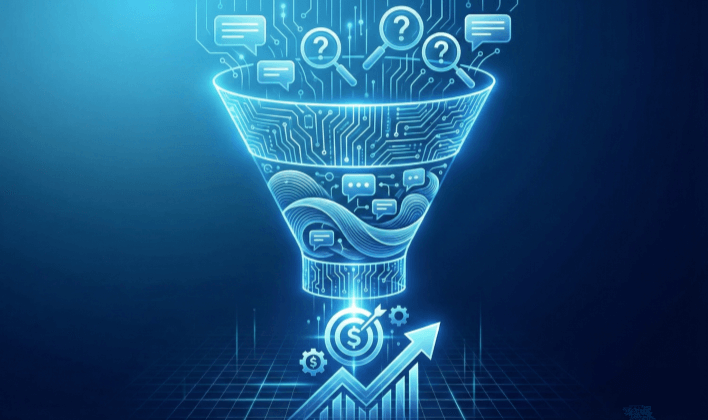
AI Is Rewriting the Economics of Marketing
Marketing has traditionally been constrained by time.
More campaigns required more people.
More content required more writers.
More creative variations required more designers.
More analysis required more analysts.
More leads required more prospecting resources.
AI challenges that relationship.
An AI Marketing Agency Singapore can use AI-assisted workflows to increase the amount of marketing activity a team can manage without proportionally increasing its workforce.
That has major implications.
Consider content.
A marketing team no longer has to choose between producing five variations or ten because each version requires extensive manual work. AI can assist with generating multiple angles, adapting messages to different buyer personas, creating platform-specific versions, and identifying opportunities for iteration.
The same principle applies to advertising.
Instead of launching one headline and one creative concept, marketers can develop multiple variations, test them, identify patterns, and continuously improve performance.
Email marketing can become more personalised.
SEO research can become more efficient.
Lead generation can become more targeted.
Reporting can become more automated.
Customer data can become more actionable.
This doesn’t mean AI makes marketing free.
It doesn’t.
High-quality marketing still requires people, technology, data, strategy, creativity, oversight, and investment.
But the economics can change dramatically when productivity improves.
The agency’s role begins shifting from producing a fixed amount of work to operating an ongoing growth engine.
That is a significant difference.
Instead of asking, “How many blog posts are included in the monthly retainer?” the conversation can become, “How effectively are we generating qualified demand?”
Instead of asking, “How many social posts will you publish?” the question becomes, “What are those posts doing for brand awareness, engagement, pipeline, and revenue?”
The measurement becomes more meaningful.
And that puts pressure on agencies that rely heavily on deliverables as their primary measure of value.
The future belongs to agencies that can connect marketing activity to commercial outcomes.
AI simply makes that transition happen faster.
Speed, Scale and Personalisation Are Becoming Competitive Weapons
Marketing has always rewarded businesses that understand their customers.
But understanding customers at scale has traditionally been difficult.
You may have multiple buyer personas, industries, markets, languages, customer segments, product categories, and stages of the buying journey.
Creating genuinely relevant marketing for each group can quickly become expensive.
AI changes the equation.
An AI Marketing Agency Singapore can use AI to support audience research, segmentation, content adaptation, campaign testing, and personalisation across a much larger number of variations.
This matters enormously for B2B marketing.
A technology company selling to a CFO should not necessarily communicate with that CFO in the same way it communicates with a marketing director.
Their priorities are different.
Their pain points are different.
Their decision criteria are different.
AI can help marketers process those differences and develop more relevant messaging at scale.
The real advantage, however, is not simply producing more content.
It is learning faster.
Suppose a company tests ten campaign messages.
Instead of treating the campaign as a one-time activity, AI-enabled workflows can help identify which themes generate stronger engagement, which audiences respond, which content formats perform better, and where prospects are dropping out of the customer journey.
The marketing system becomes iterative.
Create.
Test.
Measure.
Learn.
Improve.
Repeat.
That cycle can happen much faster than it could under a heavily manual operating model.
This is particularly relevant as search and discovery themselves evolve. Businesses increasingly need to think beyond traditional search rankings and consider how their brands appear across AI-generated answers, conversational search, and other emerging discovery environments.
Speed therefore becomes more than an operational benefit.
It becomes a competitive weapon.
The company that learns faster can adapt faster.
The company that adapts faster can capture opportunities before slower competitors even recognise them.
That is where AI becomes strategically important.
AI Will Not Kill Traditional Agencies—but It Will Expose Weak Ones
There is a temptation to frame the future as a simple battle:
AI agencies versus traditional agencies.
That is too simplistic.
The reality is more interesting.
Traditional agencies still have major strengths.
They understand brand building. They know how to develop big creative ideas. They understand public relations, storytelling, production, corporate communications, and high-stakes campaigns where human judgement matters enormously.
AI doesn’t erase those capabilities.
In many cases, it amplifies them.
An AI Marketing Agency Singapore can potentially combine strategic expertise with AI-powered execution to create a hybrid model that is both efficient and human-led.
The question isn’t whether humans or AI should control marketing.
The better question is which tasks should be automated, which should be augmented, and which should remain firmly human-led.
Repetitive data processing?
Automate it.
First-draft content?
Accelerate it.
Campaign variations?
Generate them.
Customer insights?
Use AI to identify patterns, then let marketers interpret them.
Brand positioning?
Human leadership remains critical.
Strategic decisions?
Human accountability matters.
Creative direction?
AI can assist, but taste and judgement remain essential.
This distinction is important because AI-generated marketing has its own dangers.
When everyone has access to the same models, generic content becomes easier to produce.
That can create a sea of technically competent but forgettable marketing.
The result is paradoxical.
AI makes content easier to create, but originality becomes harder to achieve.
Recent industry discussion around AI-generated thought leadership illustrates the problem: audiences and platforms are becoming more sensitive to formulaic, obviously machine-generated content.
So the winning agency won’t necessarily be the one using the most AI.
It will be the one using AI without losing its human edge.
Traditional agencies should pay attention.
Their future isn’t necessarily threatened by AI.
Their future is threatened by refusing to evolve.
Conclusion
The biggest change AI is bringing to the agency industry may have little to do with technology.
It is changing what clients expect an agency to be.
For years, agencies could differentiate themselves through creative portfolios, specialist expertise, awards, headcount, media relationships, or production capabilities.
Those things still matter.
But the bar is rising.
Businesses increasingly want partners that can help them identify opportunities, generate demand, improve customer acquisition, automate processes, personalise communication, and connect marketing activity to revenue.
That is why the AI Marketing Agency Singapore model is becoming increasingly relevant.
The best agencies of the future will not simply produce marketing assets.
They will build marketing systems.
They will use AI to analyse markets, identify prospects, generate ideas, personalise communication, automate workflows, monitor performance, and continuously optimise campaigns.
But technology alone won’t be enough.
Businesses should be careful about agencies that simply attach the word “AI” to conventional services.
Using an AI writing tool does not make an agency AI-native.
The real test is deeper.
Does AI fundamentally improve the agency’s workflow?
Can the agency move faster?
Can it personalise at scale?
Can it identify better prospects?
Can it automate repetitive processes?
Can it make smarter decisions from data?
Can it demonstrate measurable business outcomes?
Those are the questions that matter.
Singapore’s own AI adoption landscape shows why this transition will not happen overnight. While AI adoption among firms is growing, deep integration into core processes remains relatively limited. That creates an opportunity for businesses and agencies willing to move beyond experimentation.
The future will not belong exclusively to traditional agencies or AI agencies.
It will belong to agencies capable of combining human judgement with machine-scale execution.
That is the real disruption.
AI isn’t simply making marketing faster.
It is forcing the industry to reconsider what an agency is worth.
And for traditional agencies, the message is brutally simple:
Adapt the model, or watch someone else use AI to make your model obsolete.
