

The Rise of AI Marketing Agencies: Why Traditional Agencies Are Under Pressure
August 11, 2026 at 4:14 pm
What Every Marketing Director Needs to Know About AI in 2026
August 12, 2026 at 6:46 pm
For years, the SEO game was brutally simple: get to position #1 on Google, stay there, and watch the traffic roll in.
That formula worked.
But search has changed.
Today, a company can rank #1 for an important keyword and still lose the customer. A competitor sitting below it may receive the click. An AI-generated answer may satisfy the searcher before they visit any website. A YouTube video, LinkedIn post, Reddit discussion, review, or third-party article may influence the buying decision long before the prospect reaches the company’s homepage.
Google itself now describes AI Overviews and AI Mode as experiences that can surface a broader and more diverse set of supporting links while helping users explore complex questions.
The uncomfortable truth is this:
Ranking is still important. But ranking alone is no longer the definition of search success.
Businesses now need visibility, authority, relevance, trust, and commercial impact across an increasingly fragmented search journey.
That is where modern strategies such as AI-powered SEO, content authority, and AI marketing become increasingly important. Working with an experienced AI Marketing Agency Singapore can help businesses move beyond the narrow objective of chasing rankings and start building a stronger digital presence around the entire customer journey.
The #1 Ranking Used to Be the Finish Line. Now It Is Only the Starting Point.
There was a time when reaching Google’s first position felt like winning the Super Bowl of digital marketing.
You picked a keyword. You optimized a page. You built links. You improved technical SEO. You published content. Eventually, the ranking climbed.
Then came the reward: traffic.
The logic was straightforward.
If you ranked first, more people would see you. If more people saw you, more people would click. If more people clicked, more prospects would convert.
But that model assumes that the search results page is still the primary destination for the customer.
It increasingly isn’t.
Search has evolved from a simple directory of websites into a complex information environment. Google can now provide AI-generated summaries, videos, images, featured information, local results, shopping experiences, and other search features around the traditional organic listings.
More importantly, users themselves have changed.
They are no longer limited to typing something like “best B2B marketing agency Singapore” and clicking the first result. They can ask increasingly detailed questions, compare options, request recommendations, investigate competitors, watch videos, read reviews, and continue the conversation through AI-powered search.
Google’s current guidance confirms that AI Overviews and AI Mode can use related searches and multiple sources to develop responses, while still surfacing supporting web pages.
This creates a new problem for marketers.
Your company might technically rank #1 while another company dominates the broader conversation surrounding the same topic.
That is why a modern AI Marketing Agency Singapore should not treat rankings as the final objective.
The better question is not simply:
“Are we #1?”
It is:
“Are we the brand customers keep discovering, trusting, considering, and choosing?”
That is a much harder question.
It is also the question that matters.
Google Is No Longer Just Ten Blue Links
The old Google search page was brutally predictable.
Type a query. Get ten blue links. Click one. Read the page. Repeat.
That simplicity created an entire industry around keyword rankings.
But modern search looks very different.
Google’s AI Overviews and AI Mode are designed to help users explore complicated questions, ask follow-up questions, compare information, and discover supporting websites. Google’s documentation states that these experiences can use a technique known as “query fan-out,” where related searches are generated across different subtopics and sources to develop a broader response.
That changes the battlefield.
Imagine a prospect searches:
“How can a Singapore B2B company generate more qualified leads?”
In the old world, one page might rank #1 for that query.
In the new world, the customer could encounter:
An AI-generated overview.
A supporting article.
A LinkedIn post.
A YouTube video.
A case study.
A review.
A competitor.
An industry publication.
A company’s website.
The search journey has become multidimensional.
This means businesses should stop thinking about search visibility as a single ranking position.
Instead, they should think about their “search footprint.”
How many times does your brand appear when prospects research your category?
Do they encounter your expertise?
Do they see your content?
Do other credible sources mention you?
Does your website provide useful answers?
Does your brand appear when prospects compare solutions?
Does your company have enough authority to become part of the conversation?
These are increasingly important questions for an AI Marketing Agency Singapore helping businesses compete in an AI-driven search environment.
Traditional SEO is not dead. Far from it.
Google explicitly says foundational SEO practices remain relevant for its generative AI experiences.
But SEO now needs to be viewed as the foundation rather than the entire building.
AI Search Is Changing What It Means to Be Visible
Here is where things get uncomfortable for traditional SEO.
A searcher does not necessarily need to visit your website to learn about your company anymore.
AI-powered search can synthesize information from multiple sources and provide users with an answer directly within the search experience.
That does not mean websites have become irrelevant. Google still relies heavily on its Search index and surfaces supporting links from websites. In fact, Google says its generative AI experiences use core Search ranking and quality systems to retrieve relevant pages.
But the definition of visibility is changing.
Previously, visibility meant:
“You appear near the top of the results.”
Now it increasingly means:
“Your expertise is discoverable when an AI system, search engine, or customer investigates a problem your business solves.”
That distinction matters.
Consider a company offering B2B lead generation services.
It is not enough to rank for “B2B lead generation agency Singapore.”
The company should also have authoritative content answering questions such as:
How does B2B lead generation work?
How much does B2B lead generation cost?
What makes a B2B lead qualified?
How should companies combine AI with lead generation?
What mistakes destroy lead quality?
How should marketing and sales teams align?
What channels work best for Singapore B2B companies?
This is where an AI Marketing Agency Singapore can help businesses develop a broader content and visibility strategy instead of producing isolated keyword-targeted pages.
Google’s latest guidance emphasizes unique, useful, people-first content rather than mass-producing pages simply to target every possible query variation.
That distinction is critical.
AI has made content production cheap.
Expertise is still expensive.
Anyone can generate 100 articles.
Far fewer companies can produce 100 genuinely useful pieces of insight based on experience, data, customer problems, original analysis, and real expertise.
That is the advantage businesses should build.
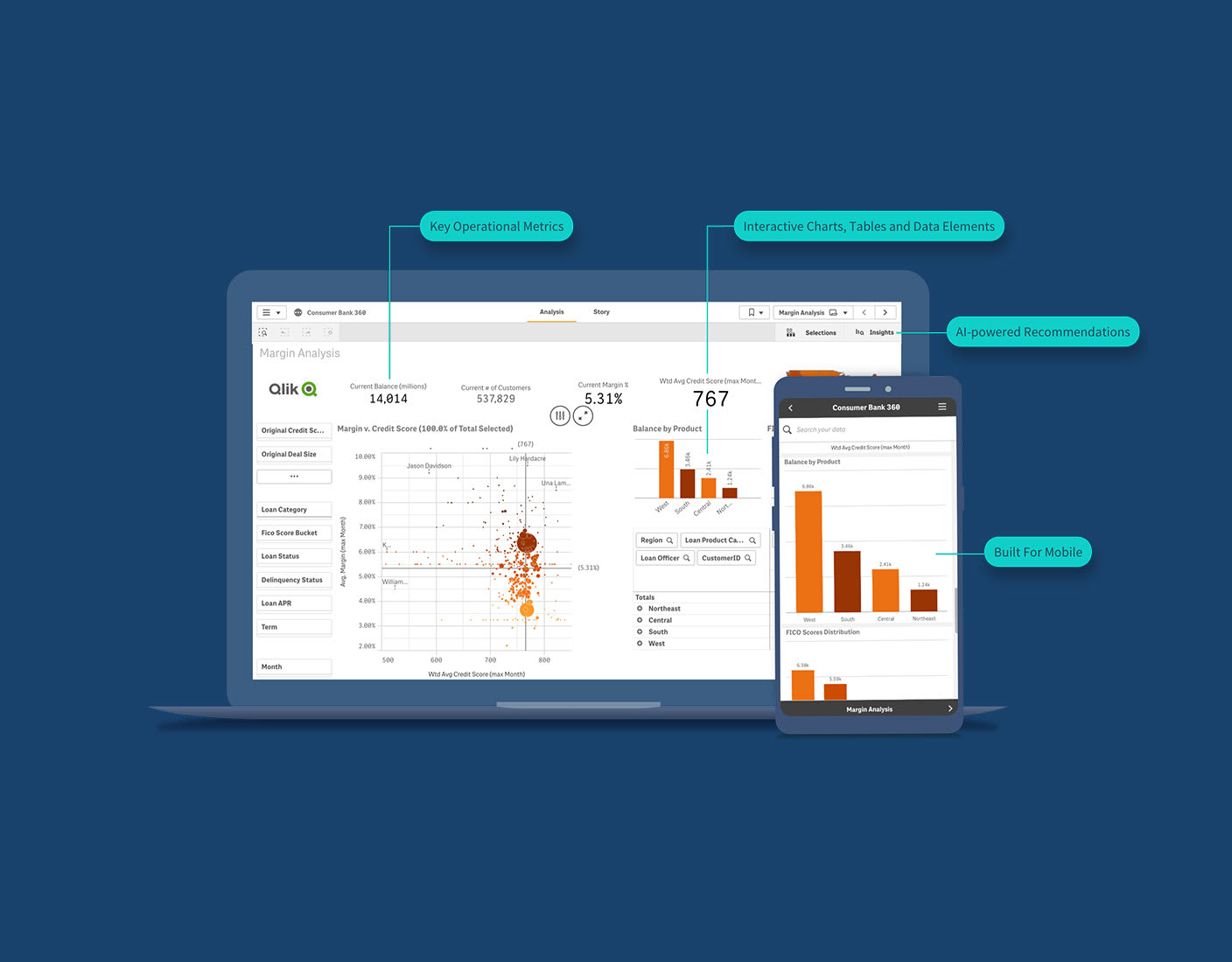
Traffic Looks Great on a Dashboard. Revenue Looks Better in the Bank.
One of the biggest mistakes companies make with SEO is celebrating traffic without asking what the traffic actually does.
A page gets 50,000 visitors.
The marketing team celebrates.
But then the sales team asks:
“How many qualified opportunities did it create?”
Silence.
Traffic is useful. But traffic is not the business objective.
Revenue is.
Qualified leads are.
Pipeline is.
Customer acquisition is.
Search has become more complicated because users can encounter information without always clicking through to a website. At the same time, Google says clicks from search pages containing AI Overviews can be higher quality, with users more likely to spend time on the resulting website.
That means marketers need to stop treating every click as equal.
A visitor searching for a definition is not necessarily as valuable as a decision-maker comparing vendors.
A thousand low-intent visitors can be less valuable than twenty highly qualified prospects.
This is why an AI Marketing Agency Singapore should connect search strategy to business outcomes instead of stopping at rankings and impressions.
Measure:
Organic leads.
Marketing-qualified leads.
Sales-qualified leads.
Conversion rates.
Pipeline generated.
Revenue influenced.
Customer acquisition cost.
Branded search growth.
Assisted conversions.
Engagement quality.
Search visibility across important commercial topics.
The shift is simple but profound.
Stop asking:
“How much traffic did SEO generate?”
Start asking:
“How much business did search visibility influence?”
This is especially important for B2B companies, where the buying journey can stretch across weeks or months.
A prospect might discover an article today, watch a video next week, read a LinkedIn post later, visit the website two weeks afterward, and finally request a consultation.
The last click does not tell the whole story.
The future of search measurement will increasingly require marketers to understand the entire journey rather than obsess over a single ranking number.
The Real Battle Is No Longer for One Ranking. It Is for the Entire Conversation.
Here is the strategic shift businesses need to understand.
One ranking can disappear.
An entire reputation is harder to erase.
If your company ranks #1 for one keyword but has no presence anywhere else, you are vulnerable.
A competitor can publish better content.
Google can change the search experience.
AI can change how information is presented.
Search intent can evolve.
Your ranking can fall.
Suddenly, the strategy that looked unbeatable becomes fragile.
That is why modern digital marketing needs to build something larger than rankings.
It needs to build authority.
Think about a prospect researching your industry.
They find your website.
Then they see your LinkedIn content.
Then they watch your video.
Then they encounter a case study.
Then they find an article quoting your expertise.
Then an AI search experience surfaces your website as a supporting source.
Now something different is happening.
You are no longer just a search result.
You are becoming a recognizable authority.
That is a much stronger position.
An AI Marketing Agency Singapore can help businesses connect SEO, AI-powered content, social media, paid media, marketing automation, and demand generation into a unified visibility strategy.
This does not mean publishing everywhere for the sake of being everywhere.
It means creating useful content that reinforces the same core expertise across multiple channels.
Your website explains.
Your LinkedIn content demonstrates.
Your videos educate.
Your case studies prove.
Your customer reviews validate.
Your thought leadership differentiates.
Your search presence connects the dots.
Google’s own guidance emphasizes unique and valuable content, good page experience, accessibility, and high-quality supporting media as important foundations for both traditional and AI-powered search.
The objective is no longer simply to own a position.
It is to own the conversation.
The SEO Strategy of 2026 Needs a Bigger Toolbox
The answer is not to abandon SEO.
That would be foolish.
Google’s latest guidance is remarkably clear: traditional SEO fundamentals remain important for visibility in generative AI search. Pages still need to be crawlable, indexable, useful, technically sound, and valuable to users.
The mistake is assuming that traditional SEO alone is enough.
A stronger strategy starts with technical SEO and then expands outward.
First, build a technically healthy website. Make sure important pages can be crawled, indexed, understood, and accessed.
Second, build topical authority. Do not publish random articles simply because a keyword tool says there is search volume. Build deep expertise around the problems your customers actually care about.
Third, create original content. Google’s guidance specifically emphasizes unique, non-commodity content that provides genuine value.
Fourth, make your content useful across formats. Articles, videos, images, case studies, data, and expert commentary can all contribute to a stronger digital presence.
Fifth, use AI intelligently.
AI can help marketers research topics, identify patterns, analyze search intent, accelerate content production, personalize campaigns, uncover opportunities, and automate repetitive work.
But AI should not become an excuse for publishing mountains of generic content.
Google’s current guidance warns against creating large quantities of pages primarily to manipulate rankings or AI responses.
Sixth, measure commercial impact.
This is where an AI Marketing Agency Singapore can become strategically valuable. The goal should be to connect search visibility with leads, customer journeys, marketing performance, and revenue.
Interestingly, Google launched new Search Console reporting in June 2026 to provide dedicated visibility into how sites appear in generative AI features such as AI Overviews and AI Mode, initially rolling the reporting out to a subset of websites.
That tells us something important.
AI search visibility is no longer a theoretical marketing conversation.
It is becoming measurable.
And what becomes measurable eventually becomes something businesses compete over.
Conclusion
Ranking #1 on Google still matters.
Anyone saying otherwise is selling a different kind of fantasy.
A first-place ranking can generate visibility, credibility, qualified traffic, leads, and revenue.
But it is no longer enough to build an entire marketing strategy around that single number.
Search has become too dynamic.
Customers can discover brands through AI-generated answers, traditional results, videos, social platforms, reviews, communities, industry publications, and recommendations.
Google’s own documentation now describes generative AI search as an evolution of the search experience, while continuing to emphasize the importance of strong foundational SEO and useful, original content.
The winning strategy, therefore, is not to abandon Google.
It is to stop thinking about Google too narrowly.
The question is no longer:
“How do we rank #1?”
The better questions are:
“How do we become visible across the customer’s research journey?”
“How do we become a trusted source of information?”
“How do we build authority that competitors cannot easily copy?”
“How do we make our brand discoverable through both traditional and AI-powered search?”
“How do we turn that visibility into qualified business?”
That is the mindset shift.
An AI Marketing Agency Singapore can help businesses move from isolated SEO campaigns toward integrated AI-powered marketing strategies that connect search, content, lead generation, automation, and conversion.
The future will not belong exclusively to the company with the highest ranking.
It will belong to the company that is consistently visible when the customer asks questions, compares solutions, evaluates providers, and prepares to buy.
Ranking gets you noticed.
Authority gets you remembered.
Trust gets you considered.
And ultimately, business gets won by the brand that remains visible throughout the journey.
The real goal is no longer to be #1 on Google.
The real goal is to become impossible to ignore.
