

Why Ranking #1 on Google May No Longer Be Enough
August 11, 2026 at 4:27 pm
How AI Search Will Change B2B Marketing in Asia
August 12, 2026 at 6:58 pm

For years, artificial intelligence was treated as an interesting experiment for marketing teams. Someone would test an AI writing tool, another person would generate a few images, and the team would call it innovation. That approach is no longer enough. In 2026, AI is becoming part of the operating infrastructure behind serious marketing organizations.
Google’s 2026 marketing guidance describes the shift clearly: the focus is moving from experimentation toward integration. Meanwhile, AI assistants are increasingly capable of answering questions directly, changing how customers discover brands and information.
For a marketing director, the question should no longer be, “Should we use AI?” The better question is, “Where can AI fundamentally improve how we acquire, understand, convert, and retain customers?”
That distinction matters.
An AI Marketing Agency Singapore can help organizations identify where AI creates genuine leverage rather than simply adding another collection of disconnected tools. The objective should be fewer manual bottlenecks, faster execution, better customer intelligence, stronger personalization, and ultimately better commercial outcomes.
The danger in 2026 is not necessarily failing to adopt AI. It is adopting AI everywhere without a coherent strategy.
Marketing directors need to look at the entire marketing operation: market research, customer segmentation, content, SEO, paid media, email, social media, lead generation, analytics, sales enablement, and reporting. Then they need to identify where AI can augment human expertise and where automation can remove repetitive work.
AI should not become another layer of complexity.
It should become the layer that makes the existing marketing machine smarter, faster, and more responsive.
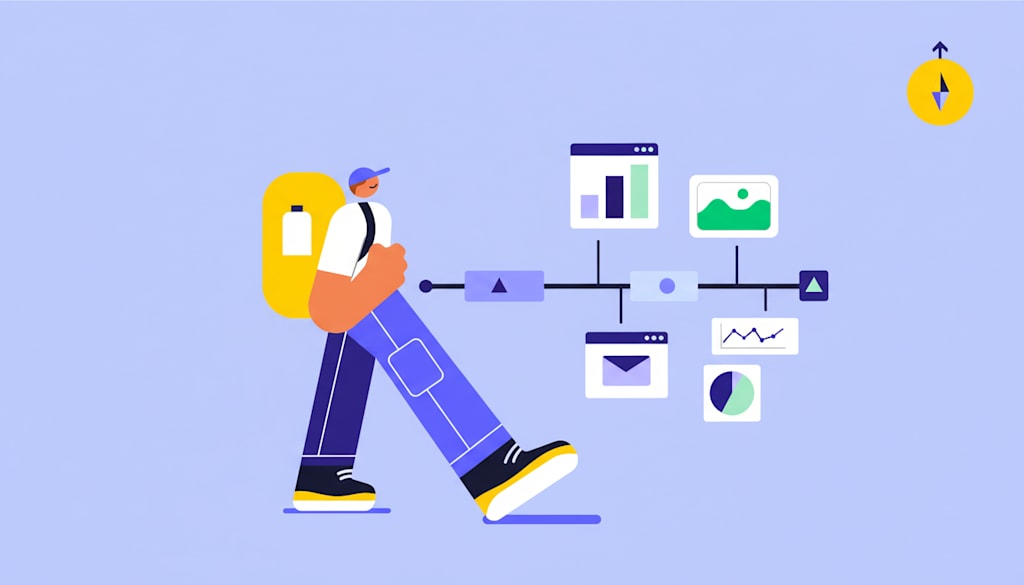
The Marketing Director’s Job Is Changing: From Managing Campaigns to Orchestrating Intelligence
AI does not simply change marketing tools. It changes what marketing leadership looks like.
Marketing directors have traditionally been responsible for budgets, campaigns, agencies, channels, people, and performance. Those responsibilities remain, but AI introduces another leadership requirement: knowing how to orchestrate humans, data, automation, and intelligent systems into one functioning operation.
Research among B2B SaaS marketing directors in 2026 shows how widespread AI adoption has already become, while also revealing a skills gap. A large majority reported substantial daily AI usage within their teams, yet self-rated AI capability remained moderate. That gap is important. Using AI frequently does not necessarily mean using it strategically.
A strong AI Marketing Agency Singapore should therefore be evaluated not by the number of AI tools it can demonstrate, but by its ability to connect AI capabilities to business objectives.
Marketing directors need to ask tougher questions.
Which processes should be automated? Which decisions require human judgment? What data should AI have access to? Where should approval remain mandatory? How will the organization measure whether AI is actually improving revenue, pipeline, conversion, or customer retention?
The rise of agentic AI makes this even more important. AI systems are increasingly moving beyond generating responses toward orchestrating workflows and completing tasks. Deloitte emphasizes that context, documented workflows, data foundations, and governance are critical for reliable agentic marketing.
The marketing director of 2026 therefore needs to become less of a campaign manager and more of an intelligence orchestrator.
The winners will not necessarily be the teams with the biggest AI budgets.
They will be the teams with the clearest operating model.
Stop Chasing More Leads: AI Is Changing Who You Should Be Targeting
One of AI’s most valuable applications in marketing is not creating more output. It is improving the quality of decisions about who deserves attention.
Traditional lead generation often relies on broad targeting, demographic assumptions, manual research, and relatively static segmentation. AI can introduce a much more dynamic approach by analyzing customer behavior, intent signals, firmographic information, engagement patterns, historical conversion data, and other available signals.
This creates an opportunity for marketing directors to move from volume-driven lead generation toward precision-driven demand generation.
A sophisticated AI Marketing Agency Singapore can help marketing teams connect audience intelligence with campaign execution. Instead of simply asking, “How many leads did we generate?” leaders can start asking, “Which accounts are showing buying signals?” and “Which prospects resemble our highest-value customers?”
That shift can transform the relationship between marketing and sales.
AI can support lead scoring, account prioritization, personalized messaging, audience clustering, campaign recommendations, and predictive analysis. It can also help marketing teams identify patterns that are difficult to spot manually when thousands of prospects and interactions are involved.
But there is a catch.
AI is only as intelligent as the data, strategy, and context surrounding it. Feeding poor-quality data into an AI system does not magically produce high-quality prospects. It simply allows bad assumptions to travel faster.
Marketing directors must therefore focus on data quality and commercial clarity before automation.
The goal is not to automate lead generation for its own sake.
The goal is to identify the right companies, understand what matters to them, deliver the right message at the right moment, and give sales a pipeline filled with opportunities that have genuine potential.
AI makes that level of precision increasingly achievable.
Google Rankings Are No Longer the Whole Game: Welcome to the AI Discovery Era
Marketing directors who still measure digital visibility primarily through keyword rankings are looking at only part of the battlefield.
Search is changing rapidly. AI-powered interfaces can now synthesize information and answer questions directly instead of simply presenting users with ten blue links. Microsoft notes that AI assistants are becoming more capable and context-aware, increasingly answering questions before users ever click a traditional search result.
That changes the marketing objective.
It is no longer enough to rank.
Your brand needs to be understood, trusted, mentioned, and surfaced by AI-driven discovery systems.
This is where SEO increasingly intersects with Answer Engine Optimization, Generative Engine Optimization, and broader AI visibility strategies. Search industry research in 2026 highlights the growing importance of being referenced within AI-generated answers rather than relying exclusively on traditional rankings and website traffic.
An AI Marketing Agency Singapore can help businesses rethink their content strategy around this new discovery environment.
That means creating authoritative content, strengthening brand entities, developing useful expert resources, building credible third-party mentions, improving structured information, and ensuring consistent brand information across the web.
The strategic shift is subtle but significant.
Traditional SEO asks: “How do we get this page to rank?”
AI-era visibility asks: “How do we become one of the sources an intelligent system trusts when answering a customer’s question?”
Those are not identical objectives.
Marketing directors should therefore expand their measurement framework. Track organic rankings, certainly—but also monitor brand mentions, AI citations, referral traffic, visibility across generative platforms, and the questions for which the brand is being associated.
The search box is changing.
Your visibility strategy needs to change with it.
AI Can Produce Content at Machine Speed—But Your Customers Still Expect Something Worth Reading
AI has created an extraordinary content-production advantage.
A marketing team can now research topics, generate outlines, draft articles, create social posts, develop email variations, produce video concepts, summarize research, and personalize messaging dramatically faster than before.
But speed creates a dangerous temptation: publishing more simply because more can be produced.
That is not a strategy.
An AI Marketing Agency Singapore should help businesses use AI to increase the effectiveness of content—not flood the internet with generic material.
The difference comes down to strategy.
AI can generate competent language. It can reorganize information. It can identify patterns. It can produce dozens of variations. What it cannot automatically provide is a company’s hard-earned market perspective, customer experience, proprietary knowledge, distinctive positioning, or genuine point of view.
That is where human expertise becomes more valuable, not less.
In 2026, generic AI content is becoming easier to produce and therefore less differentiated. If every competitor can generate a polished article in seconds, polished writing alone is no longer a competitive advantage.
Marketing directors need to demand content with evidence, experience, originality, and commercial relevance.
The right model is human strategy amplified by AI execution.
AI can accelerate research. Humans validate the insight.
AI can draft the message. Humans sharpen the argument.
AI can create variations. Humans determine what represents the brand.
AI can identify patterns. Humans decide what those patterns mean for the business.
This combination creates a much stronger content engine.
The objective is not to make content cheaper.
It is to make the organization more intelligent, more relevant, and more consistent at scale.
The brands that understand this will use AI to amplify their voice.
The brands that misunderstand it will simply produce more noise.
The Biggest AI Mistake Is Not Using Too Little AI—It Is Using AI Without Governance
There is a darker side to the AI race.
When marketing teams become excited about new tools, governance can become an afterthought. Employees start experimenting with different platforms, uploading company information, generating customer communications, automating decisions, and connecting systems without fully understanding the risks.
That is where marketing leadership needs to become disciplined.
A responsible AI Marketing Agency Singapore should understand that AI adoption is not simply a technology project. It is also a data, brand, legal, security, and operational issue.
Marketing directors need clear rules around confidential information, customer data, intellectual property, content approval, factual accuracy, model access, and automated decision-making.
They also need to confront tool sprawl.
It is easy for every department to adopt a different AI platform because each tool promises a slightly better feature. Eventually, the organization ends up with fragmented workflows, duplicated data, inconsistent outputs, and unclear accountability.
More tools do not automatically mean a more advanced marketing operation.
The better approach is to build a controlled AI ecosystem around clearly defined business use cases.
Start with the workflow.
Identify the problem.
Determine what data is required.
Select the appropriate AI capability.
Define where humans remain responsible.
Measure the outcome.
Then scale.
Governance should not be treated as bureaucracy designed to slow innovation. Done properly, it creates the confidence required to move faster. Deloitte’s 2026 guidance similarly emphasizes governance around brand integrity, intellectual property, data compliance, and regulatory risk as organizations adopt agentic AI.
Marketing directors should want their teams experimenting.
But experimentation needs guardrails.
The objective is not to eliminate risk.
It is to make intelligent risk-taking possible without putting the brand, customers, or business at unnecessary risk.
Conclusion
The biggest lesson for marketing directors in 2026 is surprisingly simple: AI is not the strategy.
AI is the leverage.
The strategic question is what your marketing organization can accomplish with that leverage.
An AI Marketing Agency Singapore can play an important role in helping organizations move from scattered experimentation toward an integrated AI marketing system—but the starting point should always be business outcomes.
Begin with the numbers.
Do you need more qualified leads? Better conversion rates? Lower customer acquisition costs? Faster campaign production? Greater market visibility? Stronger sales and marketing alignment?
Then map the processes behind those outcomes.
Identify where teams lose time. Find where decisions depend on incomplete information. Examine repetitive workflows. Look at where personalization breaks down because humans cannot execute it at scale.
Those are your AI opportunities.
From there, build deliberately. Establish data foundations. Select connected tools. Train your team. Define governance. Create measurable KPIs. Test high-value use cases. Kill initiatives that do not create meaningful results. Scale the ones that do.
Google’s 2026 marketing guidance points toward integration rather than fragmented experimentation, while current research into AI search and B2B marketing shows that both customer discovery and internal marketing workflows are already changing.
The marketing director’s challenge is therefore no longer simply keeping up with AI.
It is deciding where AI deserves a place in the company’s competitive strategy.
The winners of 2026 will not necessarily be the companies using the most artificial intelligence.
They will be the companies using intelligence—artificial and human—to make better decisions.
AI can make your team faster.
It can make your campaigns more personalized.
It can make your content engine more productive.
It can make your customer intelligence deeper.
But leadership determines whether all of that activity actually creates growth.
That is the real AI advantage.
Not more technology.
Better marketing decisions, executed at a scale that was previously impossible.
